This the second post in my ongoing series of strange potato chip flavors. See my first about red-caviar flavored chips.
Forest Mushroom Flavor Chips:


This the second post in my ongoing series of strange potato chip flavors. See my first about red-caviar flavored chips.
Forest Mushroom Flavor Chips:
I love this stuff.

What is Kvas? Wikipedia: “Kvass is a fermented beverage made from black or regular rye bread. The colour of the bread used contributes to the colour of the resulting drink. It is classified as a non-alcoholic drink by Russian standards, as the alcohol content from fermentation is typically less than 1.2%. Overall, the alcohol content is low (0.05% – 1.0%). It is often flavoured with fruits or herbs such as strawberries, raisins or mint. Kvass is also used for preparing a cold summertime soup called okroshka.
It is popular in Russia, Belarus, Ukraine, Lithuania, Latvia, Estonia, and other Eastern and Central European countries as well as in former Soviet states, such as Kazakhstan and Uzbekistan, where one can see many kvass vendors in the streets.”
This brand is my favorite by far. Their website.
cool.

[youtube]amx-JHhtsHw[/youtube]

.49 kg Broccoli = 18.61 UAH
———> 37.98 UAH/Kg ———-> $2.16 / lb (In the US it’s about $1.50)
.44 kg Chicken Drumsticks(4) = 22.98 UAH
———-> 52.22 UAH/Kg ———-> $2.97 / lb (In the US it’s about $2.50 — right?)
Loaf of bread (medium quality) = 12 UAH
———-> $1.50 (In the US it’s about $2.50)
Please post if I didn’t get the US prices right. The verdict is:
Imported produce: MUCH more expensive
Chicken: about the same
Bread: cheaper
A violent thunderstorm blew into L’viv with buckets of water falling from the sky, blue flashes of lightning, and instant, ear-splitting thunder.
I was in the center, returning from a purchase of train tickets. The lines were long and I had been thinking angry thoughts about gross inefficiency and the life-times Ukrainians spend waiting in lines or getting things stamped — the country’s two main pastimes.
The restaurants in the center all filled instantly with Ukrainians and tourists. A small crowd did remain outside under their umbrellas watching musicians set up on a stage in Rynok square.
People waited under awnings and in doorways for the rain to pass. The rain was so fierce, that even people eating under the large canopies many restaurants set up in the streets opened their umbrellas against the splash and wind.
After darting between various cafes, I feel fortunate to have gotten the last table at one of my favorite places, Cafe Cafe, which probably has the best casual combination of good service and reliable wifi in L’viv.
Show tunes are playing. I was served instantly and ordered pasta and tea. My jeans and shirt are drying. The rain seems to be subsiding already, and the thunder more distant.


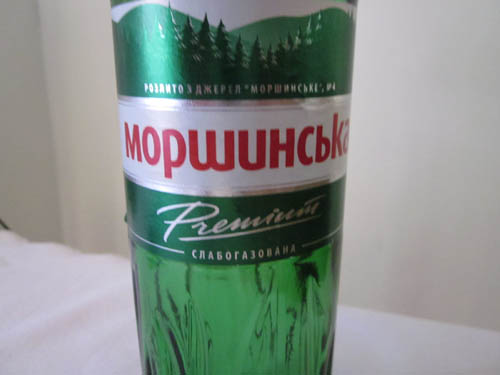


God. Bless. Capitalism.
:)
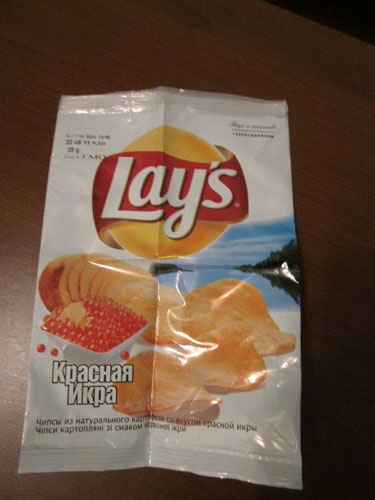
Spring has fully arrived. Instead of cold rain and snow, there has been sun for several days now, and also a dusty wind which causes you to squint and breathe through your nose.
A diaspora friend from my childhood recently stayed with me for a few days. He’s lived in Kyiv for six years. It was nice empathizing with a fellow American. Aside from history, politics and economics, the topic which dominated yesterday’s dinner conversation was customer service in Ukraine. It sucks.
I’ve been ignored in mostly empty restaurants for a good 5-10 minutes before being handed a menu. Waitresses are rude. They don’t look at you when they pass.
You can get service, of course, but you need to act tough and rude. You need to TELL the staff what to do — give me a menu, come here, take my order, bring the drinks right way, bring all the dishes out at the same time (or else you might get them as they are prepared, sometimes with a 20 minute gap between your meal and your friend’s). You can get all the service you want, but you need to bring the authority. You can’t relax and expect to be taken care of. I prefer to relax.
Sometimes I bring the authority. Sometimes I get up and leave. I also have a growing shit-list of restaurants I no longer patronize, including MVF (a cute name which shares the Ukrainian acronym for International Monetary Fund, but substitutes the word “Varenyky” — dumplings — for “monetary”) where, despite being the only patron in the restaurant, the three girls ignored me for twenty minutes after handing me the menu. In their defense, it sounded like their conversation was *extremely* interesting. That was the first time I left a restaurant.
I now understand my mistake. You can’t show any fear. You must be like an animal trainer. For example, when you walk into a restaurant, there will likely be a three or four young staff members chatting amongst themselves. Their conversation will stop and they will look up at you without smiling. Several things may go through your head at this point: Am I interrupting? Is the restaurant open? Do I seat myself? Is this the hostess who sill seat me?
This is a very common moment in Ukraine, and I’ve discovered the most important thing is to show no fear. If you hesitate, meekly inquire about their status, beg permission to sit, feel embarrassed by your broken Ukrainian, they will smell your fear and consider you powerless and unimportant. On other hand, if you walk in like you own the place and tell them what to do — take me to a free table, give me a menu — they will often spring to life and serve you as if their well being depends upon it.
It is sad and pathetic, but unfortunately that’s the way things are for the moment.
I tend to cut my fellow Ukrainians a lot of slack. Outside the black market, capitalism has only existed here for two decades. The free market can solve the customer service problem, though it will take much longer in a market as mutilated as the Ukrainian one, where success is determined more by political and criminal connections than by one’s ability to serve customers.
The most notable exception to the characteristically poor customer service is McDonalds, where the cheerful call of “vilna kasa” (free register) from smiling employees are as uplifting to me as the springtime flowering of Crocuses.
A couple weeks ago, I was so excited by the good customer service at a restaurant called “Pol’iana” (Prairie) in Kyiv’s largest shopping mall, Dream Town, that I left a 50 hryvnia tip on a 60 hryvnia meal.
Another exception was the restaurant at which my diaspora friend and I had our conversation. A wonderful L’viv restaurant called “Miaso i pyvo” (Meat and beer). They knew to hand us English menus even though I gave the polite, attentive hostess my best “dobri vecher” (good evening) upon entering.
The duck tasted wonderful, but next time I’ll try one of their many steaks.
EDIT: I recently spoke about this with a Ukrainian girl who once lived in the U.S. for a year and half. She’d worked in the U.S. as a waitress, but said doing so here would be degrading, because customers are more rude here. She says the culture of service is much less developed.
EDIT 2: Tip — the smoking sections are always the cool place to sit.
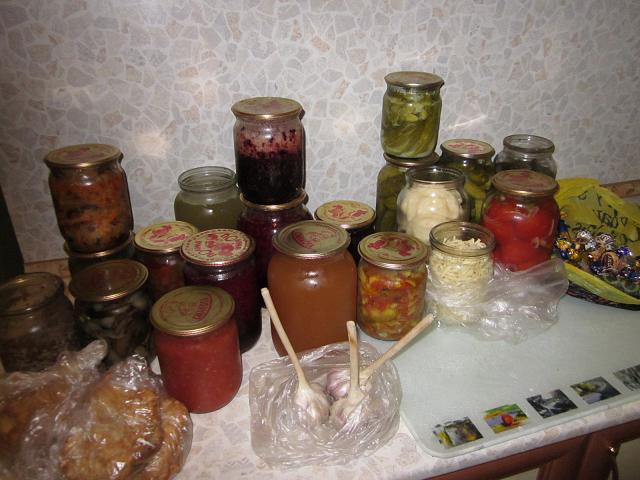
Some of food that relatives give me. Mostly home grown.
(FYI, I am one.)
1. They hate making change. If you offer a 100 or 200 UAH note, retailers will almost always ask if you smaller notes. Often they tell you they can’t make change. Sometimes, I think cabbies are just trying to get more money from me. Recently, a grocer will discounted the price because she couldn’t make change, and when I offered a tram driver a 10 UAH note for four 1 UAH tickets, she told me she couldn’t make change. She asked if we were making the return trip and suggested I buy eight tickets instead. Ridiculous. You’re in business, people.
2. They fear drafts. Even young men tell me, for example, which way I should lie in the train car to avoid a draft from the window. I think there’s a larger health fear in Ukraine. Some Ukrainians believe Chernobyl has weakened their immune systems.
3. They feed guests.
4. They think the worst of themselves. I’ve heard rude bureaucrats, poor customer service, unpredictable business culture, government failures all blamed on inherent flaws in the Ukrainian character. This is false. I’d attribute poor customer service, and business culture on the fact that the market has only been at work for twenty years and remains mutilated, the bureaucrats and government failure on the nature of coercive enterprises.
5. Emotionally tough. They can take disappointments much better than Americans.
6. Practical. This goes hand-in-hand with #5.
7. They know many home remedies for every ailment you’ve ever heard of, and most of the ones you haven’t.
8. Drinking customs. You clink glasses with every drink, not just the first. You don’t take your drink alone. When you see one person holding their glass, quiet down and hold yours. There is a preference toward having three (or six, or nine, or twelve, or fifteen) drinks — honoring the holy trinity, I think.
9. Embarrassed by their bathrooms. This goes back to #4.
10. Know how to cook.
11. Know how to tend gardens, livestock. (Good because it gives Ukrainians a fall back plan during economic crises. Bad because it lowers the division of labor.)
12. Religious. Especially in Western Ukraine.
13. In restaurants, you have to ask for the bill. When it comes, sometimes you’re expected to pay right away.
14. In business and even shopping for expensive items, personal relationships and recommendations carry even greater weight than they do in the U.S.
15. They want to know how they and their country are perceived (hence I started maintaining a list).
Also,
– often gawdy in popular expressions of art & decoration
– insufficiently skeptical of television commercials
– too often attribute west’s wealth to benevolent governments and effective welfare programs
– light switches in bad places.
I really enjoyed the Budda Bar in Kyiv. Very relaxed atmosphere, with very cool looking people. Dress code enforced. The light mood is in stark contrast to many clubs in the US where everybody seems very aggressive and judgmental.
My only complaint is the Johnny Walker Black. I tasted so weak, and I can’t help but be suspicious.
Anyway, here are a couple pics. If I remember correctly, they’re from a couple days before Halloween.
Here’s me being unimpressed:

photo by Aleks

Dominoes opened right beside the Puzata Khata (this gallery) in the Podilla neighborhood, near Kyiv Mohyla Academy. I the week after their opening, I saw a line of about a dozen rollerbladers skating through the neighborhood with Dominos jackets and flags.


I spoke with a local entrepreneur recently about Ikea. Earlier this year, the company froze its expansion, then sold it’s assets in Ukraine.
The rumor is they came under too much pressure from local authorities, and weren’t willing to pay any more bribes. (See my theory on bribes.)
The entrepreneur I spoke with suspected the pressure was orchestrated by the organized effort of local furniture makers who felt threatened, and wondered if, perhaps, the protectionist thuggery wasn’t a good thing.
Of course, this speaks to the oft-repeated economic fallacy that there is a limited number of jobs in the world for which we much all compete. This myopic point of view is easily exposed by the fact that there are many more jobs today than there were a hundred years ago.
The only limit to the number of jobs is the number of needs and desires felt by humanity. In other words, none whatsoever. Turning the furniture business over to more efficient producers makes resources available to entrepreneurs who will satisfy our other desires.
If my friend’s suspicious is true, and local furniture manufacturers did, in fact, harness the force of government to squeeze out competition, they only help themselves and only in the short term. As a consequence of the government’s coercion, all Ukrainians must pay a higher price for furniture less likely to suit their needs. Furthermore, fewer resources are available for other needs. Protectionism is a recipe for poverty.
Hey, mom. Here’s the restaurant Pani P. recommended. I’ve been eating there pretty regularly. My translator is telling me its name means “under the poplar,” but I think it means “under the pitcher.”

My friends back in Iowa would attest to my affinity for coffee shops. I was pleased to discover no shortage of them in Kyiv. This may be the biggest density of coffee shops (and sushi restaurants) I’ve ever encountered. My type of place.
I go to four different fairly prominent chains. If anyone can recommend others, please comment below.
Here’s my rating:
4. Кофе Хауз / Kofe KHauz / Coffee House
These are everywhere. Coffee House is overpriced, with horrible, soggy sandwiches, but they’re open 24/7 and I have yet to have any problems with their open wireless networks.
3. Double Coffee
Double Coffee seems like the high end shop. The food and drinks are pricey, but very good. Service is sometimes slow. In my experience, they either have a locked wireless network whose password doesn’t work, or no internet access at all. Based strictly on ambiance, though, this one takes the cake — clean, dark, mysterious, sexy. You can also order sushi.
2. Шоколадница / Shokoladnytsa / Chocolatarium
Nice, clean, good internet, good sandwiches. Given their title, I expected better desserts.
1. Coffee Life
My personal favorite of the chains I’ve visited. Hip ambiance. Several rooms. Reliable Internet. Their selection of food is rather limited, but service is quick and the servers are polite.
I should mention that the judging strictly by taste, the coffee/pastries/meals available at either of two private French bakeries are vastly superior to anything else I’ve encountered, coffee shop wise. Буланжері is located on Olesya Gonchara st and Yaroslaviv Val, the other, Реприза, or, Cafe Patisserie, is on Velyka Zhytomyrs’ka. Between the two, I’m partial to Реприза where you order then sit down, and the food is brought to you. In Буланжері, you wait in line to order food, then in another line to order your beverage.
(CORRECTION: Реприза is a chain.)
Other chains I know of, but have yet to visit:
Kafka
Coffee Time
Kofium
Repriza
Chaikoff
Volkons’ky Keizer
There are also these coffee cars all over the place:

While on the subject of coffee, I can’t resist sharing this French animation:
Perhaps “cafe” is French for methamphetamine.
I like discovering foreign details of day-to-day life, different approaches to similar things. After two weeks, I’m already ceasing to notice them, perhaps a sign of my increasing comfort & assimilation into Kyiv life, so I thought I’d detail them before they’re entirely forgotten.
Peculiar:
1. Light switches are in strange places. It’s like a big Easter egg hunt, except the reward is being able to see.
2. There are many “Solon’s of Beauty,” which struck me as an adorable turn of language.
3. Groceries are usually marked with big signs that say “продукти” or “Products.”
4. Lots of women walk around on impossibly high heels, especially when scaling steep, cobblestone streets.
 5. There are lots and lots of Sushi restaurants, including at least two different franchises. Even some coffee shops serve sushi. When I visited Kyiv for the first time I stared, and stared at a sign that read “суші.” I sounded it out, “su-shi,” but could not believe it. It’s a word I never expected to see in Cyrillic letters. I crept closer, crossing a street and peering into the window, confirming it was, in fact, a sushi restaurant. As much as I like sushi, I told myself, you’d have to be crazy to consume raw fish in Ukraine. That was then.


6. In one products store, I only saw 15, 20 and 25% milk. (The box of 15% makes a cameo appearance in an earlier post.) I thought that was the standard, but I’ve since discovered bottles of 0%, 1%, 2%, and the like. So this really doesn’t count.
6-again (since the last one didn’t count). Ads very frequently appear on my cell phone. My phone doesn’t vibrate or ring, and the ads aren’t stored as text messages, though they look like them. The ads are in Russian, which I struggle with, but I can understand enough to know that some of them are for ring tones.
7. Metro tokens are plastic.

8. In many places, cars park diagonally on the sidewalk. Occasionally, where they can’t pull directly from the street onto the sidewalk, they drive amid pedestrians for a bit.
9. The cost of food is surprisingly high. I usually pay the equivalent of $4-$7 per meal for eating out when it’s nothing fancy, $15 for sushi. For a country whose average annual income is usually reported as between $4,000 and $7,000, this is very high. Several possibilities: Kyivian are a lot wealthier than other Ukrainians. Kyiv restaurants benefit from massive tourism. Statistics about income are artificially low because much of it goes unreported.
Regardless of the cause, there doesn’t seem to be as much of an eating out culture here. When, after yesterday’s music show (which I’ll write about soon), I asked a Ukrainian guy to recommend a place where a few of us U.S. expats to eat, he immediately joked: the best place to eat is home.
10. Ukrainians seem to love stamping thing. In the restaurant we ate at last night, all the pages of the menu were stamped and signed. On almost every street you see a “нотаріус” or notary.
11. Ukrainian, or, at least, Kyivans, also love fireworks. They’ve happened at least two or three times at week since I’ve been here. I usually startle, just a little, and for a split second wonder what is exploding.

12. You often have to go underground to cross big streets. The underground passages are usually filled with retail shops. Some are nicer than others. Around Maidan, the underground area sprawls beneath several complex intersections, and I can never get to the corner I want on the first try. I have to surface like a ground hog, reorient myself, and continue closing in my desired destination.


Surprisingly Familiar:
1. Break dancers, live mimes, and other street performers.
2. McDonalds.
3. People on the street in the city’s center handing out various coupons.
4. During my 2004, a restaurant named Domashna Kukhna (home kitchen) charged a nominal price for packets of salt and sugar, napkins, plastic ware, toothpicks, etc. I found this rather annoying and the market seems to have agreed. They no longer do this. (Side note: Domashna Kukhna is both the name of a franchise and the name used by many individually-owned restaurants. There doesn’t seem to be any problem distinguishing, though. Take THAT intellectual property advocates!)
EDIT: 5. Television commercials — for cat food, skin cream, movies, cell phone service, and a whole lot more.

