“Can’t you understand if a soldier who has crossed thousands of kilometres through blood and fire and death has fun with a woman or takes some trifle?”


“Can’t you understand if a soldier who has crossed thousands of kilometres through blood and fire and death has fun with a woman or takes some trifle?”
Yevgeny Khaldei, the author of this iconic photograph of Red Army servicemen raising the Soviet flag over the Reichstag, had some editing to do before it got published.
Notice how in the unedited one on the left, one of the soldiers is wearing wristwatches on both wrists?
(ie. he probably stole one or both)


Former Polish President Lech Kaczynski was killed in that suspicious 2010 plane crash in Smolensk Russia that decapitated Poland’s leadership.
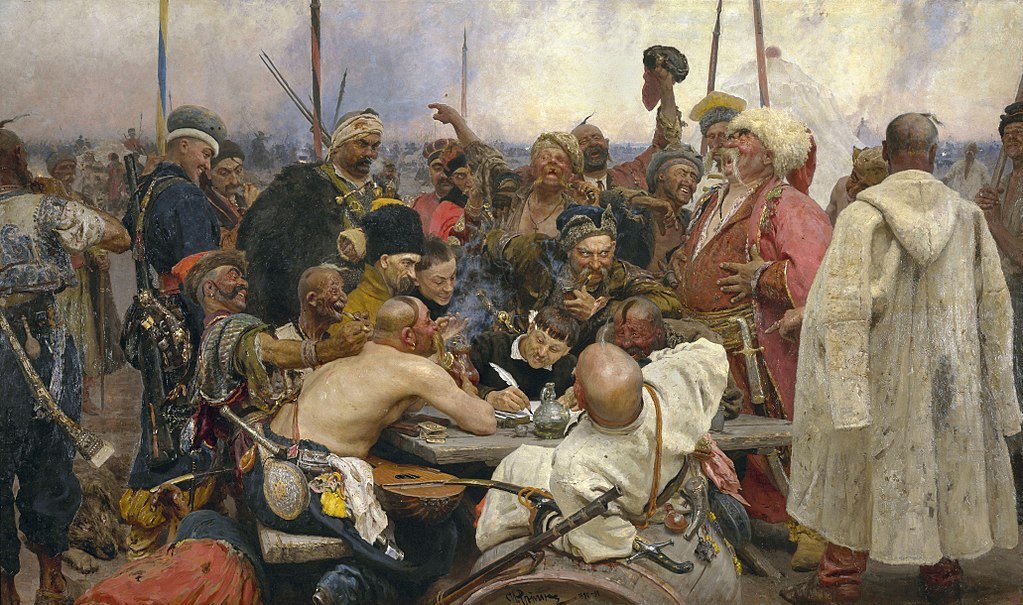
Amazingly, you can find three sinister spies in the back row of this epic painting, looking with disdain upon the freedom and spirit of the Kozaks.
Breaking the Tongue: Language, Education, and Power in Soviet Ukraine, 1923-1934

Ukraine under Western EyesThe Bohdan and Neonila Krawciw Ucrainica Map Collection

Mapping Europe’s BorderlandsRussian Cartography in the Age of Empire

Map MenTransnational Lives and Deaths of Geographers in the Making of East Central Europe

The War in Ukraine’s DonbasOrigins, Contexts, and the Future

A LossThe Story of a Dead Soldier Told by His Sister

Children of Rus’Right-Bank Ukraine and the Invention of a Russian Nation

The Gates of EuropeA History of Ukraine

A Biography of No PlaceFrom Ethnic Borderland to Soviet Heartland

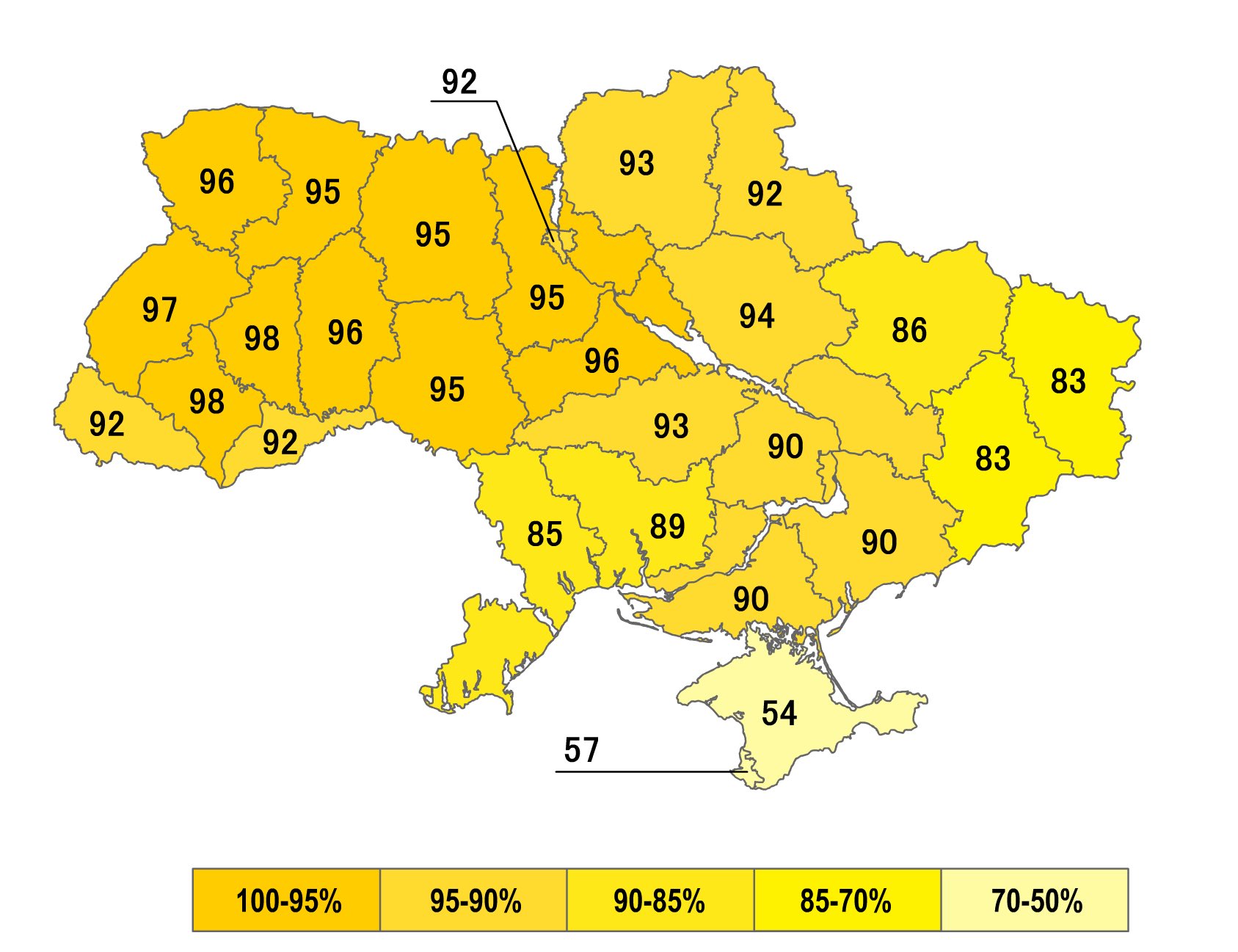
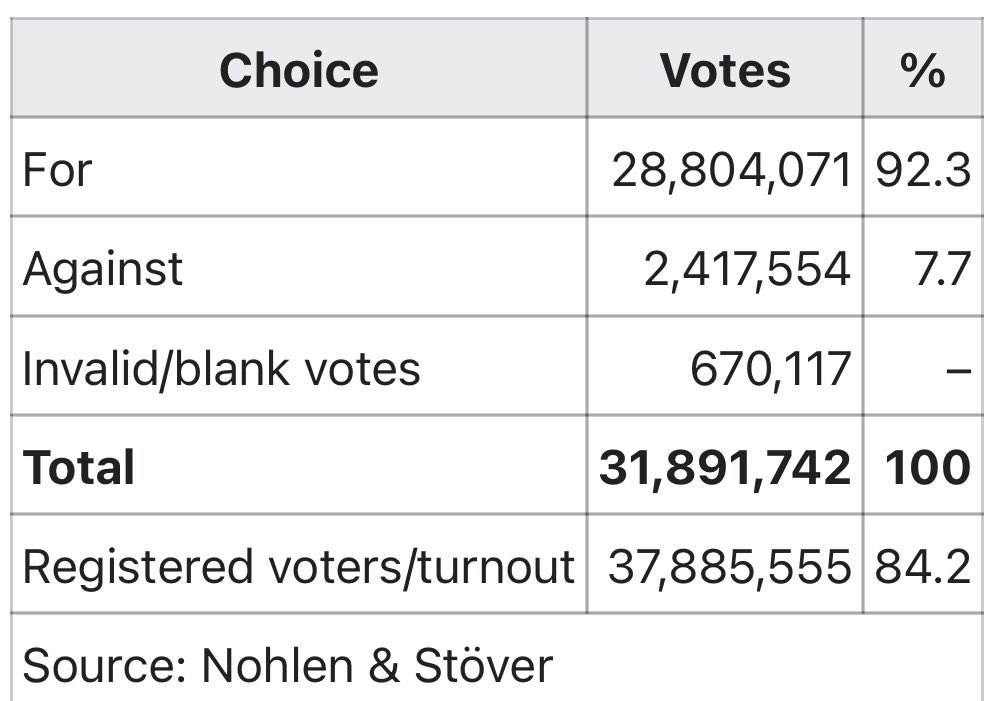
This is an important map, often missing from people’s perception of Ukraine and Crimea’s annexation. The referendum had an 84% turn out.
voted for
voted against

In the village of Subotiv,
Upon a lofty hill
There stands the coffin (2) of Ukraine —
A crypt both wide and still:
It is the church of great Bohdan,
Where once he used to pray
That Muscovite and Cossack might
Share good and ill alway.
May peace be to your soul, Bohdan!
Their gain has been our loss:
The Muscovites have snatched away
All that they came across;
And now they rend the burial mounds
In search of further loot;
Their hand assaults your hidden vaults;
They curse your soul to boot
Because they’ve nothing for their pains…
That’s how it is, Bohdan!
You’ve ruined derelict Ukraine
By your most friendly plan!
Ivan the Terrible of Muskovy massacres the upper classes of Novgorod because the city-state was drifting toward Europe. He likely massacred the descendants of “Russian” folk hero Alexander Nevsky.

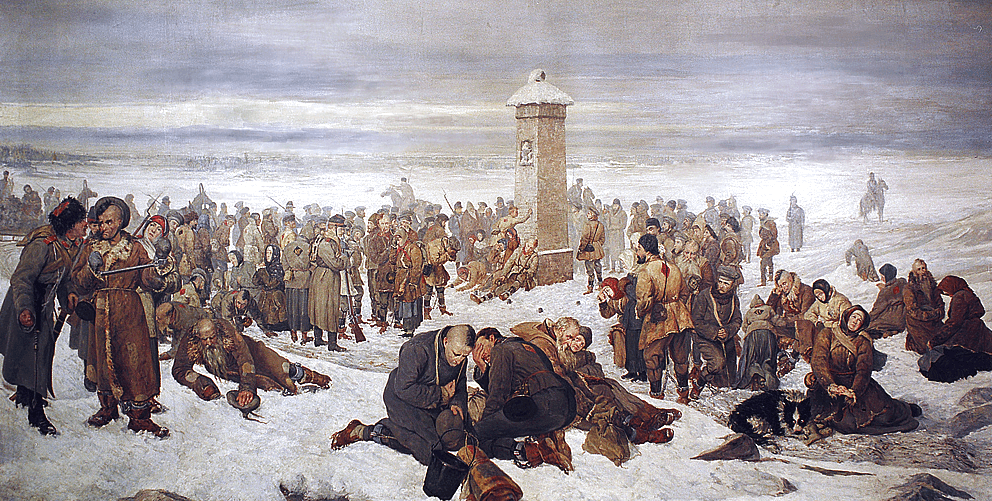
Farewell to Europe, by Aleksander A Sochaczewski. The painting depicts participants of the January 1863 Uprising on their forced march to serve their sentences in Siberia. The obelisk marks the geographic border line between Europe and Asia. The artist himself is among the exiled here, near the obelisk, on the right.
Drawing on Richard Pipes’ argument that the 1863 Polish revolt was viewed by many Russians as an illegitimate European attack on Russia and led them to conclude that “only the autocracy could preserve the integrity of the country,” Irina Glebova argues that the Ukrainian revolution of 2013-2014 (Euromaidan) has had “approximately the same influence on Russia.”
Paralleling what happened in Poland 150 years ago, the INION historian says, “the attempt of Ukraine to finally assert its European identity (in opposition to the Soviet-Russian) by completing the process of building independent statehood and an equal nation offended Russian national feelings.”
The uprising began as a spontaneous protest by young Poles against conscription into the Imperial Russian Army. It was soon joined by high-ranking Polish-Lithuanian officers and various politicians. The insurrectionists, severely outnumbered and lacking serious outside support, were forced to resort to guerrilla warfare tactics.
Reprisals against insurgents included the Tsar’s abolition of serfdom that granted land at low value (namely, the market price) and was designed to draw support of peasants away from the Polish nation and disrupt the national economy.[citation needed] Public executions and deportations to Siberia led many Poles to abandon armed struggle and turn instead to the idea of “organic work”: economic and cultural self-improvement.
“Ukraine is one of those countries that in its sub-totalitarian past experienced one of the greatest tragedies in the history of human civilization – genocide,” James Mace.
Today, the famous political scientist, Holodomor researcher, would be 70 years old.

https://twitter.com/HolodomorMuseum/status/1494620589025341440
See his work on Amazon.
This wonderful history cites the author Shane O’Rourke, who wrote “The Cossacks”.
I briefly reviewed his book here.
Prof James Ker-Lindsay
On 17 September 1991, the three Baltic Republics – Estonia, Latvia and Lithuania – joined the United Nations. It marked the end of a long battle for statehood. However, their independence didn’t mark the creation of three new countries. Instead, it amounted to a process of regained independence. All three had in fact previously been sovereign states.
My friend and co author Yuri Maltsev, himself a former member of the Central Committee of the Communist Party, would disagree that Gorbachev “saw the need for reform,” arguing instead that he was desperately trying to save a failed system, and his hand was forced.


The US Committee on Ukrainian Holodomor-Genocide Awareness has begun a national campaign to ask the Pulitzer Prize Board to reconsider its 2003 decision not to revoke the Pulitzer Prize awarded to Walter Duranty. Duranty lied about the true circumstances of Stalin’s implementation of his industrialization and collectivization policies. Duranty claimed that there was no starvation in Ukraine during the 1932–1933 genocide known as the Holodomor. The Committee asks that the Pulitzer Prize Board take a moral stand after 89 years and revoke the Duranty prize.
Please sign your name to the petition. You do not have to contribute any money to the campaign. Just share your name. Help us reach a number of signatures that will move the Pulitzer Board to make the morally correct decision.
&Once upon a time there was a Yiddish language newspaper in New York called Forverts (in English, The Forward). Founded in 1897 by the Jewish Socialist Press Federation, the newspaper was devoted to Jewish trade unionism and democratic socialism.
Like the Ukrainian gazette Svoboda in its early years, Forverts also offered English lessons to its readers, as well as civic advice regarding life in America. Under the leadership of Abraham Cahan, editor from 1903 to 1951, Forverts attained a readership of some 200,000 by World War I.
Early in February and March of 1932, Mendel Osherowitch, a Jewish Ukrainian working at Forverts, was sent to Ukraine on assignment to learn about life in Soviet Ukraine. He was to go to theaters, marketplaces, cabarets, shops, Jewish houses of learning and to speak with Jews and non-Jews.
Psychiatry in the Soviet Union
There was systematic political abuse of psychiatry in the Soviet Union, based on the interpretation of political opposition or dissent as a psychiatric problem. It was called “psychopathological mechanisms” of dissent.
During the leadership of General Secretary Leonid Brezhnev, psychiatry was used to disable and remove from society political opponents (“dissidents”) who openly expressed beliefs that contradicted the official dogma. The term “philosophical intoxication”, for instance, was widely applied to the mental disorders diagnosed when people disagreed with the country’s Communist leaders and, by referring to the writings of the Founding Fathers of Marxism–Leninism—Karl Marx, Friedrich Engels, and Vladimir Lenin—made them the target of criticism.
. . . .
Political dissidents were usually charged under Articles 70 (agitation and propaganda against the Soviet state) and 190-1 (dissemination of false fabrications defaming the Soviet state and social system) of the RSFSR Criminal Code. Forensic psychiatrists were asked to examine offenders whose mental state was considered abnormal by the investigating officers.
In almost every case, dissidents were examined at the Serbsky Central Research Institute for Forensic Psychiatry in Moscow, where persons being prosecuted in court for committing political crimes were subjected to a forensic-psychiatric expert evaluation. Once certified, the accused and convicted were sent for involuntary treatment to the Special Psychiatric Hospitals controlled by the Ministry of Internal Affairs (MVD) of the Russian Soviet Federative Socialist Republic.
The accused had no right of appeal The right was given to their relatives or other interested persons but they were not allowed to nominate psychiatrists to take part in the evaluation, because all psychiatrists were considered fully independent and equally credible before the law.

