
http://zaxid.net/news/showNews.do?krutiy_tramplinton&objectId=1399954
Author Archives: RomanInUkraine
Ukrainian prosecutors released recordings of intercepted telephone conversations between Kremlin aide Sergei Glazyev and proxies in Ukraine.
Click the audio widget to listen to the discussion.
http://www.rferl.org/content/podcast-the-tale-of-the-tape-power-vertical/27948424.html
Intermarium
Intermarium:
a plan, pursued after World War I by Polish leader Józef Piłsudski, for a federation, of Central and Eastern European countries. Invited to join the proposed federation were the Baltic states (Lithuania, Latvia, Estonia), Finland, Belarus, Ukraine, Hungary, Romania, Yugoslavia and Czechoslovakia.
The Polish name Międzymorze, which means “Intersea” or “Between-seas,” was rendered into Latin as “Intermarium.”
The proposed federation was meant to emulate the Polish-Lithuanian Commonwealth, stretching from the Baltic Sea to the Black Sea, that, from the end of the 16th century to the end of the 18th, had united the Kingdom of Poland and the Grand Duchy of Lithuania.
Intermarium complemented Piłsudski’s other geopolitical vision—Prometheism, whose goal was the dismemberment of the Russian Empire and that Empire’s divestment of its territorial conquests.
Intermarium was, however, perceived by some Lithuanians as a threat to their newly established independence, and by some Ukrainians as a threat to their aspirations for independence, and was opposed by Russia and by most Western powers, except France, who backed it.
Great 2014 lecture about the importance of the #Ukraine conflict from @SebGorka
Great 2014 lecture about the importance of the #Ukraine conflict from @SebGorka: http://thegorkabriefing.com/ukraine-what-is-to-be-done/
Thanks for the link, Walt.
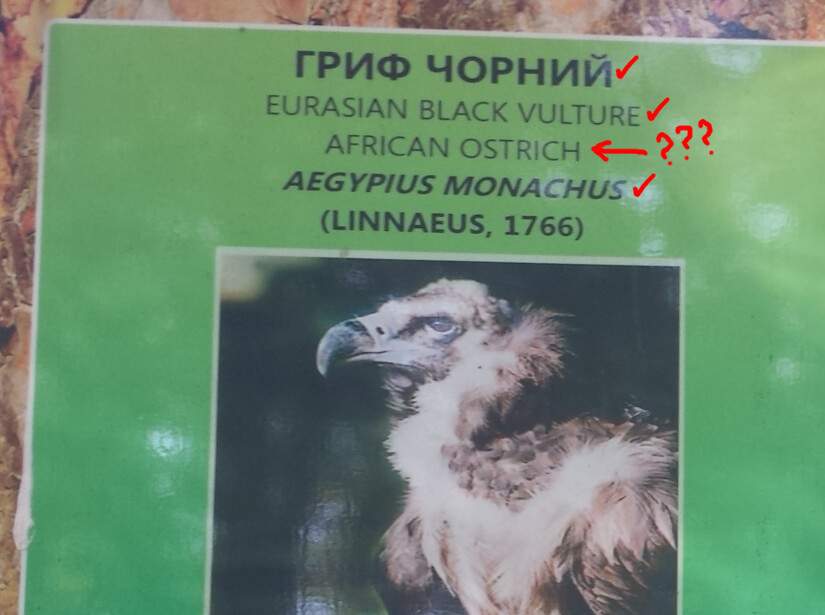
The rare African Ostrich in the Kyiv zoo.
Utterly charming names of Ukrainian villages
Utterly charming names of Ukrainian villages: Cold Water, Oaks, Grapes, Crooked Lake, Similar, Old Lighthouse, Little Mill. #Ukraine
Ukraine’s Independence Day parade in the middle of Kyiv.
Ukraine’s Independence day parade in the middle of Kyiv.
Platoon-sized contingents from Lithuania and Poland.


http://uatoday.tv/society/watch-live-independence-day-military-parade-held-in-kyiv-733027.html
The west can either understand Eastern Europe, or it can maintain its heroic WWII narrative. It can’t do both.
As I’ve said before, the West can either understand Eastern Europe, or it can maintain its heroic WWII narrative. It can’t do both.

Estonian war hero Harald Nugiseks (22 October 1921 – 2 January 2014) was an SS-Oberscharführer (Sergeant) in World War II, who served voluntarily in the 20th Waffen Grenadier Division of the SS (1st Estonian) of the Waffen SS. Nugiseks is also one of the four Estonian soldiers who received the Knight’s Cross of the Iron Cross.
Harald Nugiseks: “Estonians joined the German mobilization because the Estonian national committee and Uluots (Estonian President) encouraged us. But these were the exact deeds of Uluots that the parliament or the important men in the government refuse to acknowledge. Uluots was the one who encouraged us to join the army. But we are constantly called Fascists. This I do not understand! Because not a single Estonian, I can assure it, wasn’t the kind of man to follow the Russians or Germans. We went there to battle for Estonia and I am glad when I find from the newspaper or from history: these men were on the Narva front and stopped the Red Army from moving onwards.”
Harald has been representing this generation who had to protect the homeland in foreign uniforms. He and his three mates did not battle on the German side, they were first and foremost battling against the red regime. No one has managed to prove that there was a better way to do that back then. We were looking for answers for tens of questions where the soldier’s heroism was on a meaningful position. Why this sort of resistance was born on Narva front that the large Soviet army’s squads, battalions, groups and divisions bleed to death while trying to attack it and eventually gave up? How many red soldiers died on Narva front? There have been estimations that around 400,000 or 500,000. On the 51st anniversary of the falling of Narva on July 26, 1995 the Red Army veterans said that 700,000 soldiers were killed on that front in 1944! The red regime paid an expensive price for conquering Estonia. What did not happen in 1939 did come true in 1944 thanks to Estonian men.
There have been talks of a lot of bodies being in the Sinimäed Hills. There have also been rumors that the piles of Russians’ dead bodies were so big that they were mistaken as the new attackers and dead bodies were constantly shot. The men who were near the Sinimäed Hills said that in the autumn on 1944 and in the spring of 1945 they went to clean up the bodies from Sinimäed. For each body they received the price of a vodka bottle. In the spring of 1945 it meant that they took a truck-load of skulls to the burial place. In one place of burial, where 30,000 skulls were counted, they placed a memorial which said that the Soviet soldiers rest there. But there were a large number of common graves where no signs were put. Some farmers took a pile of skulls to the burial place and then took them back during the night, so that they could bring the skulls again the next day. But how many soldiers were lying on the minefields and were never found?
It was a war where one side was soullessly counting, but the other side was protecting homes and the last one gave birth to what we can call the Second War of Independence. Who were those brave Estonian sons who battled in the Second War of Independence – this text is devoted to one of them. These were the finest sons of Estonia and may their flame burn inside our souls forever.
It has been said that the Ancient Greek Antaios got his power from the earth. When he lost his connection with earth, it meant the end to him. This text also emphasizes the soldier’s connection to his land. The author of this text believes that Harald was inspired by not the Knight’s Cross, but by the letters of the unknown women over Estonia and the Estonian people in general and what was in those letters. Who stands behind a soldier? If there is someone, the soldier battles, if there isn’t anyone, he does not. If the people feel that the soldier is battling for them, the soldier also feels it and protects his people.
The people understand better than anyone else if the war that is going on is theirs or not. “There is no international laws or morale tradition that would prohibit the nation to battle for its own protection,” wrote Harald Riipalu. When the Soviet Union occupied Estonia on June 17, 1940, this meant war to us and we were in a war situation with the Soviet Union from that moment on. The war between the Soviet Union and Germany gave us a chance to once again fight for our freedom. The German soldiers were our allies and also the volunteers from Europe and Scandinavians. We didn’t want Russia, we wanted to keep our little home free and for this Estonian soldiers battled side by side.
That’s how the Estonian soldiers’ battles should be viewed on Narva front and in other places. These four soldiers – the Knight’s Cross recipients – just like all other Estonian soldiers, who fought for our freedom, showed great soldier’s bravery in these battles and they deserve the people’s gratitude. Especially thankful should be those whom the war helped to escape to the West, away from certain death. Their descendants should know, however, that the life was guaranteed here with these brave Estonian soldiers’ life and death. Isn’t it so that the people who do not fight for their freedom, don’t deserve it? Well, they did fight and they made their nation worthy of freedom.
Road Trip to Zatoka, Ukraine
Road Trip
Zatoka Ukraine is a crazy mix of folksy village life — grandmothers, gardens and laundry drying in the sun — and touristy beach culture.
It’s on a narrow strip of land that forms a barrier between the Black Sea and a small gulf at the mouth of the Dniester River. Both sides of the narrows roads were crowded with people holding signs that read “sdaiem” or “renting”. They seem to sit there all day in lawn chairs, wearing sun hats. We choose a hotel instead, just 100 m from the beach.
The beach was small but clean with soft sand that made wading into the Black Sea very comfortable. It was located at the gap in the land — the one opening to the Gulf.
We watched a draw bridge working. And also the two cranes by the single doc on the other side of the gap. Over the course of a day, they loaded a huge barge with lumber. When it sailed, another barge took its place, two tug boats assisting its arrival.
Like the nerd I am, I read all about Black Sea marine life before the trip, and imagined Angel Sharks, Cat Sharks, all sort of rays, and more. Did you know there were Ukrainian-specific species? The “Ukrainian brook lamprey” and “Ukrainian stickleback.”
In the water I saw tiny fish, little fish, and one jelly fish about the size of a fist.
We only made quick trips to the beach because our little boy would start fussing, though during one early-morning trip he remained perfectly calm and seemed fascinated by the waves. We took turns swimming.
Before our return, we detour to the right bank of the Dniester River, into Ukrainian Bessarabia.
Did you know that Shabo was not just a brand of Ukrainian wine, but a Ukrainian town surrounded by vineyards where the wine is produced? We visited their shop, and a gorgeous cottage-style restaurant, where our boy remained alert and calm — I want to believe this is a sign of budding good taste.
We drove further up the right bank to take a very quick look at the castle in Bilgorod-Dniestrovsk. The shorter route back to Kyiv would have involved passing through Moldova for 7km and then through the Lower Dniester National Park. Were it not for my wife’s Ukrainian passport, we might have tried it. Instead we backtracked all the way to Zatoka, then past Odesa and up to Kyiv.
I remain utterly charmed by the names of Ukrainian villages: Cold Water, Oaks, Crooked Lake, Similar, Old Lighthouse (which is inexplicably located dozens of miles inland), Little Mill.
Ukraine’s roads are improving, but still have a way to go. I bottomed out, scraping our car’s undercarriage five or six times, once on the main highway between Kyiv and Odesa.
I’ve enjoyed watching the progress of Ukraine’s gas stations during my time in Ukraine. Some of them draw visitors for their restaurants rather than their gas. They’re a sign of what a competitive (partially competitive) market can do. Shell is the one international petrol company with stations in Ukraine, but they’re all empty. Their gas is one or two hryvnias more expensive, and I wonder if they’re burdened by some dishonest requirements imposed by Ukraine’s corrupt regulators.
Every road trip, I’m reminded of Ukraine’s beauty and potential. Just north of Odesa, there are gorgeous lakes with seemingly no infrastructure for visitors. The rolling Eurasian steppe offers breathtaking vistas, where it seems like you can see forever. I kept thinking: “I want to put a home here.”
Prolonged Sanctions Rip Into Russia, Causing Angst For Putin
One Novatek project, the massive $27 billion Yamal LNG project to be built in the Russian Arctic, has suffered considerable setbacks. Prohibited from securing financing in U.S. dollars, it scrambled for at least a year in search of funds and finally turned to Chinese banks, which are more expensive and less flexible than Western funding.
Moreover, when Russia’s oil production starts to decline, new oil discoveries will be needed while lack of access to Western technology for offshore drilling will have repercussions for Russia’s oil industry for years to come. Unable to replace declining production, Moscow’s’ state coffers will also decline. As much as half of the offshore and fracking technology used by Russia comes from the West.
Low oil prices also take a bite
Oil prices, which have tumbled from $107 per barrel in July 2014 to the mid to high $40s level now, have also caused considerably angst in Russia. Around half of Moscow’s state revenue is derived from oil and natural gas exports, though Moscow claims a much lower figure.
Budget problems from low oil prices have also caused Moscow to try selling large stakes in its state-controlled energy companies. In late June, Russian media reported that the Russian government was considering selling 19.5 % of its shares ($10 billion) in oil major Rosneft to China and India. Last week, however, Russia was forced to delay its privatization of Rosneft as it waits for oil prices to improve.
Russia’s oil exports have been helped to some degree by the massive devaluation of the Russia ruble, whose 20% loss against the dollar last year was added to a nosedive of 44% the previous year. Though a weak currency hurts Moscow, it makes Russian oil exports cheaper.
In late June, Russian President Vladimir Putin tried to persuade the EU to not renew sanctions, but to no avail. A week later, the EU extended sanctions in connection with the ongoing conflict in eastern Ukraine. They are in effect until January 31, 2017, then will be reviewed again.
Now the question is: just how long will sanctions remain in place? That depends on who you ask and on Russia’s future geopolitical developments and finally, how the West continues to respond.
On Tuesday, Chris Weafer, a senior partner at economic and political analysis firm Macro-Advisory, told CNBC that Crimea-related sanctions will stay indefinitely because clearly Crimea is not going to go back (to Ukraine) as far as the Russians are concerned.
Devastating Timeline Reveals the Transfer of Half of U.S. Uranium Output to Russia as Hillary Clinton’s Foundation Bags $145 Million
Paul Manafort Resigns From Donald Trump’s Campaign
Paul Manafort Resigns From Donald Trump’s Campaign
http://abcnews.go.com/Politics/paul-manafort-resigns-donald-trumps-campaign/story?id=41511502
In May 1920, dock workers refused to load this ship with British armaments bound for Poland to be used by Russia’s anti-Bolshevik White Armies.
The movement included members of the Independent Labour Party, the British Socialist Party, Workers Socialist Federation, and the Herald League, who wanted to show international workers’ solidarity with their Russian comrades. Where other attempts at cross-factional unity had failed, the Hands Off Russia! campaign proved to be a powerful galvaniser of British left-wing sympathisers. It really got going in January 1919 when a National Committee for the Hands off Russia! campaign was elected at a conference in London. Many of the groups and individuals who congregated under the umbrella of Hands Off Russia! later went on to form the Communist Party of Great Britain in August 1920.
http://armingallsides.on-the-record.org.uk/case_studies/hands-off-russia/
US moves nuclear weapons from Turkey to Romania (rumor)
Caspian Report: Putin vs his oligarchs
Putin vs his oligarchs. Increased difficulty purchasing loyalty as #Russia’s resources dwindle. https://www.youtube.com/watch?v=BT4sK36cU3Y
Wow! Francis Fukuyama is going to teach at Ukrainian Catholic University.
The Polish victory at the battle of Warsaw in 1920 saved Europe from a Communist invasion.
Can we give credit to Ukraine’s sich riflemen for slowing the reds down a bit?
—“Absolutely true! Poland saved Europe twice – from Tatars and Mongols and then from (even worse plague) of Soviets in 1920. In 1945 they were betrayed by Roosevelt in Yalta and given to Stalin as a new slave’s camp.”—

On August 16, 1920, Marshal Józef Piłsudski personally led the Polish Army counter attack against the Red Army, which practically smashed it, and saved Poland and Europe from a Soviet invasion.
This stunning and decisive victory that Pilsudski and the Polish army achieved, which would be later known as “The miracle on the Vistula” (after the Vistula river running through Warsaw), radically changed the outcome of the Polish – Russian war of 1920, and perhaps the fate of Europe.
Up until that battle, the seemingly invincible Red Army was sweeping through Poland pushing the Polish army all the way back to Warsaw. The newly reinstated Polish state, desperate, alone and unaided in its war with Soviet Russia (the only European country to offer any substantial help to Poland during the war was Hungary) seemed on the verge of collapse and total defeat.
Lenin believed that by destroying Poland, he would create a Red Bridge to Europe -particularly Germany – which he was certain was ripe for Communist revolution.
Hromadske Radio launches new podcast Ukraine Calling.
Hromadske Radio launches new podcast Ukraine Calling.
Ukraine Calling is a weekly English language podcast on Ukraine’s current affairs.
The podcast is hosted by Marta Dyczok and addressed to people, who are interested in what is happening in Ukraine but do not have time to follow the news every day.
Half an hour English language weekly show Ukraine Calling brings week’s top stories and looks to the week ahead. The main goal is to explain the key issues through interviews with decision makers, opinion makers, and ordinary people.
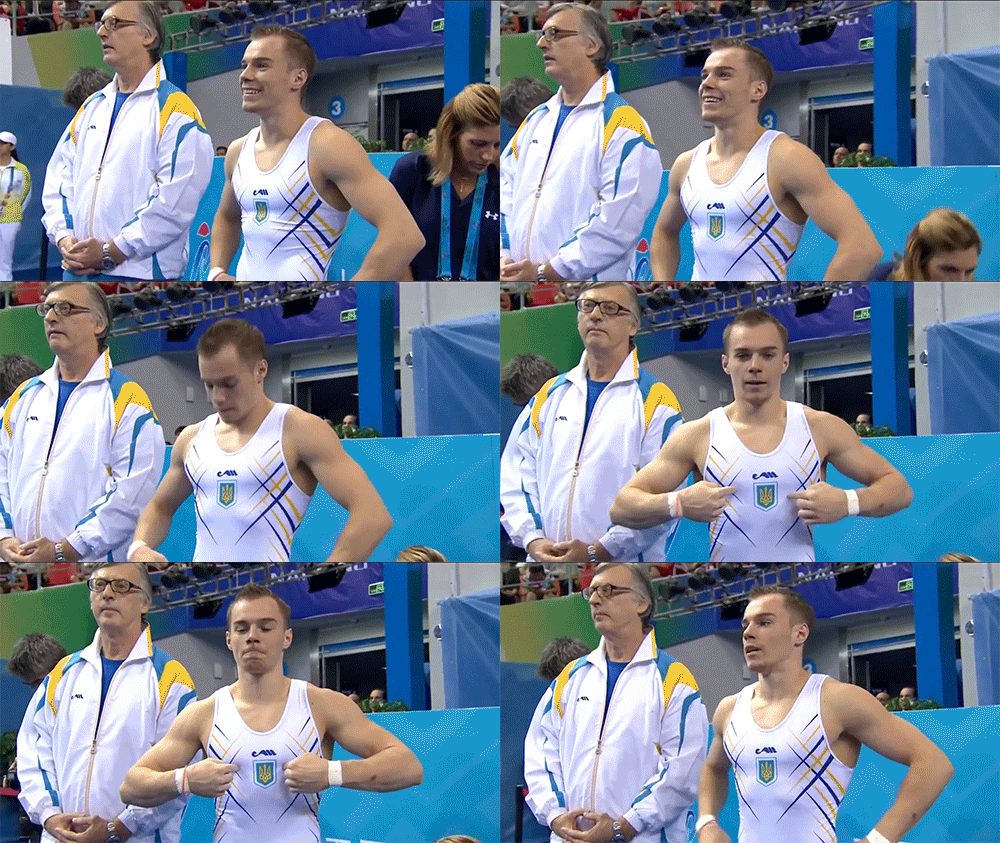
Ukrainian Silver Medal-Winning Gymnast, Oleg Verniaiev from Donetsk, UKRAINE!
4 reasons behind Russia’s escalation by Timothy Ash
First, State Duma elections are upcoming on Sept. 18, and Putin will be eager for the ruling United Russia party to do well, as a precursor then to his own re-election in the March 2018 presidential elections.
While polls show United Russia doing okay (60 percent support), Putin never likes to take chances with domestic politics, and will want to impress on the Russian electorate his own strength, and how lucky they are to be Russians citizens, as perhaps compared to their Ukrainian counterparts, as reflected on insecurity, weak leadership in Kyiv, and weak backing from its Western allies.
Second, Putin’s intervention in Syria has yielded significant political gains/leverage – as reflected in the PR coup this week with Turkish President Recep Erdogan’s visit – but no decisive victory for the Bashar Assad regime (or Russia), and with the bitter ongoing battle for Aleppo, the question is whether Assad’s forces have the ground forces sufficient to deliver a final military victory.
Russia’s own death toll in that conflict – exposed with the loss of a Russian helicopter crew over the past week – is rising and exposes the difficult choices Putin has to make therein.
Third, the 25th anniversary of Ukraine’s independence from the Soviet Union, and importantly from Moscow, is looming on Aug. 24.
Fourth, Ukraine’s own anti-corruption agenda seems finally to be making progress under the new prosecutor general, Yuriy Lutsenko, and a number of high profile ex-President Vitor Yanukovych ministers (Oleksandr Yefremov, et al) are in the process of being indicted/arrested. . . . And note that this new risk of re-escalation comes as the Ukrainian macro outlook has begun to brighten . . . . Large fiscal, current account and energy deficits have been reduced. The currency has stabilized, with NBU reserves being rebuilt from $5 billion to over $14 billion now, and with little or no Western international financial institution support over the past year.
Inflation has dropped from near to 60 percent to around 6 percent and the economy is poised for real GDP growth this year of around 1 percent. That number could be particularly embarrassing (in an election year) given that the Russian economy is likely still to record a real GDP contraction this year of 0.5%.
And, in the past, military re-escalation in the east has worked to destabilise the macroeconomc economy in Ukraine, forcing locals to buy foreign currency, weakening the hryvnia, depleting reserves, boosting inflation and driving the economy into recession. There may thus be a desire to go back to past proven policies and to try and weaken the comparative Ukrainian economic performance.

