
Author Archives: RomanInUkraine
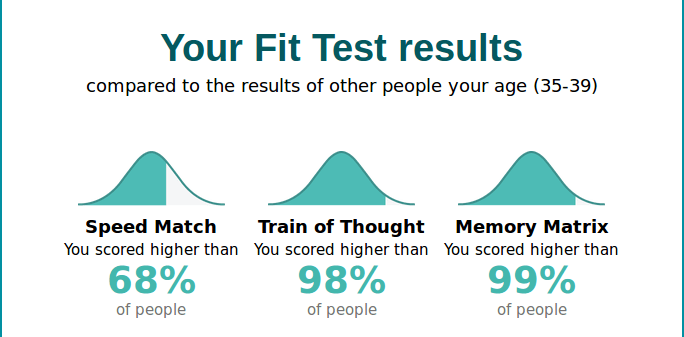
Cognitive Games and Tests from Lumosity
Seems accurate. I’ve always needed time and space to think.
:-)
Alexander Dugin — the schizophrenic death throes of a failed civilization (2015)
Reading a lot of Alexander Dugin.
His writings are the schizophrenic death throes of a failed civilization. He feels the encroachment of the truth telling / rule of law civilization. He’s alarmed by his people’s demonstrated preference for it.
So he is spouting completely schizophrenic nonsense trying to appeal to every perceived enemy of the West and unite them. He even admits it: “The most important factor should not be whether these groups are pro-Russian or not. What they oppose is of much greater importance here.”
But his resulting ideology is a complete mash of incoherent, contradictory nonsense. He supports everything
from communism to federalism to nationalism,
from Islam (“an organic part of the Russian whole”) to Christian traditionalism,
from nationalism to multiculturalism,
from local autonomy to a powerful centralized state,
all of it quietly funneled into Russia’s tired, centuries old paradigm of “greater Russians” being first among equals.
He will have some success appealing to the rank and file of dissenting political movement, but any serious thinker will recognize him for the desperate fraud he is.
The salvation of any people remains rule of law, property rights, truth telling, and the willingness to enforce it. Unfortunately, Russia needs to change on a very fundamental level before these things are perceived as pluses. Myths need to die and power structures with them. The Soviet Union needs to finish collapsing. People do not want what Muskovy is selling.
No, Dugin, NATO isn’t aggressively expanding. All the people on Russia’s periphery, having known the hell on Earth that Moscow creates, are inviting it, desperate to escape the miasma of Russian “civilization.”
***
Notes and quotes:
Dugin (quoted by Shenfield): “The meaning of Russia is that through the Russian people will be realized the last thought of God, the thought of the End of the World. . . . Death is the way to immortality. Love will begin when the world ends. We must long for it, like true Christians. . . . We are uprooting the accursed Tree of Knowledge. With it will perish the Universe.”
Read more at: http://www.nationalreview.com/article/380614/dugins-evil-theology-robert-zubrin
Dugin: “Chechnya is at the center of contemporary Russian statehood” The hope here is to spread an image of Russia as a state that defends the “traditional societies”
the political space united long before bolshevism and representing Greater Russia as the political entity based on the civilizational similarity between the history and the cultures of different ethnical groups and peoples.
schizophrenia: By defending the multiplicity, plurality, and polycentrism of cultures, we are making an appeal to the principles of their essences, which we can only find in the spiritual traditions. But we try to link this attitude to the necessity for social justice and the freedom of differing societies in the hope for better political regimes. The idea is to join the spirit of Tradition with the desire for social justice. And we don’t want to oppose them, because that is the main strategy of hegemonic power: to divide Left and Right, to divide cultures, to divide ethnic groups, East and West, Muslims and Christians. We invite Right and Left to unite, and not to oppose traditionalism and spirituality, social justice, and social dynamism. So we are not on the Right or on the Left. We are against liberal postmodernity. Our idea is to join all the fronts and not let them divide us. When we stay divided, they can rule us safely. If we are united, their rule will immediately end. That is our global strategy.
I am Russian Orthodox. This is my tradition. Under different conditions, however, some individuals might choose a different spiritual path. What is important is to have roots. There is no universal answer. If someone neglects this spiritual basis, but is willing to take part in our struggle, during the struggle he may well find some deeper spiritual meaning. Our idea is that our enemy is deeper than the merely human. Evil is deeper than humanity, greed, or exploitation. Those who fight on behalf of evil are those who have no spiritual faith. Those who oppose it may encounter it.
[On nationalist groups]: The most important factor should not be whether these groups are pro-Russian or not. What they oppose is of much greater importance here. The enemy of my enemy is my friend. It is simple and easy to understand. If we adopt such an attitude in order to appeal to all possible allies (who either approve of us or who do not), more and more people will follow suit – if only due to pragmatism. In doing so, we will create a real, functioning network – a kind of Global Revolutionary Alliance. It is important that we pursue a strategy of uniting the Left and the Right everywhere, including in the United States.
Muslims form a part of the Russian population, and are an important minority. Therefore, Islamophobia implicitly calls for the break-up of Russia. The difference between Europe and Russia in our attitude toward Islam is that, for us, Muslims are an organic part of the whole, while for Europe they are a post-colonial wave of re-invaders from a different geopolitical and cultural space. But since we have a common enemy in the globalist elite, which is pro-Pussy Riot/Femen, pro-gay marriage, anti-Putin, anti-Iran, anti-Chávez, anti-social justice and so on, we all need to develop a common strategy with the Muslims.
I suggest the return to the ethnic organization: French Quebec should be French and so on. However, this should not be achieved in the process of creating a new national state, but cultural rights should be granted in the geopolitical context by the Imperial Constitution.
AD: China is also a unique civilization, but its pretensions to world domination and the assertion of Chinese values as universal are nowhere near as intrusive, as large-scale, as persistent as the pretensions of Western civilization. Russia in this case does not at all claim that it is an exceptional civilization among others. It says that it is simply a civilization, distinct, having its own system of values, its own philosophy, and that it should be compared not with France or Germany, which also differ from one another, but with all Europe, or with Asian culture.
VP: But there is no such civilization as “all Europe”.
AD: There is. European civilization; Western-European civilization. This European civilization is a completely precise, concrete collection of values, notions, ideas, methods, procedures, which have been imposed over the course of many centuries […] as universal. And this was at first imposed on Eastern Europe, Byzantine; then through colonialism on everyone else.
Ukrainians aboard the Millennium Falcon

Andrey Kolodyuk: Building a startup nation is a new Ukrainian dream
Two months ago I welcomed a delegation of European investors and tech entrepreneurs for the informal 3-day WEF/YGL/GS Ukraine Discovery Tour in Kyiv. I met them at the World Economic Forum in Davos in January and invited to Ukraine despite skeptical views on the “country in war.”
These views weren’t surprising because of the Russian propaganda that displayed the war with the purpose to scare off all business people and investors.
“So how is it in Ukraine? What’s going on with businesses? What was it like before the war?” – these were the first questions I was attacked with. So I told the story straight and fact-full. . . .
We have over 2,000 startups, about 100 global R&D centers, more than 500 outsourcing firms and 100 e-commerce companies. All of them add up to over $5 billion industry’s volume worth as of late 2014. The figure could be higher if it wasn’t for the economic downturn.
Creating an enterprise software startup with 20 people on the team working for at least 2 years would take $10 million if it was in the U.S. In Ukraine, the same team for the same time span will cost 10 times less. Just think about it. It is possible to raise $1 million in the U.S., develop the product here and then return with the developed product to sell it in the U.S. . . .
There are more than 50 Ukrainian companies with valuation of $20-100 million that operate globally.
Країна Моксель, або Московія – expose book on Ukrainian History
I would LOVE there to be a translation of this book.

Russia and the U.S. Environmental Movement
Our report begins where the Senate report ended, with Klein Ltd. Klein Ltd., a corporation that “only exists on paper” and is based out of a Bermuda law firm called Wakefield Quin, gave $23 million dollars to environmental bundler Sea Change Foundation from 2010 to 2011, which has given tens of millions to other U.S. environmental groups. While it is unclear who is funding Klein, the law firm controlling this shady offshore funder of the U.S. environmental movement has ties to Russian money laundering, a friend and advisor of Vladimir Putin, Russian oil production, and more.
According to its Articles of Incorporation, Klein was formed by two employees of Wakefield Quin (WQ), a Bermuda law firm. A Klein director and WQ senior counsel, along with another WQ senior counsel, have pasts that should be considered questionable at best. Both held directorship positions in a group, owned by Russian minister of telecommunications and longtime Putin friend Leonid Reiman, which was the subject of a 2008 money laundering case. The group was ultimately convicted in British Virgin Islands court.
WQ’s Russian involvement doesn’t stop there. Marcuard Spectrum, a Moscow-based investment firm, operates a hedge fund in Bermuda based out of WQ’s office. Both of the aforementioned WQ lawyers are listed in leadership positions. Further, one of the founders of Marcuard is also the chair of Russian-owned oil giant Rosneft.
There have been significant questions about whether foreign interests—particularly Russian—are funding attacks on U.S. natural gas because it would hurt the Kremlin. Here we have a major foreign funder of the U.S. environmental movement tied through its Bermuda office to Russian money laundering and the Russian government.
https://www.biggreenradicals.com/wp-content/uploads/2015/01/Klein_Report.pdf
Removing Soviet Symbols in Kharkiv (from June)
Interviews with the Chechen commanders from both sides
http://www.theguardian.com/world/2015/jul/24/chechens-fighting-in-ukraine-on-both-sides
The new commander of the Dzhokhar Dudayev battalion since Munayev’s death is Adam Osmayev, a British-educated Chechen who spent two years in jail in Odessa, charged with hatching a plot to assassinate Vladimir Putin. He said the charges were trumped up. He was released from prison late last year and said he was on the frontline “within a day or two”. He is hoping that Ukraine’s government will officially allow foreigners to fight in its army in order to entice Chechens away from fighting in Syria.
“People are going from Chechnya to the Middle East out of a sense of hopelessness; if the Ukrainians made the right conditions they would come here instead. Many people go there not from ideology but are brainwashed when they get there,” he said.
Another Chechen man who did not want to be named said he was trying to persuade other Chechens, via online forums, not to travel to the Middle East but to come to Ukraine instead.
“Why are Chechens fighting for Isis, why are they fighting against Kurds who have never done us any wrong? For Kobane, which they had never heard of before? That is not a Chechen war. This, here in Ukraine, is a war for Chechens. If we defeat Russia here, we are closer to freeing our homeland.”
***
He, too, has a personal history of fighting the Russians, and of personal tragedies. Two of his cousins were captured, tortured and executed in 2001 by Russian troops, Bolotkhanov said, despite the fact they were “completely peaceful people”.
But when Kadyrov’s father, Akhmad-Khadzhi Kadyrov, first took over the reins of the republic, men like Bolotkhanov who had fought against the Russians were given the chance to be amnestied and join the new battalions loyal to Kadyrov and Russia.
“In 2002 I signed up for the battalions and served until 2012, ending with the rank of major. I performed the hajj six times. If I had stayed with the rebels, or if the war had continued, I would never have had that opportunity. It’s all thanks to Kadyrov.”
He said there is nothing strange about Chechens fighting alongside their long-standing enemy, Russia.
Ex FSB [Russian Intelligence Service] Agent: Russia supports radical Islam
Not a lot of data in the interview. Mostly you get the sense that they support radical Islam by having Chechens and Dagestanis in the population who hand out money.
At the end he calls Russia a “giant with clay feet”.
St. Nicholas Day!
St. Mykolai (in Ukrainian) is a patron of common people, children, prisoners and captives.
Near our apartment stands St. Mykolai’s church. It was very crowded. Yulia and I went to place candles. There was a long line to buy candles and an even longer line to place them or to pray directly in front of the icon to St. Mykolai. We bought candles and placed them elsewhere in the church.

Top Jewish-Soviet spy who spied on Israel dies at 97
“He was a Communist who acted out of conviction and gratitude to the Red Army for having allowed him to fight the Nazis who massacred his entire family in Poland,” daughter Sylvia Klingberg told AFP.
Klingberg had always maintained that his motivation for spying was ideological and not financial.
Born in Warsaw into an ultra-Orthodox Jewish family, Klingberg fled Poland during the Nazi invasion in 1939 and made his way to the Soviet Union, where he studied medicine.
In 1941, after German troops entered the Soviet Union, he enlisted in the Soviet army.
He returned to Poland at the end of the war, where he discovered that his parents and brother had died in a concentration camp. He emigrated to Sweden, then to Israel shortly after the state was created in 1948.
He served in the Israeli army’s health services, attaining the rank of lieutenant colonel and specialising in epidemiology. He joined the top-secret biological institute, located in Nes Ziona south of Tel Aviv, in 1957.
Israeli suspicions turned toward him in 1963 and there were suggestions that his spying began long before, but he was arrested only 20 years later in 1983 with the help of a double agent codenamed Samaritan.
Paper about Crimea — good historic survey data
This paper: http://opus.bath.ac.uk/36013/3/Malyarenko_and_Galbreath_Crimea.docx.pdf
***
According to the census of 1939, Crimea constituted: Russians 49.6%, Ukrainians 13.7%, Crimean Tatars 19.4% and Jews 5.8%. After the deportation of the Crimean Tatars following the Second World War to Central Asia, the territory of Crimea was populated by Russians and Ukrainians. To illustrate the change, in the 1959 Soviet census (first census after WWII) the population of Crimea consisted of Russians 71.4%, Ukrainians 22.3% and Jews 2.2% (Polyan 2001). In accordance with the last census in 2001, the Slavic (Russian and Ukrainian) population of Crimea are approximately 58.5% and 24.4% respectively (National Population Census in Ukraine, 2001).
***
According to opinion polls in May 2009, 32.3% of Crimean residents supported an idea of separation of Crimea from Ukraine. In May 2011, this rate fell to 24.4%.
Furthermore, the number of residents who would support a plan for a Crimean Russian national autonomous region inside of Ukraine has also decreased (19.5% in 2009, 2.3% in 2011). Instead, the percentage of residents supporting a broad autonomous region inside Ukraine has increased to 30.9% (Opinion Polls: Crimea, 2006-2011, Razumkov Centre).
***
Any separatist activity of the Tatar ethnic minority has been rarely analysed as a real phenomenon and a conflict factor in Crimea, but recent opinion polls show that at least 2% of Crimea’s residents support separation of the Crimea and subsequent annexation of this territory to Turkey, bearing in mind that Crimean Tatars constitute just over 12% of the regional population (Opinion Polls: Crimea, Razumkov Centre, April – May 2011).
***
In comparison to other regions in Ukraine, the process by which institutional exclusion occurs in Crimea is arguably more devastating, underwritten by corrupt commercial and political networks that are created around the illegal distribution of land with the full knowledge and even participation of local authorities. Local public servants play the decisive role and manage the process of the illegal land business.
US Airforce drops mock (inert) nuclear bomb
Exciting chess game I had online
Super blitz (3 minute chess):
http://www.chess.com/livechess/game?id=1373206920
Notes:
7… Bb7 was his attack on my e pawn.
8 Nc3 was my erroneous defense of my e pawn — erroneous because the knight could easily be chased away. I realized it as soon as I made the move, and he realized it too.
8… b4
So, rather than concede the loss of a pawn, I decided I would make an interesting game — I’d sacrifice that hapless knight in exchange for blowing open his center and (hopefully) stranding his king.
In quick games, like 3-minutes super blitz, you can get away with dramatic, if not completely sound moves b/c the opponent doesn’t necessarily have time find difficult defensive moves, and might get rattled too.
May05 2015 in #Donetsk bas-relief of Ukrainian poet Stus from Donetsk was removed.


Russia Funds “anti-Nazi” and other NGOs in the Baltics

It’s an open secret in the Baltics that Russia financially supports local NGOs who defend its policies in Estonia, Latvia and Lithuania. The only unknown is how generous that support is. The investigation by Re:Baltica shows that there are more than 40 such organizations in the Baltic states that have received at least 1.5 million euros through legal means in the last three years, according to the most conservative calculations. That excludes cash transactions and financing through Russia-friendly enterprises and individuals. It is impossible to say precisely how much of their income is from the Russian government funds, because part of the recipients do not declare it in their annual reports.
http://en.delfi.lt/nordic-baltic/kremlins-millions-how-russia-funds-ngos-in-baltics.d?id=68908408
^^ The article names a lot of specific organizations in the Baltics.
http://en.delfi.lt/nordic-baltic/kremlins-millions-how-russia-funds-ngos-in-baltics.d?id=68908408
A Russian priest blessed a base of strategic bombers w/the icon of Joseph Stalin.
Truth doesn’t matter in Russia. Appealing to intuition does.

Heritage Foundation: U.S. Comprehensive Strategy Toward Russia
This analysis from Heritage Foundation is the best I’ve read.
The policy recommendations are good, though it is much better to support a Baltic-Black Sea alliance than it is to expand NATO’s role.
Aside from that, one very slight disagreement with “Since at least the 17th century, Russia has been torn—and has oscillated—between viewing itself as a basically Western nation or as a great and imperial power that embodies values apart from those of the West and has historical license to control its neighbors”.
The only thing which has oscillated is the West’s perception of Russia.
Read the story here or my notes below:

At the core of the U.S. failure has been an unwillingness to assess the nature of the Russian regime realistically and to base its policy on that assessment. Too often, the U.S. has relied on wishful thinking. . . .
Since 1991, U.S. policymakers, scholars, and journalists have largely operated under the assumption that post-Soviet Russia was on a bumpy and faltering, yet real road to democracy. This assumption has blinded observers to the reality that Russia was on a successful road to becoming a kleptocratic autocracy. Of course, this regime has not succeeded in modernizing the Russian economy, reversing its catastrophic demographic collapse, or fostering the creation of widespread wealth. But since the mid-1990s, Russia has not been journeying haltingly toward freedom. Instead, its leaders, in particular Vladimir Putin, have intelligently and systemically directed it toward becoming what it now is: a functioning, well-developed tyranny.
The U.S. failure to recognize Russia’s direction of travel and its destination has led the U.S. to adopt a strategy based fundamentally on the belief that the best way to foster democracy in Russia was to engage with it. Russia was invited into international organizations that nominally required its members to be wealthy democracies, when in fact Russia was neither. The arrival of Dmitry Medvedev as Russia’s president in 2008 was taken as a serious advance of Russian democracy and a harbinger of better things to come, not as the head fake it actually was.
. . . . U.S. concessions did not improve U.S.–Russian relations; instead, they convinced the Russians that the U.S. was willing to accord Russia an equality of status and a regional role that Russia’s actual achievements did not merit.
The engagement strategy sought to treat Russia as the U.S. hoped it would become, not as it actually was, in the belief that this was the best way to ensure that Russia made progress. In practice, all this strategy did was enable Russia’s move to autocracy and, far more importantly, encourage the U.S. to excuse Russia’s failures. . . .
By this way of thinking, pointing honestly to Russia’s human rights abuses or its wars in Chechnya and Georgia was an impediment to the development of democracy in Russia, because by pointing out the negative, the U.S. failed to accentuate the positive. This is a textbook example of the soft bigotry of low expectation. . . .
Russia’s apologists argue, vociferously, that the U.S. was responsible for the deterioration in U.S.–Russian relations. . . . This argument assumes that Russia has a right to exercise a neo-imperial control over its neighbors and that those neighbors have no corresponding right to determine their own destiny. What the Russian regime could not tolerate is quite simple: any independent sources of power on its borders or inside them that could resist the regime’s will. . . .
Since at least the 17th century, Russia has been torn—and has oscillated—between viewing itself as a basically Western nation or as a great and imperial power that embodies values apart from those of the West and has historical license to control its neighbors in the name of increasing its power and advancing its concept of civilization. . . .
Russia is a problem that will be with the West for a very long time, although its urgency will wax and wane. . . . the problem ultimately comes back to Russia’s view of its own national identity and role in the world.
. . . the gap between appearances and reality is large. While American policymakers need to recognize the reality of Russian autocracy and hostility, they should not give Russia too much credit. The fundamental reality is that time is not on Russia’s side. It has made a geopolitical splash for reasons that are as simple as they are fragile: Russia has many weak neighbors. It benefitted from the high price of oil. It faced little effective Western pushback, and as an autocracy it is capable of mobilizing force and subversion in ways that Western democracies find difficult. Yet none of its actions since the mid-1990s have added in any enduring way to its strength. The path to world power does not lie in crushing Chechnya, occupying slices of Georgia, or taking Crimea. These are not assets. They are liabilities.
Russia is a declining power with feet of clay in every way except for the size and geopolitical centrality of its territory, its energy resources, its nuclear arsenal, the modern portion of its conventional armed forces, and above all its willingness to attack, subvert, and play the spoiler. If not for these factors, Russia would be of only very limited significance to U.S. policy. It can play what is fundamentally a weak hand because it is regionally strong and acts stronger than it is, while the U.S. and Europe have cared little, done less, and shown less will. Russian weaknesses would come into play if the West pressed its advantages.
. . . . differences between today’s Russia and the Soviet Union are immense. In the aftermath of the Second World War and during the decline of the European empires, Communism was—regrettably—an appealing ideology for many. Today’s Russia has no wide ideological appeal. It is too assertively Russian to appeal to others. Putin’s hatred of the West has a broader appeal, but is not unique to him, and those who share it—such as the Islamists—frequently detest Putin as well. . . .
Russian gross domestic product (GDP) in 2013, before the energy price crash, was just over $2 trillion, approximately the size of Italy’s economy. The energy sector accounts for up to 30 percent of Russia’s GDP, which makes it particularly vulnerable, financially and socially, to energy price declines. . . .
Yet just because Russia is far weaker than the Soviet Union does not mean that the U.S. should ignore facts. As long as Russia openly and avowedly defines itself against the U.S. and the Western order, a rivalry is inevitable. . . .
Putin’s primary goal is to stay in power. For that reason, he has murdered, driven abroad, imprisoned, or bribed the domestic opposition, and therefore views the possibility of a Western-aligned Georgia or Ukraine as a threat. He does not fear their power or worry that they will be the avenue for a Western attack. He worries that they will give the Russian people ideas. . . .
Putin correctly assesses that time is not on his side. . . . Therefore, one essential element of U.S. comprehensive strategy toward Russia is to be calm, and to commit clearly and credibly to defending its allies and interests. In a situation in which one side believes that force works, ambiguity is a dangerous strategy. . . .
Precisely because it has no great need for day-to-day ideological consistency and no democratic accountability, it can play the spoiler extremely effectively. For example, it welcomes Edward Snowden and plays the role of friend of the Internet, while simultaneously launching cyber attacks and practicing online censorship. . . .
U.S. strength rests in the long-run competitive economic and political superiority of its system, which is precisely Russia’s weakness. Of course, this does not eliminate the need for short-term U.S. responses and initiatives as part of a long-term strategy of trying to match U.S. strengths against Russia’s weaknesses. But in many areas, the U.S. can afford—and should want—to play defense. . . .
The Putin regime’s fundamental weak points are that it:
– Lacks wide ideological appeal outside Russia;
– Has no coherent economic strategy that can address its long-run problems; and
– Relies on the appearance of strength, on having or inventing a run of successes, and on repression to remain in power.Thus, the basis of a U.S. comprehensive strategy toward Russia is to play on its lack of ideological legitimacy by emphasizing its reliance on repression, to employ policies that increase the costs to Russia of Russian actions that the U.S. finds undesirable, and to make it harder for the regime to project an appearance of strength and success by placing Russia in positions where it must pay these costs or give up.
When Americans think about comprehensive strategy toward Russia, they often return to the policy of containment. This is not a helpful approach. . . . The U.S. approach should instead be to seek to impose costs on Russia—reputational, rhetorical, economic, financial, and military costs. . . . Russia will always be able to gain a short-term advantage by doing something, such as invading Ukraine, that the U.S. cannot immediately counter. But the long-term cost of such victories for Russia will be high, and the U.S. can and should make them higher. . . .
The long-run prospects for the Russian economy are bleak. Russia is a failed, corrupt petrostate with a rapidly aging population. Russia’s economy is deteriorating. It was slowing significantly before the rapid fall in energy prices and is expected to contract by 4 percent in 2015. Capital flight has accelerated, and the ruble’s depreciation has increased inflation to double digits. . . .
There is a fundamental asymmetry between the values of the U.S. and the values of its adversaries. While the U.S. values its citizens, economic prosperity, and institutions, U.S. adversaries value leadership survival above all. The U.S. should develop precise means to credibly threaten what its adversaries value and deploy both passive and active defenses to remove the benefits adversaries might gain by attacking the U.S. or its allies. . . .
Russia has rarely, if ever, signed an arms control treaty that it did not violate. Russia is in violation of the Helsinki Final Act, the Istanbul Commitments of 1999, the Presidential Nuclear Initiatives, an agreement to remove its military from Georgia and Moldova, the Conventional Forces in Europe Treaty, the Budapest Memorandum, the Chemical Weapons Convention, and the Intermediate-Range Nuclear Forces Treaty (INF). Russia is possibly in violation of the Biological Weapons Convention and the Comprehensive Test Ban Treaty as interpreted by the United States. The U.S. should itemize, publicize, and emphasize all of these violations and refuse to negotiate additional agreements or renew previous agreements until the original Russian violations are corrected. . . .
Russian Treaty Violations
#russialies
Russia has rarely, if ever, signed an arms control treaty that it did not violate. Russia is in violation of the Helsinki Final Act, the Istanbul Commitments of 1999, the Presidential Nuclear Initiatives, an agreement to remove its military from Georgia and Moldova, the Conventional Forces in Europe Treaty, the Budapest Memorandum, the Chemical Weapons Convention, and the Intermediate-Range Nuclear Forces Treaty (INF). Russia is possibly in violation of the Biological Weapons Convention and the Comprehensive Test Ban Treaty as interpreted by the United States. The U.S. should itemize, publicize, and emphasize all of these violations and refuse to negotiate additional agreements or renew previous agreements until the original Russian violations are corrected.

