

Author Archives: RomanInUkraine
Prague is like a rennovated L’viv on steroids
I remain biased toward L’viv, but holy smokes! What a cool city.
Are those Kozaks as secondary figures in some of the sculptures on the Charles Bridge?




Crossing to the EU, and a decade ahead in development
The cost of seeing Europe is, at a minimum, a three hour border crossing from Ukraine.
At first it’s depressing. Instantly, one recognizes how much poorer Ukraine is. You realize how bad Ukraine’s roads are, how shoddy the housing is, how long the buildings in the city centers have gone without repair.
I tell myself that the gap is opportunity. Having grown up in a fully developed economy, I know what the future looks like. A huge advantage for an entrepreneur. The future, that is, if Ukraine doesn’t first bleed out from its parasitic bureaucracy.
Russian corrected to Ukrainian Bus Poster
In Western Ukraine, there is a strong preference toward the national language. :)

Arsenal 2012 — Fantastic Art Exhibit!
http://arsenale2012.com/home/?lang=eng
Artists from all over the world.
“the toilet paper is softer in America”
Before I returned to Ukraine, a American who’s lived here for almost a decade advised that it’s not for everyone. “The toilet paper is definitely softer in America,” he said.
He was talking about all the little things which are more difficult in Ukraine. These are no big deal in my opinion, but they are interesting.
***
First, some reasons I prefer Ukraine . . . for now:
All in all, I feel safer in Ukraine than in the US, especially from violent crime.
Toilets work. (The privately owned ones, that is.) For an expose on American toilets see Jeffrey Tucker’s, The Relentless Misery of 1.6 Gallons.
The markets are much less developed. Opportunities abound. I walk around everyday and imagine various enterprises. I think: “this could work. That could work.”
Although there are real, devoted advocates of economic Marxism here, everyone considers them ridiculous. I think they’re mostly devoted to the sacrificed their ancestors made to the red banner and hammer and sickle. As I’ve written before, when an endeavor is sprinkled with the blood of good people, it becomes its own justification, regardless of whether or not is a moral and economic abomination. In the U.S. Marxism is treated like a good idea that hasn’t yet been properly implemented.
There is less cultural Marxism here. It is okay for women to be beautiful and men to be manly and people to be successful.
There is less of a slave mentality (maybe). Although the U.S. still has the hottest entrepreneurial talent in the world, by far, I feel like most Americans now have a slave mentality. They want to be caged and taken care of by the state. Perhaps it’s because government in Ukraine is such an obvious and spectacular disappointment, that most people (excluding pensioners) don’t expect anything from them.
***
Now, the bad:
1. Opening a door. There seems to be a 50/50 chance that the door will bump into another door, or a closet, or a person standing by the sink of a restaurant’s bathroom. Things aren’t designed as well in Ukraine.
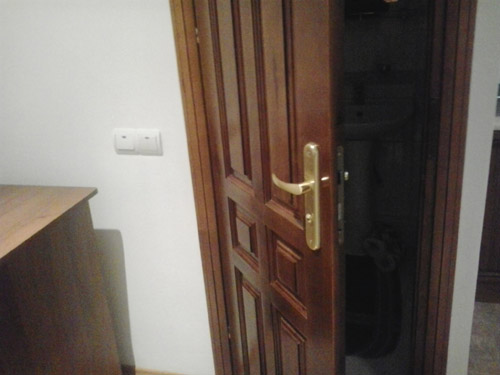
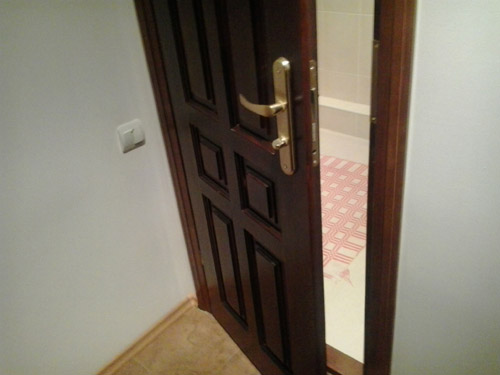
2. Turning on a light. In most apartments that majority of light switches are centrally located. It’s as if the home’s commissar, following in the great socialist tradition, wanted a commanding height from which to bestow the blessing of light upon his subjects who are obviously too stupid to do it themselves. The result — I spend frustrating seconds switching lights on and off until I see, through the cracks of a door at the end of the hallway, that the proper switch has been flipped.
In renovated apartments, the light switches are no longer centrally located, but they are poorly placed. You have to reach around a door, for example, to flip the switch.
3. Unplugging something. If you’re not careful, the plastic socket casing will come out of the wall pulling guts and wiring with it.
4. Browsing the internet. It has to do with how IP addresses are assigned. When I unplug one laptop and switch the ethernet cable to the other, I have to wait for 30 minutes before I can use it. (This was solved when I got WIFI.) Also, if you misspell your password just once on a Ukrainian website, you’re immediately confronted with a Captcha verification. No second chance.
5. Showering. Hot water is unreliable, even in my gym. It’s getting much more reliable, though! Some building have gigantic water heaters beside them — again the Soviet lust from centralized control — but little by little, people are installing private water heaters in their homes. Many bathrooms are small and crowded, and many showers are handheld, with the fixture for fastening the nozzle above you broken. I’m learning to wash single-handed.
6. Going to a restaurant. There is the generally poor customer service which I’ve written about before. There seems to be a common practice of labeling every table “reserved” on certain nights. A place will be half empty, but every seat and table will be marked “reserved,” and you’ll get scolded for sitting there. (What the fuck?) You’d think they’d welcome your money. They don’t even offer to sell you a reserved table. Perhaps it’s up to me to offer them money. I don’t understand this system.
7. Shopping. A store may be locked during normal business hours with no explanation. Or, the main door may be locked and you’ll never realize that only the side, alley-way door is open. When you point it out, the lady behind the counter will have no idea why you’re bothering her with such trivialities.
Also, in Soviet times, shops were run by the government. The clerk, much like the clerks Americans interact with at the Department of Motor Vehicles, is a government employee who enjoys a monopoly on the “service” they offer. They were rude as hell, and asserted their authority by abusing customers. The legacy of this is that some retail people assert their authority by being rude. This is changing slowly. The free market takes time. Businesses with bad customer service has to go bankrupt or change. The best ones will slowly increase their market share. The further a market is from free, the slower this process. Also, you have to pay for your bag and bag your items yourself.
8. Finding your way around. Street signs are not located at intersections. They are *sometimes* located on little placards on buildings. I’ve walked a quarter mile trying to figure out the name of the street I had turned onto.
Address numbering is weird. It can still be in the single digits on one side of the street, while on the other they’re reaching the thirties. Some addresses are inside courtyards accessible only by alleyways.
Also, major roads in Kyiv (and in some other cities) are crossed by going through underground passageways. They are often filled with shops and it’s impossible to go the direction you think you need to go.
9. Checking a movie listing. Once while walking through Kyiv, sounding out the names of stores, I noticed a ‘kinoteater,’ a theater. There was no brightly lit sign depicting movie listings as one may find in the US, so I went inside. I studied the various posters and announcements above the ticket booths, but found no listings until a crowd off to one side attracted my attention. They peered over each other’s shoulders to study an 8 1/2 by 11 sheet of paper taped to the wall below eye level on which the listings were printed in black & white. Hunger Games was not playing.
10. Water deliveries. Despite repeated promises, they don’t arrive. (Ukraine’s tap water is non-potable.)
11. Calling a cab. The operator of a cab company hung up on me suddenly and without explanation as soon as we began to have difficulty understanding each other. When I called back the first time, the same lady answered. She recognized my voice and hung up instantly. I called back a third time, got a different operator and ordered my cab. I still use them, because they’re inexpensive and tell you the price beforehand. When no cabs are available, sometimes you’ll get a text message telling you. Sometimes they just leave you waiting.
12. When it rains neither umbrellas nor taxis seems to be available.
13. Interpersonal space. Ukrainians sometimes have a strange sense of it. Example #1: When the metro leaves a station, it is not usual to be tapped on the shoulder immediately and asked whether you’re getting off at the next station, simply because you’re standing between another person and the door. They expect to switch spaces with you even if it’s too crowded to switch spaces, even if you’re the only person between them and the door, and even if you’re a nice person who always gets out of the way for people.
Example #2: I went to eat at an inexpensive local buffet style restaurant called Puzata Xata. There were many free tables, but beside the windows, there was only one. A small table. It had a blue folder on it. I didn’t see anyone nearby, so I sat there and began to eat. A middle aged woman put her tray down opposite me and sat down. She rummaged through her purse. “Was this table taken?” I asked in Ukrainian, ready to move elsewhere if it was. She seemed not to hear me. I asked again, a little louder. She didn’t react in the slightest, and I wondered if she was deaf. “Excuse me,” I said in English. Again, no reaction. She pulled a cell phone from her purse, and then I knew she wasn’t deaf. She was ignoring me. “Was this table taken?” I asked again in Ukrainian, determined to get an answer. She looked at me angrily and said “Well sit. It’s a common area. Sit and eat. What do you want?” We both ate our food, sitting just a few feet apart facing one another. Both of us took phone calls during our meal. I left when I finished.
14. Boorish behavior. The lady behind me in line at the supermarket kept tapping my bag, accidentally, I thought. I was in a good mood and felt more shocked and amused than irritated. She seemed to be with her husband or lover. He was whispering softly to her in Russian. I guess her tapping was supposed to be a hint that I didn’t grasp. Eventually, she shoved me from behind. I turned around, shocked. She raised her chin defiantly. The man immediately grabbed her and moved himself between us. He scolded in in the same gentle, lover’s voice. The line was unusually long and slow — late night rush. Eventually, she shoved me again. I think she felt frustrated that I wasn’t crowding the person in front of me. I turned around and again the man put himself between us, and lectured her. I did too. I told her I was a foreigner. That in America people don’t push each other. She waved her hand dismissively and said something like “move along America.” Her man continued to gently berate her in a lover’s voice. He said something like “this man came all the way from America to visit us and his is how you’re treating him.”
Pretty pathetic behavior from an adult. I was on my way home from Brazilian Jiu Jitsu and therefor in a good mood. I was more stunned than anything else.
15. Banking. This is related to the interpersonal space issue. When I go to a bank, to inquire about my account, withdraw money, or the like, the people behind me in line are right up in my shit. Their noses are on my shoulder. They watch closely as I fill out forms, count money. Sometimes they pretend I’m not there and begin conversations with the teller while she’s in the middle of helping me.
16. Leaving your apartment. You need a key, sometimes two. This is a fire hazard catastrophe waiting to happen.
17. Toilets in public places. You have to pay an attendant. Despite that, they are filthy. Often, they are squat toilet. Often, they are filthy squat toilets. Filthy, pay squat toilets.
18. Old ladies closing the windows on public transportation. Okay, so most public transportation is crowded, a little dirty, uncomfortable, etc. Ukraine’s public transport has the added feature of, old women who sincerely believe that drafts (as opposed to germs) cause disease. It’ll be miserably hot, steamy and smelly on a public bus, and some idiotic, sweater-clad babushka will insist that the windows be shut. She’ll insist as if her life depends on it, because she believes it does.
19. Removing a price tag, especially from a cup or dish. They don’t have the ones that come off smoothly like in America. These bastards are sticky and fall apart. Once you’re done picking off the paper — one torn bit at a time, you have to use a scouring pad to remove the glue from your new dishes.
(I’ll likely be expanding this post as more things occur to me.)
I like to describe Ukraine as not quite designed for humans . . . yet. Socialism is not designed for humans, and Ukraine, given the perversion and distortion that characterizes it’s two decades of lurching away from the Soviet system, is recovering slowly.
Wood products from Ukraine
They say exports are really hard from Ukraine because of a 20% VAT. I’m happy to see an old friend of mine working for a company that’s trying to export natural Ukrainian wood products:
They make floorboard, decking, clapboard, window trimmer and skirting-board (плинтус).
The Philosophy of Liberty
Oops. This year-old post somehow got saved as a draft. Great stuff:
Individualist video translated into Ukrainian:
http://www.jonathangullible.com/mmedia/PoL.Ukrainian.%282006.10.04%29.swf
(Thanks, Ed!)
English version here.
And of course, there are many Ukrainian-language resources at mises.org.ua.
Headlines, May-June 2012
Russian Millionaire Tosses Paper Money Planes Out of Office Window, Laughs as People Brawl Over Them
Pavel Durov, founder of the popular Russian Facebook-alike VKontakte, took a bread-and-circuses approach to generosity over the weekend, spending time with VK’s vice president tossing paper airplanes made of money out of the company’s St. Petersburg offices.
A crowd soon formed outside the building, eager to catch every 5,000-rouble ($160) bill Durov and his cohort were throwing. As tends to happen in these situations, the scene quickly devolved into an all-out brawl.
“People turned into dogs as they were literally attacking the notes,” said one eyewitness. “They broke each other’s noses, climbed the traffic lights with their prey – just like monkeys. Shame on Durov!”
***
Ukraine’s Population in Rapid Decline
With ultra-low fertility rates and high death rates, Ukraine will experience the single largest absolute population loss in Europe between 2011 and 2020. Although the resulting labour shortages will push up real wages and thus benefit consumers, lower competitiveness and output will adversely impact the country’s long-term economic growth.
http://blog.euromonitor.com/2012/05/ukraines-population-in-rapid-decline.html
***
President Putin’s Return to power marked by deserted streets:
[youtube]mRuIzYnXXbw[/youtube]
***
Farmland moratorium end likely to be unpredictable
lex Frishberg writes: Nobody knows yet what rules will govern land sales.
Ukraine has long been called “the breadbasket of Europe,” and for one excellent reason: its fertile black soil. The estimated value of this treasure is anywhere between$ 40 and $80 billion. The only problem with investing in such an obviously profitable business was an artificial bureaucratic/legislative barrier commonly known as the “moratorium on alienation of farm land” (the “moratorium”).
As a background, the moratorium prohibits not only alienation of any land that is designated (zoned) as “farmland,” but it specifically bars all foreign citizens and foreign-owned companies from owning such land.
Consequently, foreign investors had no choice but to gain a foothold in agricultural land by leasing it directly from farmers who could legally own their small parcels. The lease term was usually either medium (up to 25 years) or long-term (up to 99 years), with an option to buy out such land whenever the moratorium was lifted.
***
Political threats to the Ukrainian language
Misinformation has accompanied the current language bill in parliament because of Ukraine’s complex linguistic situation. Unfortunately, Western journalists haven’t succeeded in clearing up the confusion and informing their readers of the real meaning behind this legislative initiative.
Sufficient legislation on language has long existed in Ukraine, offering generous – some say indulgent – guarantees for the Russian language and its speakers.
The binding legislation approved in 1989, “On Language in the Ukrainian Soviet Socialist Republic,” properly identifies the Ukrainian language as one of the decisive factors in the national selfhood of the Ukrainian people.
It called for the state to ensure the thorough development and functioning of the Ukrainian language in all spheres of social life, a principle that was subsequently adopted by the Ukrainian Constitution in 1996.
While giving priority to Ukrainian, the 1989 law also protects Russian language speakers, reflective of the Ukrainian people’s long history of tolerance towards its ethnic minorities.
The 1989 bill calls for the free development and use of the Russian language, which was buttressed in the Constitution of 1996, a document that goes even further in calling for the defense of the Russian language in Ukraine.
Specifically, it sets the conditions for the use of Russian, alongside Ukrainian, in state organs and enterprises. It allows for citizens to address state organs and enterprises in Russian, and for these institutions to respond in Russian.
The same bill allows for judicial proceedings to occur in Russian, including offering testimony and producing all documentation. It requires all state employees to command both Russian and Ukrainian and requires that students learn both languages, beginning in elementary school.
Therefore, the characterization offered by certain Western media (including the Associated Press and the Wall Street Journal) that the legislation approved by parliament on June 5 would allow the use of the Russian language in state institutions is false and misleading.
The Russian language has been alive and well in the state institutions of the majority of Ukraine’s oblasts and in most of Ukraine’s cities for the duration of the nation’s 20 years of independence. This is the case even after the alleged Ukrainianization during the Orange era [of ex-President Viktor Yushchenko and ex-Prime Minister Yulia Tymoshenko], which barely occurred. . . .
It was sponsored by alleged 2004 election falsifier Sergei Kivalov and provocateur-for-hire Vadim Kolesnichenko, who denigrates the Ukrainian language and culture at every opportunity he has in front of the media.
As the main reason, it’s worth noting that for the first time since the Orange revolts of 2004, the Party of Regions is no longer the most popular political force, according to an April poll conducted by the Razumkov Center, widely considered to be among the most reliable.
The Fatherland Party founded by imprisoned opposition leader Yulia Tymoshenko is now most popular.
The Party of Regions has lost significant support among its electorate, particularly with such maneuvers as passing an oppressive tax code and cutting social payments to veterans of the Afghan War and 1986 Chornobyl clean-up, many of whom live in the party’s cradle of support in the southeastern oblasts.
Indeed on the very same evening that parliament approved the first reading of the language bill, it voted on another bill that creates the opportunity to cut such social payments even further in 2013. Not a bad distraction, eh?
Then there’s the economy. The stock market is down 33 percent year-to-date and the National Bank of Ukraine can’t sell enough five-year notes, despite interest rates of close to 14 percent.
The National Bank also reportedly burned through $1 billion of its international reserves in May alone, bringing them down to $31 billion. Most recently, Business Insider ranked Ukraine as among the world’s five governments most likely to default.
Meanwhile, the Ukrainian government stands accused by the opposition of plundering close to a third of the $10 billion in state funds spent on Euro 2012, the evidence for some of which exists.
In its desperation, the Party of Regions has turned to the sensitive and volatile language issue as its last trump card to activate its core support base of pro-Russian radicals.
Unfortunately, these elements care little for establishing rule of law and independent jurisprudence in Ukraine, which are issues that are far more relevant to most Ukrainians as tangibly improving their day-to-day lives.
These radicals, who number in the millions, suffer from ignorance of the history of the land that they walk upon, wanting to live in a Ukraine without ever encountering the Ukrainian language that they were raised to hold in contempt by Soviet propagandists.
Ironically, their leaders, including Kolesnichenko, claim to embrace European values, alleging their position is in line with the European Charter for Regional and Minority Languages, a document whose letter and intent was to defend weak languages from extinction and to ensure their speakers retain the minimum of rights. . . .
The bill thereby dismantles safeguards in the few remaining institutions where the Ukrainian language is flourishing, namely education, voiceover dubbing in cinema and mass media advertising.
The legislation claims to defend such minority languages as Crimean Tatar or Bulgarian, yet there’s no chance that state organs – often lacking funds to pay heating bills or to buy floor cleaning soaps – can accommodate each 10 percent minority in a given district.
Conflicts will become inevitable between the various minorities and the default language will be the majority language in most regions, which is Russian.
The Kyiv Post has printed letters to the editor complaining about the presence of the Ukrainian language, such as voiceover dubbing in cinemas (Ukrainian-language dubbing is non-existent in DVD sales).
Foreign university students have also complained about courses taught in Ukrainian (though much of the coursework, particularly in mathematics and the natural sciences, has been in the Russian language).
Such complaints reveal indifference to the suffering of the Ukrainian people, who were persecuted, and often killed, for asserting their right to live in an environment that provides for the comfortable functioning of the indigenous language of most of these lands.
These complainers should consider that the Finnish language was subjugated centuries ago to the Swedish language, a policy supported by Finland’s own elite. Similarly, the Czech language was once subjugated to German by its own elite too. Ukraine’s so-called elite is no different, embracing Russian and laying the groundwork for the eradication of Ukrainian.
http://www.kyivpost.com/opinion/op-ed/political-threats-to-the-ukrainian-language.html
***
***
Ukrainian Govt’s Monolingualism Diagnosis
I’ve often remarked on the jaw-dropping stupidity of the Party of Regions currently misruling Ukraine. Whatever they do, they do badly. It’s not just that they’re extremists and thugs; it’s that they’re dumb extremists and cloddish thugs. Smart extremists wishing to destroy Ukrainian identity would never have appointed the widely reviled Dmytro Tabachnyk minister of education. They’d have done it on the sly. Smart thugs who want to destroy the opposition would never have beaten up Yulia Tymoshenko in jail. They’d have arranged for an accident on some country road. Smart crooks would never flaunt the money they’ve stolen. They’d dress like regular folk. Smart supremacists wishing to extirpate the Ukrainian language wouldn’t pass a law that will provoke a patriotic backlash. They’d just discriminate on the sly.
Why are the Regionnaires so dumb? Is it their provincial upbringing amid the smokestacks of the Donbas? Does it come from their Soviet educations? From inhaling too much polluted air? From drinking too much hooch? From getting punched in the nose a few times too many?
Well, I finally have the answer—from none other than the New York Times. In an article titled “Why Bilinguals Are Smarter,” Times science writer Yudhijit Bhattacharjee notes the following:
Speaking two languages rather than just one has obvious practical benefits in an increasingly globalized world. But in recent years, scientists have begun to show that the advantages of bilingualism are even more fundamental than being able to converse with a wider range of people. Being bilingual, it turns out, makes you smarter. It can have a profound effect on your brain, improving cognitive skills not related to language and even shielding against dementia in old age.
Sonofagun! Makes perfect sense to me. The Regionnaires are known for their unwillingness and inability to speak Ukrainian. Indeed, they’re proud of their single-minded dedication to Russian.
http://www.worldaffairsjournal.org/blog/alexander-j-motyl/ukrainian-govts-monolingualism-diagnosis
***
Billionaire Petro Poroshenko, Ukraine’s minister of trade and economic development decided to increase the tax on car imports. Poroshenko is also owner of struggling Ukrainian car company.
From Korrespondent:
Defending the initiative to increase taxes, Poroshenko said : “I contend that today there is every reason, so as to protect the Ukrainian market … and successfully developed its own production and increase investment in the industry.”
Just before the company Bogdan Motors has announced that production at its factory in Cherkassy decreased 2.08 times as compared to May last year. This fact once again confirms that Ukrainian consumers prefer foreign cars before production Bogdan Motors.
Train Stations and Supermarkets in Ukraine
First published in the Ukrainian Weekly, July 1, 2012:
L’viv-born economist, Ludwig Von Mises made the case that capitalism forces people, even enemies, to cooperate and serve one another. This is so evident, we often fail to see it.
Consider buying something at a store. It is typical for both customer and cashier to say “thank you.” This mutual expression of gratitude reflects how both parties benefit. The customer receives his product, and the cashier, on behalf of the owner, the customer’s money. They are both happier and the world becomes a better place.
The mutual benefit only occurs for businesses relying on voluntary patronage. It doesn’t exist where people profit from tax dollars — for example, at the train station. This brings me to my personal experience buying tickets in Kyiv’s “Vokzal.”
I was been told you can buy tickets online in Ukraine, but the website looks confusing. You must register. Also, after you buy them online, you go to the train station and cut in front of the many exhausted travelers waiting on long lines just to receive online-purchased train ticket. I can’t imagine doing that. So, for my stay in Ukraine, I’ve resorted to standing on lines at train stations to purchase tickets.


For my non-Ukrainian readers, let me clarify how horrible this experience is: The station is perpetually crowded and smells like body odor. By my estimate, the average wait in Kyiv is thirty minutes. You have to demonstrate your capitulation to the system by stooping to speak through a little portal to the impatient clerk. You have no idea what train tickets are available or how much they cost until you get there. A decision must be made the instant you get the information and there doesn’t seem to be any way to get an overview of what’s available.
You ask for Thursday night, they tell you, very rapidly what’s leaving on Thursday night, which types of cabins, times of travel and cost. It’s an awfully large amount of information to process quickly, especially for non-native speakers and especially if you’re a nice person sensitive to the impatience of the people behind you.
It gets worse.
On a recent visit to the train station a young man asked to cut in front of me, just as I reached the front of the line. Perhaps he had bought a ticket online. “Thirty seconds,” he said. I nodded. Good manners are only a weakness in a bureaucratically managed enterprise.
He was indeed finished in thirty seconds, but a lady sensed her opportunity and asserted her place behind the young man. I told her she couldn’t cut, and even posted my arm, but she snuck around my other side as soon as he finished.
She jumped straight into a heated argument with the clerk. The clerk refused something but she wouldn’t accept it and kept arguing. Eventually, the clerk put a cardboard sign in the window that read “Technical break,” dropped the venetian blinds, and left her booth, switching off the light.
This shouldn’t have caught me by surprise.
Various times are printed on the glass of the booth. Though they weren’t labeled, I’ve since learned these were the technical breaks. Each booth has five or six technical breaks during the day and they range from ten to sixty minutes in duration. This one was supposed to be twenty minutes long, and I decided to wait it out rather than move to a different line. She returned on time, but then spent five minutes counting money with another lady. When I finally had her attention, she told me that nothing was available on the day I wanted to travel, or the day after that. I couldn’t make an immediate decision about what to do, so I left empty handed.
Most Ukrainians would probably think: “Of course, that it how it works at the train station. That is how it always worked, and that is how it will always be until the end of time. There is no alternative.”
One must be able to imagine progress before achieving it. Imagine a supermarket. I shop at the Mega Market near Olympiski Stadium metro station. In fact, I went there just to cheer myself up after my failure at the train station. I like choices. I like polite people.
At Mega Market, I don’t have to ask which products are available. They are advertised with beautiful pictures and sometimes, attractive people hand me leaflets as I wander the aisles at my own leisurely pace. I get free samples. I can touch, hold and even smell things before I buy them. The biggest miracle of all, however, may be the checkout.
There is no glass between me and clerk. I don’t have to stoop. They smile and demonstrate good manners. They never take technical breaks. A girl only leaves her station when her replacement arrives. Even if they did take breaks, it wouldn’t matter because the lines are always short. Do train station bureaucrats stumble through supermarkets in utter awe? Do they consider the managers there to be super-human geniuses?
Economist Frederick Hayek distinguished between two economies in every society. There is the voluntary economy, where exchanges rely on voluntary patronage, and there is the coercive economy — so called because it runs on taxes which are collected coercively. For the sake of good manners, peace, and making the most of the little time each of has on this Earth, we should remember how we are treated by each.
In the Language of Flowers by Krystyna Sklianchuk
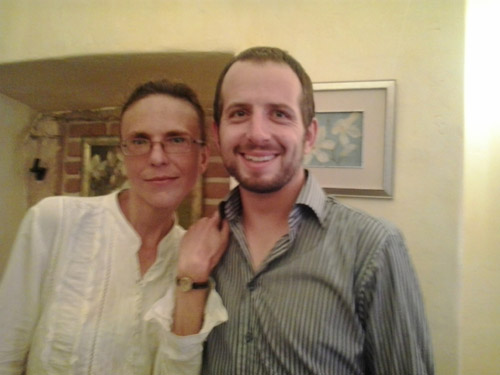
The opening of my cousin’s art exhibit in L’viv. :)


Light Switches in Ukraine
When they aren’t centrally located for an entire apartment, they are inconveniently placed — on the side of a door’s hinges instead of by the door knob.

Uzhhorod
I’m afraid I didn’t take any pictures the city itself or its defining characteristic: the wide, shallow river running through the city center, in which fisherman stand from dawn to dusk.
Here are a few other pics:


Boorish behavior
Obolon district. Kyiv.
The lady behind me in line at the supermarket kept tapping my bag, accidentally, I thought.
I was in a good mood and felt more shocked and amused than irritated. She seemed to be with her husband or lover. He was whispering softly to her in Russian. I guess her tapping was supposed to be a hint that I didn’t grasp. Eventually, she shoved me from behind.
I turned around, shocked. She raised her chin defiantly. The man immediately grabbed her and moved himself between us. He scolded in in the same gentle, lover’s voice.
The line was unusually long and slow — late night rush. Eventually, she shoved me again. I think she felt frustrated that I wasn’t crowding the person in front of me.
I turned around and again the man put himself between us, and lectured her. I did too. I told her I was a foreigner. That in America people don’t push each other. She waved her hand dismissively and said something like “move along America.” Her man continued to gently berate her in a lover’s voice. He said something like “this man came all the way from America to visit us and his is how you’re treating him.”
Pretty pathetic behavior from an adult. I was on my way home from Brazilian Jiu Jitsu and therefor in a good mood. I was more stunned than anything else.
My Euro Cup
Euro 2012 is almost over. Italy plays Spain on July 1st for the Championship.
I was happy to watch Ukraine overcome Sweden at a bar with friends, and to watch one albeit unimportant game in the Kyiv Stadium (Sweden v. France after both their fates had already been settled).
The long-anticipated event seems to have more-less gone off without any major problems. All the tourists I spoke with were very impressed. That’s the surface.
Behind the surface was, as is characteristic of tax-funded endeavors, massive, massive corruption. It’s highlighted in this ̶U̶k̶r̶a̶i̶n̶i̶a̶n̶ Russian-language video:
[youtube]3SxOso5tbjI[/youtube]
***
“Even as the Euro 2012 soccer championships kick off Friday, it’s already clear there will be big losers in host countries Poland and Ukraine.
The first former Soviet-bloc nations to host the quadrennial tournament have spent almost $39 billion getting ready, including $25 billion in Poland and $14 billion in Ukraine. Besides accommodating an expected 1 million soccer fans, the two countries are betting that new stadiums, roads, and other infrastructure will help give a nice boost to their economies and local companies.
So far, it hasn’t worked out that way. Three of Poland’s biggest construction companies have declared bankruptcy in recent weeks after running up hundreds of millions in losses on Euro 2012 projects. ” (Read more from businessweek.com)
***
Here are some pics I took through the experience:


A Brief Visit to Lviv


Reagan tells Soviet jokes
[youtube]mN3z3eSVG7A[/youtube]
Love-Ukraine video of the month
[youtube]uOFBA5OG8e0[/youtube]
Ukraine’s Anti-Corruption Action Center
Great Resource. Most of the stories are in Ukrainian. The official English version of the site isn’t developed, but you can auto-translate.
Particularly impressive are the success stories in the left-hand sidebar. Here’s a translation of their most recent success story:
“”Our Money” reported that the National University of Internal Affairs on February 15 after the tenedru signed a contract with LLC ” Lyemyetra Ltd “to lease space for training and consultation point in Poltava on February-December 2012. The cost of the transaction amounted to 960 thousand USD.
The lack of documentation did not give us to understand why the Kharkov University Ministry office rent in Poltava more and for the money. So with the People’s Deputy forests Orobets we asked about this Kharkiv Prosecutor Gennady Tyurin, who overthrew our regional appeal derzhfininspektsiyi, head which AA Kozina pleased with our response , that the said contract terminated.
It is evident at the Kharkov University Ministry could not come up with an explanation of this purchase, so it had to cancel. We hope that saved 960 thousand USD. be used to improve the educational process at the university, not the welfare of individual officials. ”
These guys are like the Institute for Justice in the US.
Back to Brazilian Jiu Jitsu
First training in Ukraine! The new BJJ club is right near my place. Also, beside a grocery. Now I’m eating my bodyweight in fresh cherries.

