Category Archives: History

Reburial of Galician SS soldier remains

Story and photos here.

dsc_4124_4e3ff dsc_4256 dsc_4313

First, some context and empathy for the soldiers:

The Galician SS division formed in 1943 when it was already clear that the Nazis would lose the war. Approximately 15,000 young men, mostly from Western Ukraine formed the division. The division was unique among SS division in that it formed with two stipulations: 1) they would only be used to fight the advancing Red Army. 2) they were allowed to have priests in the division. The latter is relevant because the first thing the Red army did when it captured Galicia in 1939 was slaughter all the priests (and deport all the seminary students to Siberia).

I regard their effort as a mostly heroic effort to resist the Bolsheviks who, long before WWII even started, had slaughtered many more innocent people that the Nazis ever would.

I know my grandfather, a Ukrainian patriot who did time in Poland’s Bereza Kartuska prison (and may have survived only because the guards abandoned the prison upon the Soviet invasion of 1939), advised young men from his town against joining the Galician SS division, not because it wasn’t a noble cause, but because their effort was futile. (Later that year, it was my grandfather’s Jewish neighbor who warned him, with only minutes to spare, that the Bolsheviks were coming to take him away.) Indeed, most of those young men died in the battle of Brody, which in the sweep of history was a minor speed bump on the Red Army’s road to Berlin.

“Of the approximately 11,000 Galician soldiers deployed at Brody, about 3,000 were able to almost immediately re-enter the division. Approx 7,400 were posted as ‘Missing in combat’ . . . . The 3000 survivors of the Galician Division were used as a nucleus for the rebuilt 14th SS division. Those that were captured were either executed or sent to slave-labour camps.”

I believe in honoring these men, but the Nazi uniforms are in poor taste. The Galicians were not loyal to the Nazis, they were loyal to Ukraine. They need to stop being so stupid about the symbols they choose. Also, from a utilitarian perspective, Nazi dress-up parties only fuel the false legitimacy of the Soviet Union, of the imperial ambitions of Putin’s Russia, of Ukraine’s Party of Regions, and of the bullshit prosecutions and show trials of innocent men like John Demjanjuk.

More broadly, this reburial demonstrates why Ukrainian history is so difficult to read and discuss, but maybe that’s why I’m attracted to it. If all the information around me was honest, true and complete, I’d have to find a new hobby.

Comments and contrary opinions are welcome.
Little-Known WWII Tragedy

In 1941, as Nazi German troops swept through Soviet-era Ukraine, Josef Stalin’s secret police blew up a hydroelectric dam in the southern city of Zaporizhzhya to slow the Nazi advance.

The explosion flooded villages along the banks of the Dnieper River, killing thousands of civilians.

As Europe marks its Day of Remembrance for Victims of Stalinism and Nazism on August 23, a handful of Zaporizhzhya residents are battling for the recognition of the little-known wartime tragedy.

The day, which is also known as Black Ribbon Day outside Europe, coincides with the anniversary of the 1939 Molotov-Ribbentrop Pact of nonaggression between Nazi Germany and the Soviet Union.

Ukraine suffered heavy losses both during World War II and under Stalin.

The Zaporizhzhya events took place in August 1941.

As Nazi troops approached the city, Moscow sent in agents from the NKVD, the predecessor of the KGB, to blow up the city’s DniproHES hydroelectric dam.

The team successfully carried out its secret mission — which historians say was ordered by Stalin himself — tearing a hole in the dam and temporarily cutting off part of the city from the invaders.

But the explosion also flooded villages and settlements along the Dnieper River.

The tidal surge killed thousands of unsuspecting civilians, as well as Red Army officers who were crossing over the river.

Since no official death toll was released at the time, the estimated number of victims varies widely.

Most historians put it at between 20,000 and 100,000, based on the number of people then living in the flooded areas.

Read more: http://news.kievukraine.info/2013/08/ukrainian-activists-draw-attention-to.html

(thanks for the link, Ed!)

Хіт Жовтий Князь Голод1933 злочини більшовицького режиму

[youtube]hqyDjDhVnV0[/youtube]

Фільм знятий за мотивами повісті Василя Барки «Жовтий князь». «Голод-33» – перший художній фільм, який розкриває злочини сталінсько-більшовицького режиму проти українського народу, – штучний голод 1932-1933 рр. Західні країни мало знали про цей Голодомор в одній з найврожайніших країн світу. Радянські офіційні органи заперечували факт голоду. Тільки 26 січня 1990 року Компартія України визнала Голодомор.

Після краху Російської імперії в 1917 році Українська Народна республіка була насильно включена до складу Радянського Союзу. Коли Сталін утвердився при владі наприкінці 20-х років, комуністична партія методами систематичного терору встановила контроль над усіма аспектами суспільного і політичного життя. Українське селянство стало першою жертвою нової правлячої сили. У 1932 році вийшов указ, який коштував життя мільйонам людей. Терор зими і весни 1933 року був викликаний насильницькою конфіскацією у селян продовольства і худоби. Тоді, в центрі цієї трагедії опинилася проста селянська сім’я,

EX Waffen-SS man Hero of the Soviet Union

The chaos of war in Ukraine:

How many former Waffen SS men acheived the highest Soviet military distinction?

One did for sure. Hryhoriy Hevryk was born in Drohobych, Western Ukraine and enlisted in the 14 Galician Division in the spring of 1943.

He completed his training and in late June 1944 was sent to the eastern front then situated in western Ukraine, when the 14 Galician Div was deployed as part of XIII A.K in the Brody sector. Here in mid July, the Soviets launched a huge summer offensive and XIII AK including the 14 Galician Div was surrounded. The situation inside the pocket was chaotic. An organised breakout attempt was made but ultimately it became every man for himself. Hryhoriy Hevryk survived the battle and like several other Ukrainians from the Division, left its ranks and was hidden by some Ukrainian civilians. He initially escaped detection and managed to make his way back to his home town, but eventually enlisted as a civilian into the advancing Red Army. He was killed in action in the offensive on Berlin on 29 March 1945, near the Polish railway station Prukhna. On June 29 1945 he was posthumously awarded the highest Soviet military distinction (the only Galician to be awarded it) the Hero of the USSR.

For those of you who read Ukrainian further details can be found in the veterans publication Visti Kombatanta (Combatants News), in an article entitled “Tragedy of a Hero”, Za Vilnu Ukrainu, L’viv, 1952 No 6-7, p8.

Also, we had family friends in the US with the last-name Hevryk. I wonder if there’s any relation.

Mankurt Blog — by a descendant of the L’viv’s Russian KGB community

Apparently, this blog has caused quite the sensation:

http://www.mankurty.com/blog/

I don’t read Russian, but here’s what I’ve been told about this blog:

* Its author writes about his father who was a high level figure in L’viv’s KGB since 1946.

* When his mother arrived to join the family, they met her at the train station. There were no lights in the streets, and all the way home, his father fired a pistol shot into the air at every intersection.

* His mother was amazed at L’viv’s modernity.

* Once, someone asked his father, in Polish, what time it was. When his father replied in Russian, his questioner shot him.

* The author of the blog is in his sixties.

* He feels sorry for communist oppression, but thinks Russians are unduly demonized.

* He resents negative stories about the Russian officials from 1946. (One such story that I’m aware of involves the wife of a Russian official mistaking a woman’s undergarment in the apartment they claimed for an evening dress, and wearing it out in public.)

* After independence, many speeches were made by local figures asking the Russians to go home. They were called “Mankurts” — people without memories, because they had no local roots and didn’t talk about their past.

* The word “Mankurt” comes from what is probably mythological Khazak (from Khazakstan) practice for erasing a person’s memories. It involves shaving their head and using a camel skin to painfully restrict the re-growth of hair.

* Upon arrival, his family chose a one-room apartment because it was winter and the small apartment would be easier to heat. Most of the neighborhood was vacant either abandoned or deported and they planned to move in the spring, but so many Russian administrators arrived, that all better apartments were quickly occupied.

* He spend his career in the bureau of propaganda.

* He actually lived in my neighborhood — where most of the Russian administrators lived. After independence, Ukrainians purposely named all the streets in that area after Partisan leaders: Stephana Bandery, Sushkevycha, Chyprynky, Heroiiv UPA.

* The author thinks Ukraine has no future with the EU and should form some sort of union with Russia, because it is important to have a strong government.

* He’s a big fan of Russian president Putin and hates the Untied States.

* He think Ukrainians owe Russia a debt of gratitude for kicking the Poles out of L’viv.

* His older son became a local gangster and died of a drug overdose in 2004. His younger son has a family.

* L’viv publishers all rejected his memoir because they were offended by the content.

* One of his recent blog posts was a creepy collection of pictures of womens’ legs taken in public, seemingly without their knowing.

That’s all I remember. Anything else, Adnriy?

The name Skaskiw

Skaskiw (or Skaskiv) is a somewhat rare name. Amazingly, I’ve met six or so Skaskiws besides my immediate relatives.

There’s also partisan leader Yaroslav Skaskiw whom I read about on Wikipedia.

The name seems to come from the village Bozhykiv (also transliterated as Bojekiv).

The name means God-village. God was banned in the Soviet Union, so it’s name was “Pryvitne” which means welcoming, until the collapse of the Soviet Union.

I’ve been to Bozhykiv a couple times. It was a really touching visit the first time. I remembered my dad’s story about visiting in 1974 (on his honeymoon) and sneaking away from the Intourist tour to arrange a car for a visit to the village. He ran up the hill and enjoyed the panorama he hadn’t seen in thirty years, but just briefly. He hurried back to the car, lest the authorities

The neighbor’s remembered my grandparents (whom I’ve never met). They recalled how they used to be invited over when my grandparents received letters from my father in America.

As I understand it, my grandparent’s house was sold to them shortly before my grandmother died, because they had no heirs other than my dad who was in America. Their two-room house is now a woodshop. I was touched almost to tears when they offered to give me the property, should I want to live there.

I estimate that 20% of the tombstones in Bozhykiv’s cemetery had the name ‘Skaskiv.’ It’s a small village. A few hundred houses. This past year, some guy wrote a big book about the village history. I was shown a .pdf, but it’s in Ukrainian, which I read very slowly. The .pdf had 340 pages, and it’s setup so one .pdf page equals two book pages. I need to read this book some time, or have it translated.

***

See also, UPA organizer Halyna Skaskiw: http://romaninukraine.com/halyna-skaskiw-head-of-youth-department-of-ukrainian-insurgent-army-berejany-region-ternopil-oblast/

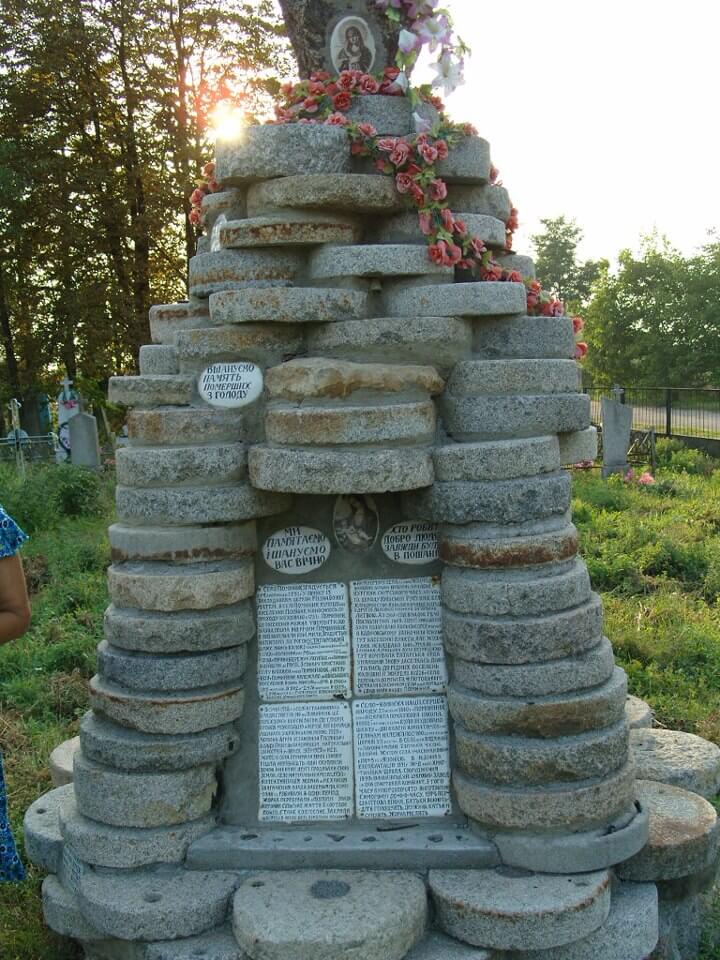
Holodomor Monument in Cherkasy Oblast

Holodomor-Monument-Cherkassy

Цей пам’ятник зробив житель села Вікторівка, що на Черкащині. Він зібрав усі жорна з дворів, в яких всі померли під час голодомору. Влада не дозволила поставити його в селі, тому ця людина встановила його у себе в городі. До цього пам’ятника ніколи не заростала стежина і завжди лежать живі квіти. Прислала цю фотографію уродженка села Наталія Володіміровна Била

This monument was build by a villager from Viktorivka in Cherkasy. He collected all the millstones of households in which everybody died during the famine. The government doesn’t allow it in the village, so this man has set it in his garden. The path to this monument is never overgrown, and there are always fresh flowers. A lady from the village sent this photograph.

Soviet Video about the battle for Ternopil

Things people have told me about this battle:

1) Hitler declared the city some sort of official secure place — No retreat allowed.

2) The city was almost completely destroyed during the fighting.

3) The Soviets attacked the city nine separate times before finally succeeding.

4) Soviet generals had, at one point, announced all the way up their chain of command (all the way to Stalin), that the city was captured. When they realized they were mistaken, they were in an absolute panic and rather than report their failure, resorted to massive bombardment of the city and another attack.

5) After Ternopil, the retreating Nazi army didn’t have to organize a defense around Lviv. (I also heard the Soviets wanted to preserve the value of Lviv and purposely hurried.) I know there was a little fighting at the railway station in Horodok, 30km past L’viv.

Why so many Russians still love Stalin

“By Keith Wagstaff | The Week – Tue, Mar 5, 2013

To the bafflement of the world, Stalin is remembered quite fondly by millions upon millions of Russians

To most of the world, Joseph Stalin, who died 60 years ago today, is a monster — the architect of violent purges and labor camps that killed millions of Russians during his reign over the Soviet Union from 1924 to 1953. So why is Stalin actually more popular in Russia today than he was during the collapse of the Soviet Union in 1991?

It’s complicated. Make no mistake; most Russians aren’t ignorant of Stalin’s crimes. In a recent poll conducted by the Carnegie Endowment for International Peace, 65 percent of Russians agreed that “Stalin was a cruel, inhuman tyrant, responsible for the deaths of millions of innocent people.” Yet in 2011, 45 percent of Russians also had a “generally positive” view of Stalin.

A lot of that discrepancy has to do with World War II, or as the Russians call it, the Great Patriotic War. At a recent conference held by the Russian Orthodox Church, which was persecuted by Stalin’s government, one speaker told an audience that “the nation must be grateful to Stalin for the ‘sacred victory’ over Nazi Germany,” according to Reuters.

. . . .

In Georgia, they have a more traditional reason for liking Stalin: He was born there. The Carnegie poll found that 68 percent of Georgians agreed that “Stalin was a wise leader who brought the Soviet Union to might and prosperity.” According to the BBC, his birthplace of Gori features a Stalin museum and has voted to erect a huge statue of the dictator. One tour guide summed up the country’s feelings towards the man.” (more)

My reaction:

1. “War is the health of the state.”

2. I wonder what a survey of the opinions of American academics would reveal.

Ternopil’s Museum of Repression

The Museum of Repression in Ternopil, Ukraine is a monument to a catastrophic history too often forgotten and ignored. The museum is a converted jail. People were tortured and executed there. For many, it was their first stop en route concentration camps in Siberia.

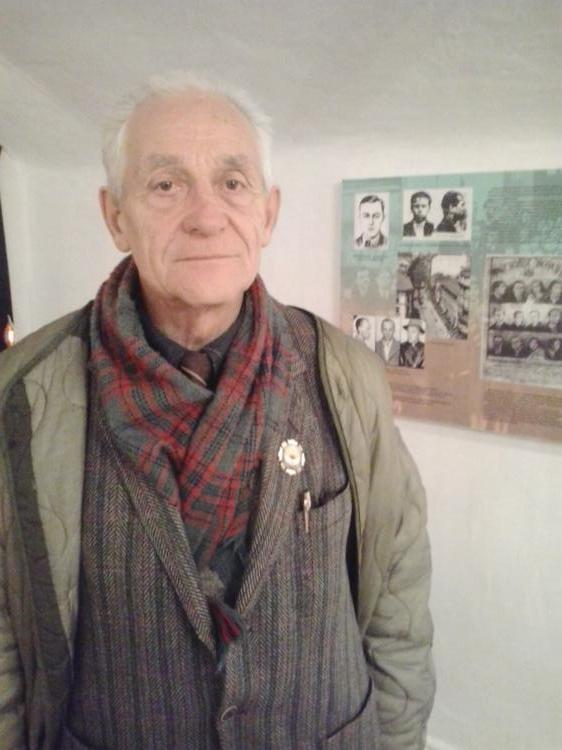
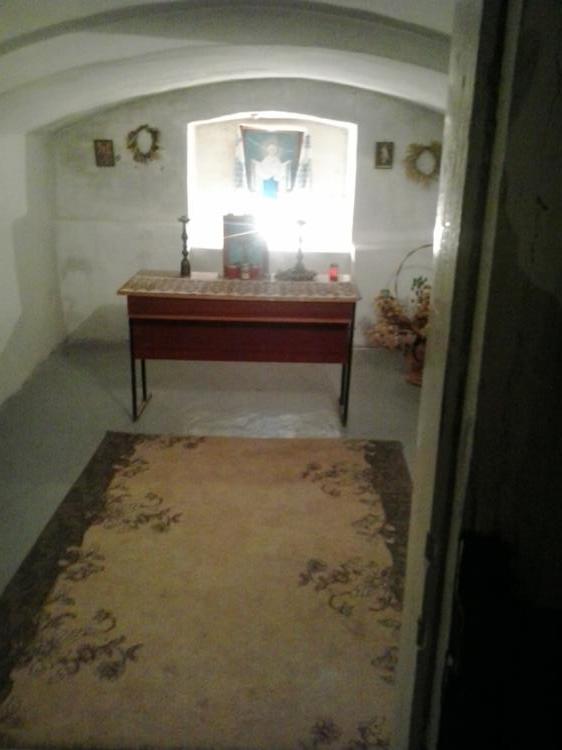
This was the case for the now-82-year-old director, Ihor Oleshchuk, who provides a personal tour. He was sentenced to 25 years, but returned after eight under Krushchev’s general amnesty. The cell in which he was held is now a chapel.

Some documentarians needs to go there and film his tour, then let him speak to the camera for several hours.

Ternopil Museum of Repression

Ternopil Museum of Repression

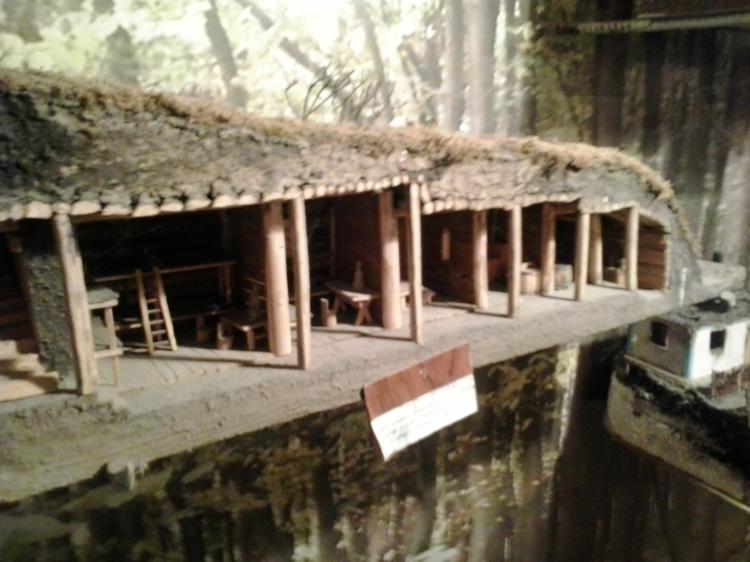
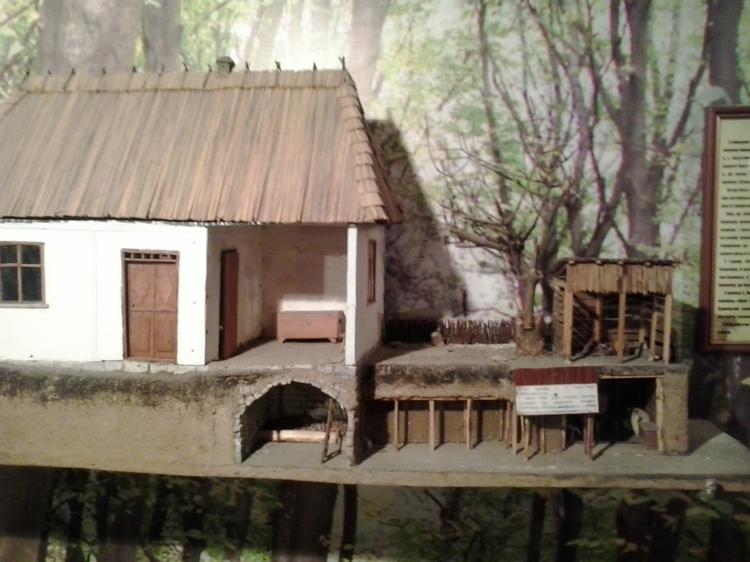
The museum includes models of actual hideouts used by the Ukrainian Partisan’s during WWII.

Ternopil Museum of Repression

Roman Shukhevych spent the winter of ’44-’45 at this hideout:
Ternopil Museum of Repression

The proud, resilient museum director:

Ternopil Museum of Repression

The museum director in Siberia:

Ternopil Museum of Repression

Made in the Gulag — handkerchiefs depicting angels, and a bread-and-dirt rosary which, amazingly, has survived 60+ years.

Ternopil Museum of Repression

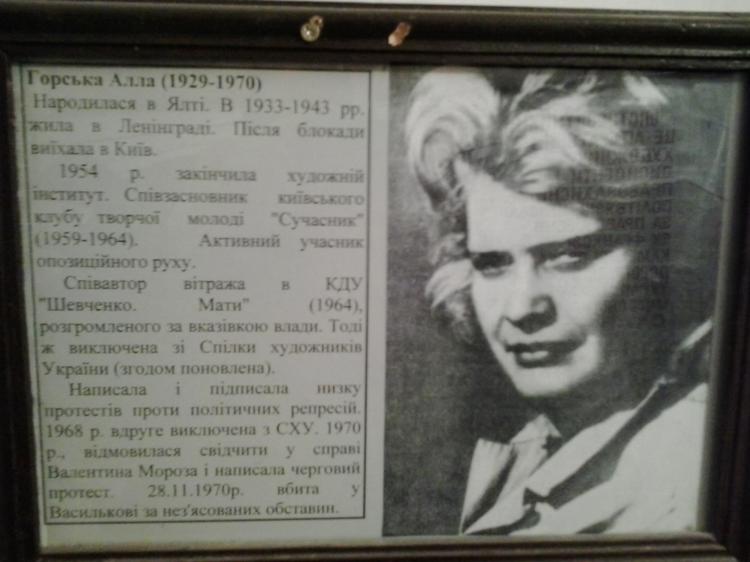
If I understood correctly, this is a stained glass mosaic artists executed in the 1960s after she began adopting nationalistic themes:

Ternopil Museum of Repression

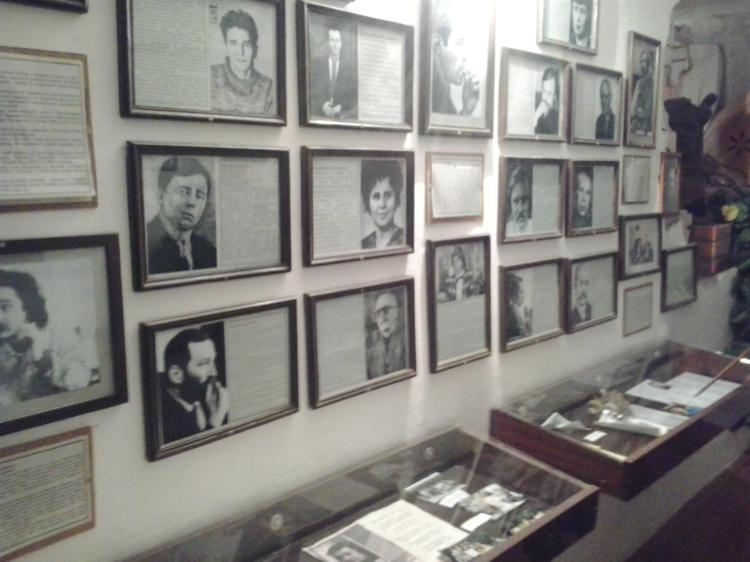
She was one of many executed cultural figures:

Ternopil Museum of Repression

The museum director’s former cell is now a chapel.

Ternopil Museum of Repression

Visiting the museum was a very moving experience. The director’s first hand accounts and breadth of knowledge and passion contributed greatly to the experience. I really wish someone would film this place, as the director, though seemingly in excellent health, is over eighty years old.

The only thing I didn’t like was one room toward the end devoted a little too strongly to idolizing Stephan Bandera. The room was pretty much an altar. Too much for any mortal.

Vasyl Stus — calling for his own destruction . . . and getting it

Vasyl Stus “Соціалізм — це найчесніший людський лад. І він мусить виростати на чистій, на природній людській основі чесності, справедливості і взаємодопомоги людей, а не підтримуватись зграєю платних шпигунів, поліцейських, донощиків, кар’єристів, чиє ім’я — людська безликість. І за такий соціалізм варто боротися до скону.”

Translation (Google): Socialism – is the most honest human system. And he must grow in clean, natural human based on honesty, fairness and mutual people and not supported bunch of paid spies, police, informers, careerists, whose name – human impersonality. And for such a socialism worth fighting to end of life.

***

Wikipedia:

(Ukrainian: Васи́ль Семе́нович Стус; January 8, 1938 – September 4, 1985) was a Ukrainian poet and publicist, one of the most active members of Ukrainian dissident movement. For his political convictions, his works were banned by the Soviet regime and he spent 23 years (about a half of his life) in detention. On November 26, 2005 he was posthumously given the title Hero of Ukraine by order of the state.

. . . .

Vasyl Stus died after he declared hunger strike on September 4, 1985 in a Soviet forced labor camp for political prisoners Perm-36 near the village of Kuchino, Perm Oblast, Russian SFSR, where he had been transferred in November 1980. Danylo Shumuk reported that the commandant, a certain Maj. Zhuravkov, committed suicide after the death of Vasyl Stus.[5] In the Kuchino camp, out of 56 inmates kept there between 1980 and 1987, 8 died, including 4 members of the Ukrainian Helsinki Group.

Legacy

In 1985, an international committee of scholars, writers, and poets nominated Stus as a candidate for the 1986 Nobel Prize in Literature, but he died before the nomination materialized.[8] He was nominated by a German writer Heinrich Böll, who publicly stated that he expected Stus to win the prestigious prize.

***

The tradition of Ukrainian patriots feverishly advocating their own destruction remains alive and well.