
Category Archives: Mostly Tourism
Capitalist Art
Emotion Media Factory Laserland (EMF) has completed Europe’s biggest floating multimedia fountain system in the Ukrainian city of Vinnytsa by order of Roshen Confectionery Corporation.
More signs of Spring in Ukraine
Of course, Ukraine’s folkloric White Storks returning to their enormous nests:


L’viv streets teeming with visitors, street vendors of all sorts, musicians and beautiful people:


Signs of Spring in Ukraine

The sidewalk ice softens enough to chop through.

(The town of Коломия)
Potholes blossom like wild flower.

And cafes begin putting up outdoor patios.
What I learned in Ternopil
The ice fishermen are smarter than me. :)


Prague

Friends in Prague, March 2013.
Short Fiction: Для загального добра
It’s nice to see that not all Ukrainian writers from the early part of the previous century were calling for socialism. It’s a shame that those who were, most notably Ivan Franko and Lesia Ukraiinka, now have monuments to them all over the place and appear on Ukraine’s money.
The only reason they haven’t passed into the dustbin of Ukrainian literary history is that they wanted a separate Ukrainian socialism instead of joining the greater workers’ paradise. That is the lone criteria for being a hero to Ukrainian nationalists.
Anyway, here’s a writer with a better understanding of how the world works:
http://ukrlit.org/Kotsiubynskyi_Mykhailo_Mykhailovych/Dlia_zahalnoho_dobra/
Христина Соловей: ‘Горе долом’
[youtube]iOBN0vJyHT4[/youtube]
March 2013 – a false spring, restaurants, music
March brought an early spring with warm weather and blue skies — quite a relief from L’viv’s almost perpetually grey winter.
The “ratusha” in the city center:

The sun reflecting from a window below L’viv’s famous sitting Jesus:

The Cathedral near the train station:
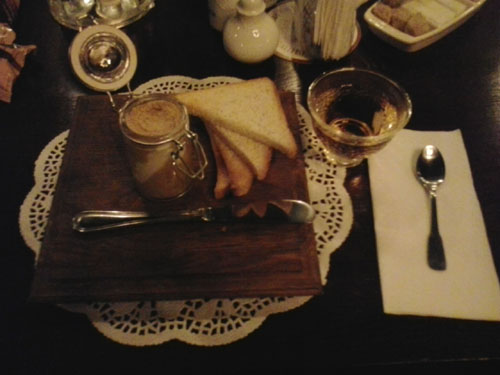
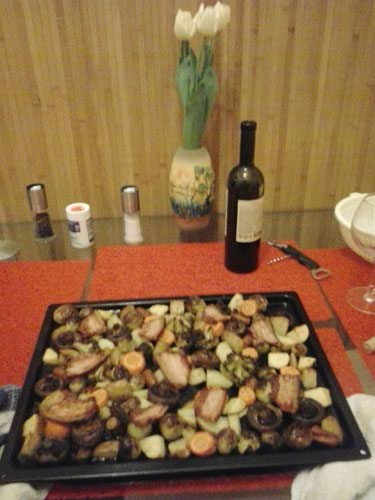
Chicken Pate — Another gorgeous lunch at Centaur Restaurant:
Snow melting in Ivan Franko Park:

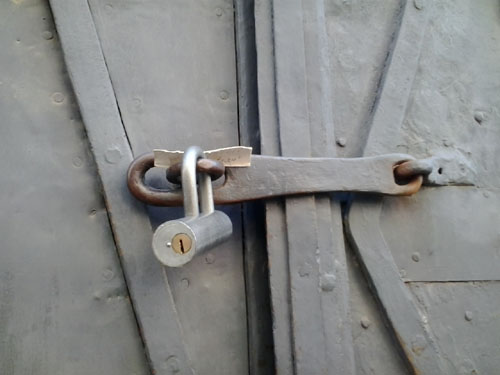
Typical L’viv: On one of my many attempts to visit a gallery while it was open, I found this note tucked into the latch. “I’m in Svit Kavy [World of Coffee],” followed by a name and phone number.

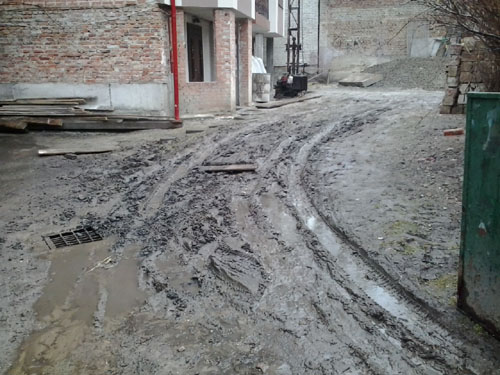
The entrance to my building :(.
This folk rock band is hugely popular in the West. They use Hutsul dialect in their lyrics. “Ty taka doroha my.”

[youtube]8up5LOeFAVc[/youtube]
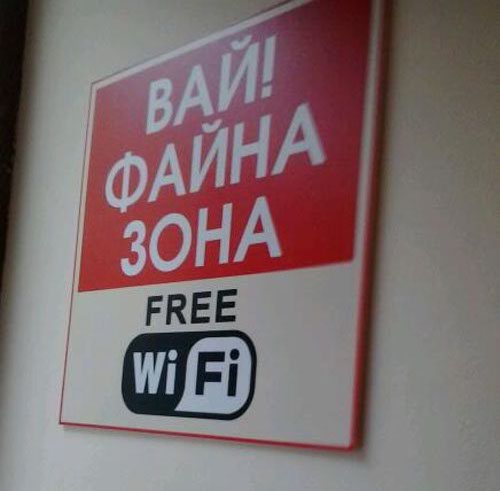
Very funny. For my American reader:
“вай!” means Wow! but sound like the first syllable of wifi.
“файна” means fine but its first syllable sounds like the “fi” part of wifi.
“зона” means zone or place.
вай файна зона = Wow! a fine place. = Wifi Zone

And then, a blizzard:

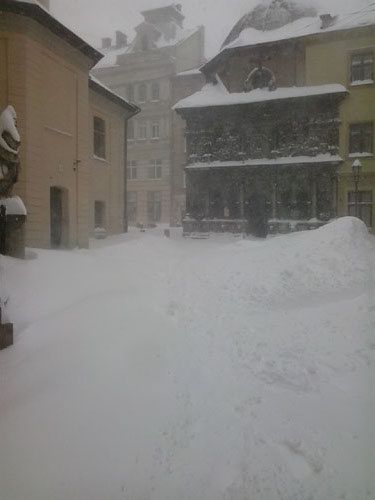
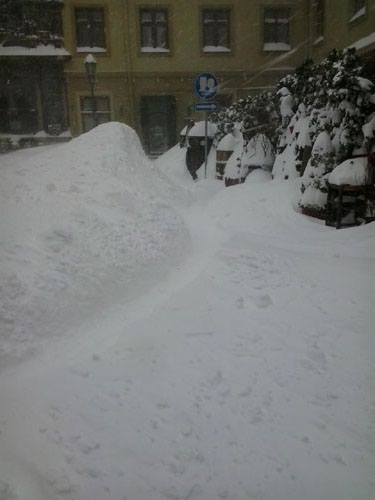
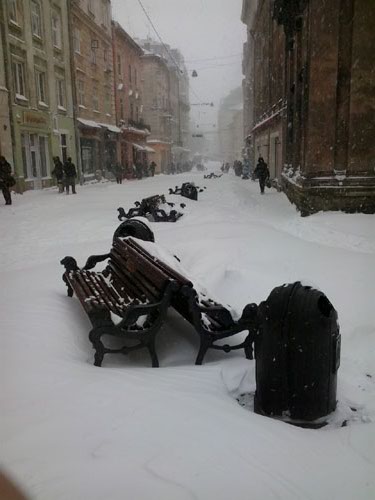
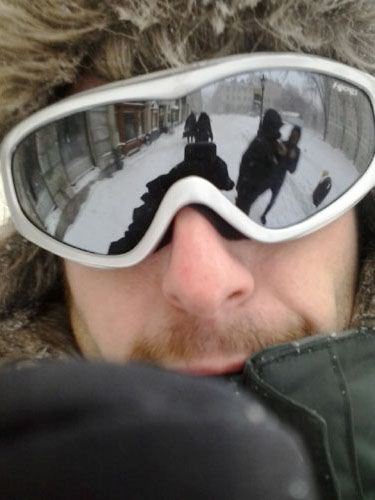
Lviv’s public transportation system ground to a halt.

Гей, була в мене коняка
[youtube]RD4GM6H-xrs[/youtube]
Не ЗРЯ премійований!
Unfortunately, I still read Ukrainian rather slowly. I’ll work on it in the future, but for now I’m delighted to be getting exposed to Ukraine’s literary world through great friends like Andriy who is known to make waves with book reviews like this one. It’s about the poetry of this year’s Tarash Shevchenko literary prize, awarded by (I think) Ukraine’s Ministry of Culture.
http://litakcent.com/2013/03/09/ne-zrja-premijovanyj/
Translated (sort of): http://translate.google.com/translate?langpair=auto|en&u=http%3A%2F%2Flitakcent.com%2F2013%2F03%2F09%2Fne-zrja-premijovanyj%2F
The best office in the world
Lviv. 11:30am. Handsome cafe. Empty. Good Coffee, Good Wifi, and LIVE PIANO MUSIC. Life is good. :)

Beauty in Ukraine
From my good friend Curt:
CULTURAL OBSERVATIONS: UKRAINIAN BEAUTY
10 Reasons Why Ukrainian Women Are Beautiful:
1) Women neither believe they are inferior nor feel afraid. Men are just strong gorillas that need to be kept as properly trained pets through careful management, just like children. Women are not weak. They are not afraid. They are not oppressed. They are powerful and they act like it.
2) Women do not deny their emotions, but they also do not treat them as ‘truths’. They are physical manifestations that must be exorcised and ‘put’ somewhere so that rational thought can prevail. Western women, as a charter from the feminist movement, have adopted the posture that their emotions are both rational, justified, and often, the source of truth. (Which is my only explanation for why so many western women are literally both miserable and ‘crazy’.) Women are confident because of this. They do not fight with themselves or doubt themselves. They are not in conflict. They just experience the emotion. Exorcize it. and move on.
This has an interesting effect on relationships here. Men are more understanding because they can separate the irrational and emotional reactions of women from the rational – providing comfort or acquiescence in the first, and friendship in the second. It’s accomplishing what western women desire, but through natural means rather than attempting to create a gender free society and denying our differences.
3) Classes are evident but class signaling is not. You dont’ signal what you ‘are’ as much as what you either ‘have’ or ‘have control of’. This creates a very interpersonally open society. (friendly and calm.)
4) Women dress to kill. This is because they (correctly) understand the power women have to wield, and that in an world where violence is no longer a currency, it may be true that men will hold the top positions due to loyalty and specialization, but that women will hold MOST positions because in a clerical economy, few if any positions require strength or violence. Even if they are poor, they dress well, and they are confident.
5) The Sport-Look (clothes that allow you to be fat), and the Brittany-tramp look (close that are sport-sexy for when you aren’t fat) and the masculine-look (close that signal you can play in a man’s office world) don’t exist here (yet). That would be sacrificing feminine power.
6) Women have relaxed faces. I don’t now if it’s a holdover from Serfdom, or from Communism, or if it’s biological, but if your face isn’t all that expressive, and you are more expressive with your body language than your face, you will look more peaceful and elegant. And the women look peaceful and elegant. (Well, aside from the shambling little babushkas that still show up now and then.)
7) Long headed slavic tribe’s jaws are narrow which increases femininity and accentuates the size of eyes. There are round heads here too. And round heads with asian influences. But the tall thin fine featured women are a definite gene pool.
8) They walk a lot. Cars and gas are expensive. The subway costs about a quarter (23 cents or so.) It’s safe to walk outside. Even in absurd heels.
9) Women will not tolerate being fat any more than they will tolerate dressing poorly. Seriously. Four random women in any given restaurant here look like they’re out for auditions or photo shoots. You can tell the Americans by who is loud and dresses badly. (Guilty of the second but not the first.)
And they are happy, friendly, and rational. It’s easier to be happy when you love yourself. And its easier to love yourself when you feel beautiful.
10) Women choose to be beautiful. In reality, Ukraine is a melting pot of many different tribes, high middle and low germans, celts, scandinavians, poles, russians, czechs, and a mix of the south slavic peoples too (although I can’t identify them yet.) . … the list goes on. And the women aren’t, at least numerically, physically different from any other european country. But its our actions that determine our appearance. One can cultivate it or ignore it.
Beauty is a record of good choices. :)
Shevchenko’s KOBZAR
All of it:
[youtube]X2A3ps3h-Y8[/youtube]
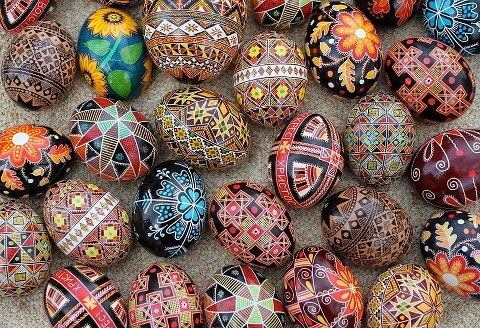
Ukrainian Easter Egg Workshop held at Mount Airy Museum of Regional History
“The Mount Airy Museum of Regional History held a Batik Easter Egg Workshop yesterday afternoon on the second floor of the museum. The Ukrainian tradition of decorating eggs with wax is called pysanky, and dates back to 1300 BC.
The ancient practice used traditional motifs that date back even further, to 3000 BC, and many examples were provided for the students by the class instructor, Maria Skaskiw.
Skaskiw learned the art of decorating the eggs as a child in New York. She grew up in a Ukrainian community and she said she believes she began the art after her sister began learning the technique.
Read more: Mount Airy News – Ukrainian Easter Egg Workshop held at Mount Airy Museum of Regional History.” (more)
A very Ukrainian poem by Bohdan Nyzhankivsky
Here is a hilarious poem by diaspora poet Bohdan Nyzhankivsky, published under the nickname Babay (Boogie man), in Detroit 1983:
Історія
Прощав ліричний козаченько
(Під ним ліричний кониченько)
Свою ліричну дівчиноньку,
Бо на ліричну йшов війноньку.
Рубнув ліричний воріженько,
І вмер лірично козаченько.
Над ним ліричний кониченько
Іржав лірично, потихенько.
Лірично сохла дівчинонька…
Ось українська пригодонька!
(із книги “Марципани і витребеньки”)
Note: I don’t have any rights to this poem. I just want to popularize a poet who, for his sense of humor, seems worth remembering. But if any copyright trolls want me to remove this, contact me.
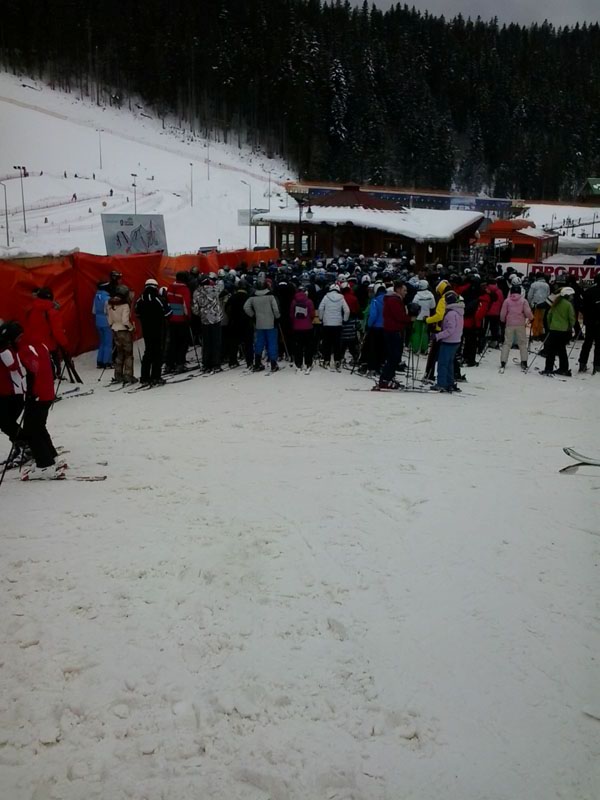
Bukovel
See my article about Bukovel from a couple years ago.
***




***
(Sorry for the vertical video. I’m suffering from vertical video syndrome.)
My Winter 2012-13 Photos


***
Goodbye Dragon
The last year of the dragon, 2000, I finished my computer science degree at Stanford University, commissioned as an infantry officer, completed IOBC, wrecked my knee at Ranger School, made a miraculous recovery, and started Ranger School again in the dead of winter.
This year of the dragon, I decided to move to Ukraine and start a variety of little projects. So far so good. :)
This past weekend, the year of the dragon ended and the year of the snake began. There were festivities in L’viv, the third and final New Year celebration of the season and regular New Year and the Old New Year on January 13th.




Ternopil’s Museum of Repression
The Museum of Repression in Ternopil, Ukraine is a monument to a catastrophic history too often forgotten and ignored. The museum is a converted jail. People were tortured and executed there. For many, it was their first stop en route concentration camps in Siberia.
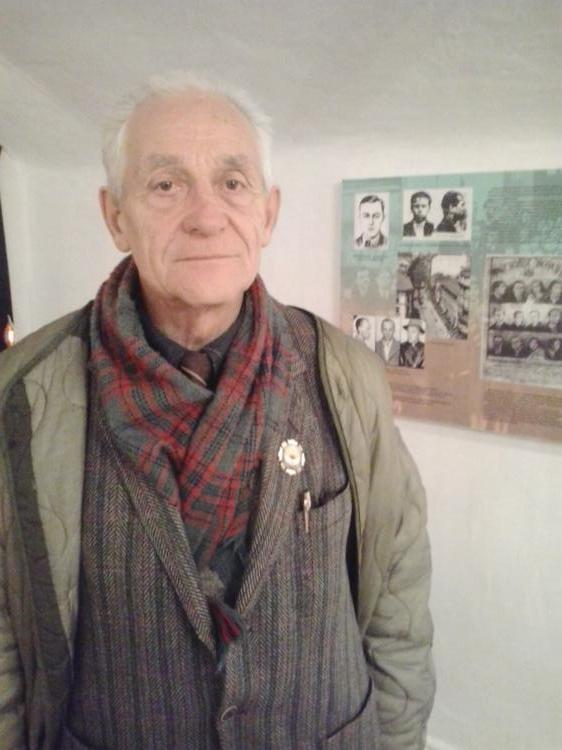
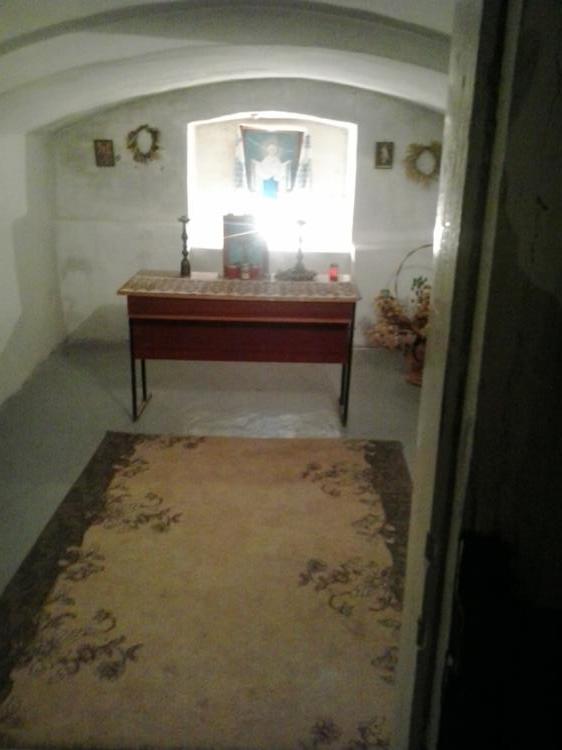
This was the case for the now-82-year-old director, Ihor Oleshchuk, who provides a personal tour. He was sentenced to 25 years, but returned after eight under Krushchev’s general amnesty. The cell in which he was held is now a chapel.
Some documentarians needs to go there and film his tour, then let him speak to the camera for several hours.


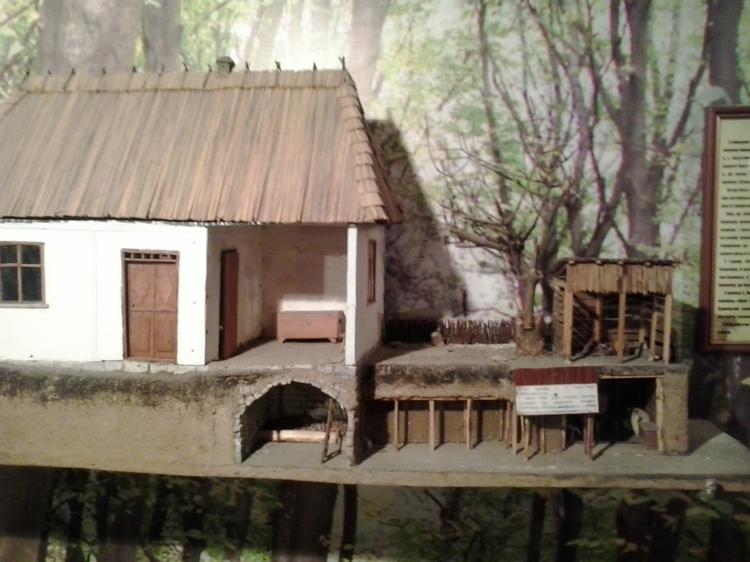
The museum includes models of actual hideouts used by the Ukrainian Partisan’s during WWII.
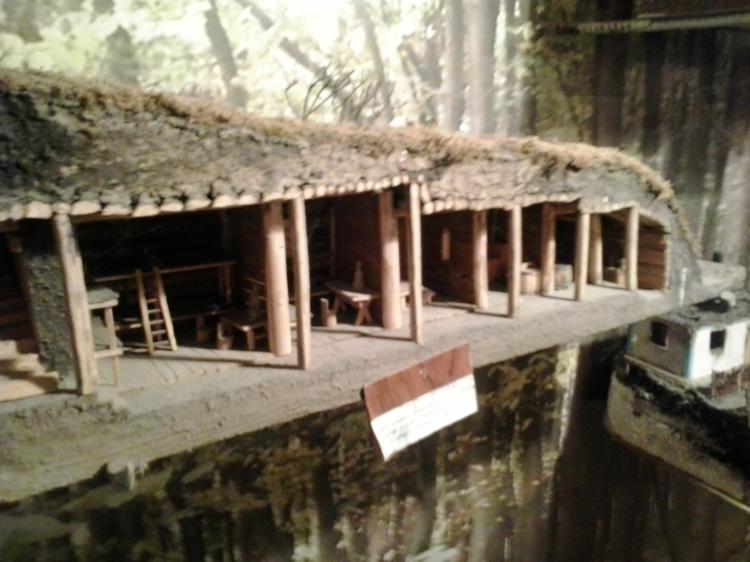
Roman Shukhevych spent the winter of ’44-’45 at this hideout:
The proud, resilient museum director:
The museum director in Siberia:

Made in the Gulag — handkerchiefs depicting angels, and a bread-and-dirt rosary which, amazingly, has survived 60+ years.

If I understood correctly, this is a stained glass mosaic artists executed in the 1960s after she began adopting nationalistic themes:
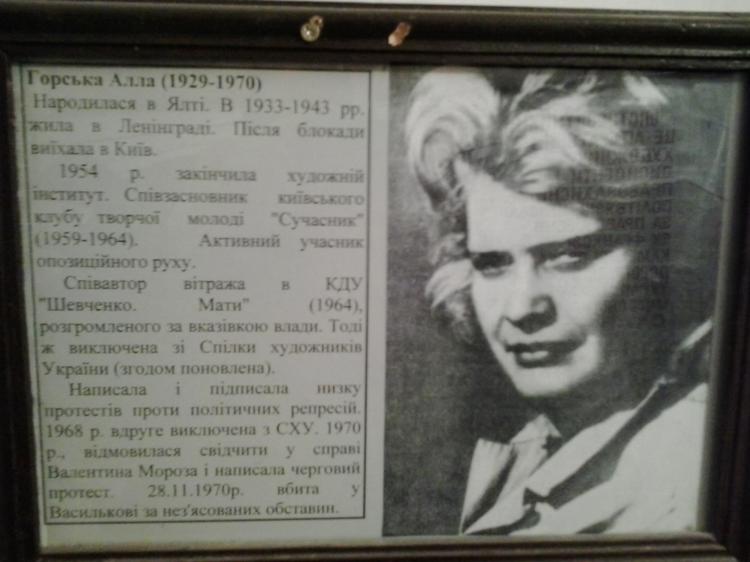
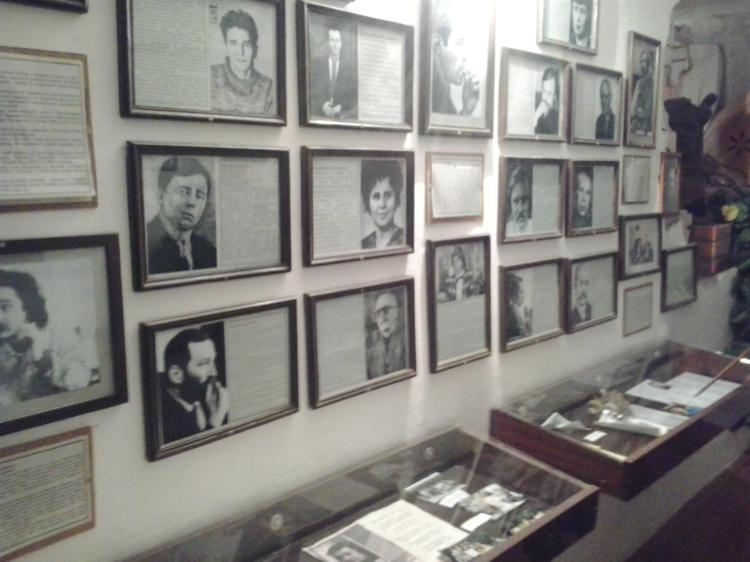
She was one of many executed cultural figures:
The museum director’s former cell is now a chapel.
Visiting the museum was a very moving experience. The director’s first hand accounts and breadth of knowledge and passion contributed greatly to the experience. I really wish someone would film this place, as the director, though seemingly in excellent health, is over eighty years old.
The only thing I didn’t like was one room toward the end devoted a little too strongly to idolizing Stephan Bandera. The room was pretty much an altar. Too much for any mortal.

