Category Archives: Mostly Tourism
Culture of Failure
In the US, people flaunt their poverty (real or fake) to show kinship with the common man. This began as a revolution from European aristocracy, but it has melded with a general scorn for the imaginary group: “the 1%.” The absurdity and inaccuracy of the term matters little. The masses need a simple, understandable enemy for their fear to coalesce into action. To be rich and successful is to be suspect.
In Ukraine, people flaunt their wealth (real or fake). They’ve had enough equality under the Soviet Union. It is cool to rise above the masses. I love it here. I feel like I’m supposed to do great things. I’m trying.
The Ukrainian Side Of Vera Farmiga
[youtube]e8rV_ZZZwJE[/youtube]
I had hear her diaspora accent in the few lines of Ukrainian she speaks. :)
Happy Vodokhrescha!

Charming L’viv
Passed this on my to the city center a few days ago.

click for higher resolution
“The City of Dreams” Cartoon by State Tax Service of Ukraine
[youtube]q_B4QXx0Jm0[/youtube]
Two Winter Pictures of Western Ukraine
Ivano Frankivsk:

Lviv:

Sadly, I had the wrong settings on my phone camera, so I don’t have higher resolution images.
Carolers
Veselyx Sviat! Xrystos narodyvsia!
[youtube]gyETGQDKP7c[/youtube]
Six impressions of America upon returning for the holiday
I’m back in NC for the holiday. I’m enjoying family, especially my niece who seems to think I’m a rock star, warm(er) weather, and American customer service — the best in the world!
My six impression upon returning for the holiday:
1) From the DC airport: Why are so many people wearing pajamas? By Ukrainian standards, this is criminally casual. Are whites America’s new minority?
2) You know that lonely feeling when you’re walking in the shoulder of a road? I wanted to get some fast food near my hotel. There were no sidewalks. Only the drive-thrus were open. The one at Taco Bell refused to serve me without a vehicle. So did the one at Wendy’s. The chill and smell of the air reminded me of nights at Fort Bragg. I’ll walk that memory lane when I visit Fayetteville next week. Welcome back to the USA.
3) Driving a car again. Love it. I can drive for hours and hours in any direction. My own car, after I jump started it, reminded me of the carefree days of Iowa City life. It was making noises first. Lots of them. But in the first few miles of driving they all disappeared, one by one.

4) The U.S. has the best customer service in the world. It is also immensely convenient — from the parking lots, to the cheap products available, to the price tags and come off easily without ripping. You no longer need a scouring pad to remove the glue. I bought a ladder and Lowes. The packaging just popped off. I didn’t even need scissors. I returned it to get another ladder, and the return process literally took about 30 seconds. It came with a smile too.


Meticulous thought has been devoted to anticipating and mitigating every difficult and inconvenience between my desires and their satisfaction. One example: since I used me credit card before at Walmart, I no longer have to sign the receipt. I’m not saying this is legal or a good idea, but it’s an example of how extraneous gesture is scrutinized with the aim of making life better. God bless Capitalism.
5) When I arrived at my sister’s my usually shy niece screamed my name and ran down the drive way to give me a hug. I think we all have a soft spot for such childish devotion and admiration.


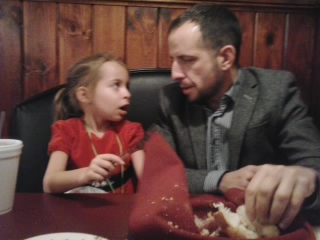
6) My mom’s guest room is more Ukrainian than my L’viv apartment.

7) I love playing scrabble with mom. I had a banner game with three turns > 50 points, the highest being 65 points for “Nascent” which used all my letters.


ps – Lastly, here’s a picture of a Nativity model older than I am. The lamps were made by my grandfather and recently restored by my mother. The lamp-shades rotate when the lamp (with old fashioned Earth-hating incandescent bulbs) heats up, showing a procession of figures toward the manger

Armed Hutsulka
Isn’t she gorgeous?

“Women Do Everything Here” : The Absence of Chivalry In The Byzantines
“So, just as the church had used its power of literacy and legitimacy to manage the Christian monarchs, they used the crusades and the myth of chivalry, to direct the energies of these professional warriors to productive ends.
This ethic of chivalry conveyed status upon those who served christendom. It codified service of others as masculine. It could be obtained through demonstrated action, and spiritual reflection, as well as daily posturing, rather than the more expensive requirement of land holding, and was therefore more widely available to retinues. It also provided a code of conduct that the aspring classes could imitate, making the ethics pervasive.
The need for commoners to rent land from land holders, participate as infantry, and to demonstrate their capacity for honorable hard work, before marriage and reproduction were possible, reinforced this set of chivalrous values – allowing laborers and craftsmen to also adopt the chivalrous ethic, and to demonstrate their status signals through conformity to it. THe corresponding delay of childbirth and consequential inclusion of women into the work force, as well as their possession of rudimentary property rights, worked along with suppression of the breeding of the lower classes to create the european universalist and commercial character.
This code of chivalric conduct does not exist here in the east among the men. Service is immasculine. It violates the primary principle of manliness which is independence from external direction. Whether that external direction come from service to an employer or service to the commons – society.
Manliness, and masculinity have not been hybridized. It is not even as mature here as it is among the peacock strutters of the mediterranean — even if it is less ignorant, brutal and barbaric than that of the Arabs, and less familial and hierarchical than that of the Asians. And while we will certainly argue that masculinity has been overly feminized in much of the west, so much so that lower class males are returning to their individualistic migratory roots, the ethic of masculinity through service remains — for now.”
This piercing observation comes from Kyiv. I think masculinity is more inclined to peace of productive cooperation in L’viv for several reasons:
1. People are much more religious.
2. More people travel to Western Europe and witness civilized cooperation.
2. People here fondly remember the Austro-Hungarian Empire and the notion of aristocracy.
3. The Soviet Union had 60, instead of 80 years to obliterate morality, identity outside state-identity, and pride outside pride in the state. Western Ukraine was spared the particularly murderous 1920s and 1930s. Additionally, the Soviet Union and it’s barbaric caricature of reality was views, from bloody inception to collapse, as something foreign.
More photos from the Typical L’viv FB page
Please click on the photo for large version with attribution.

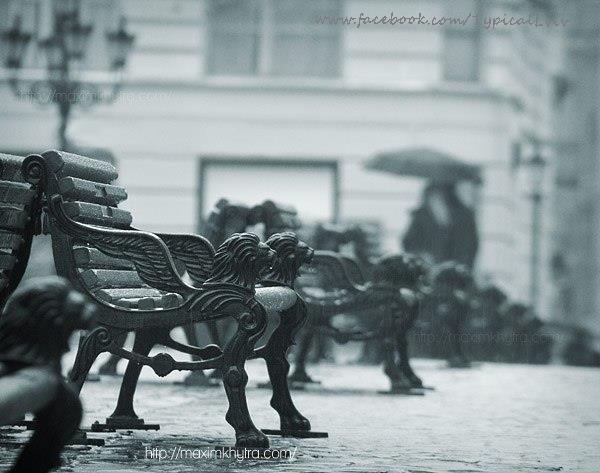
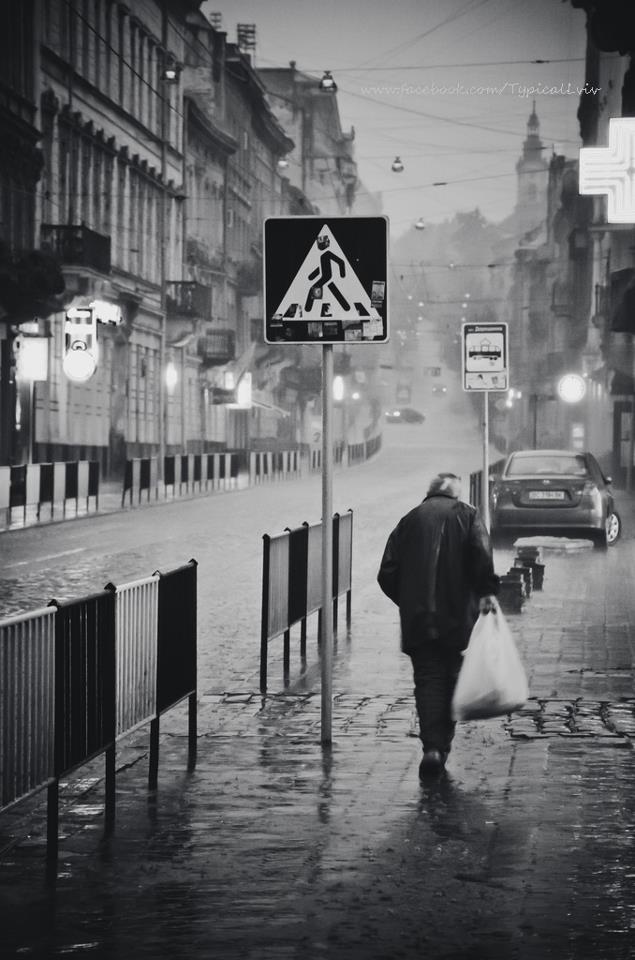
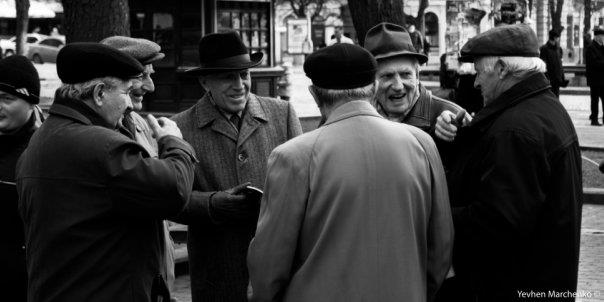






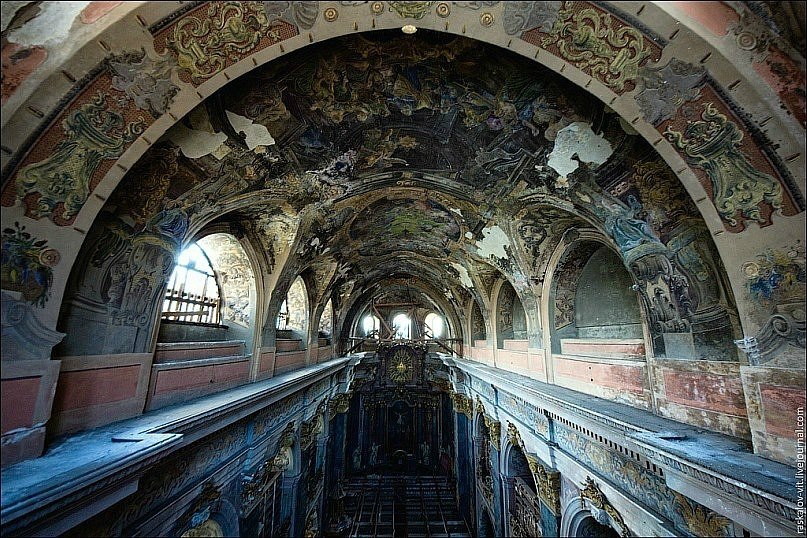



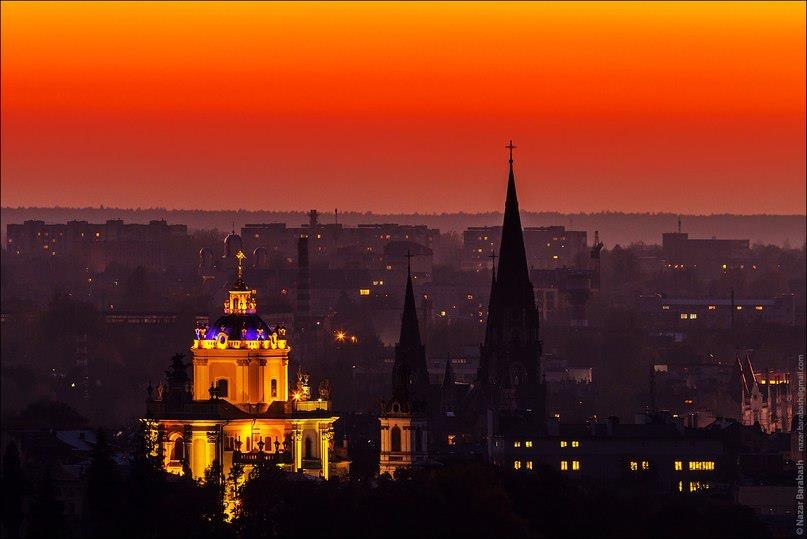
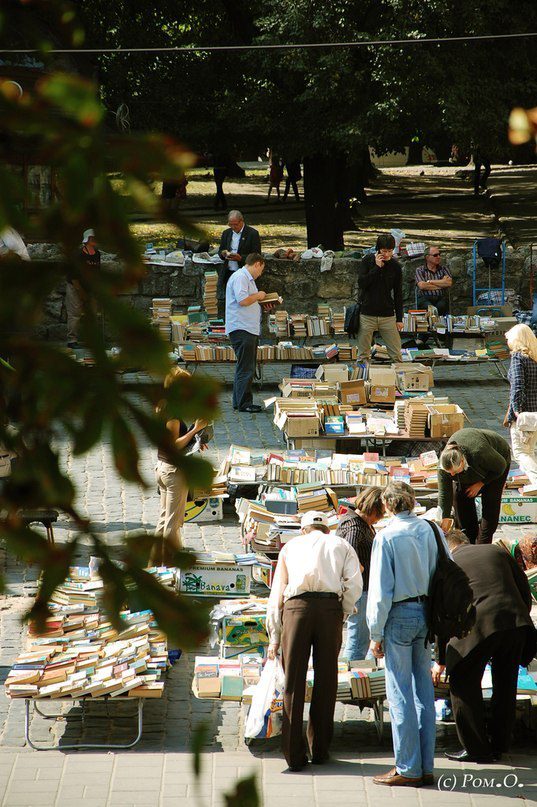
L’viv!
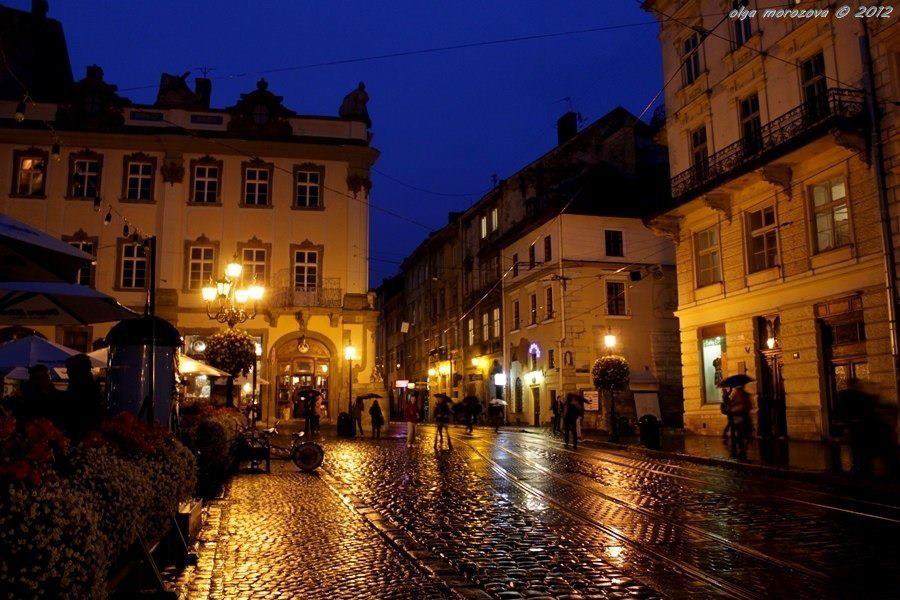
This city is so cool. It gives me chills.
Here are some photos posted in the FB group Типовий Львів (Typical L’viv). Each links to FB where you can see the photographers name.
***
***

***

***
***
***

Class and Cultural Icebergs
At the 2012 Property and Freedom Society Conference, a dear friend of mine told me about the books The Nine Nations of North America and Class, and his extrapolation of their ideas.
If I understand correctly, Americans exist with little or no imprint of feudalism upon their psyche. They treat each other as more-or-else equal members, but of different or unknown groups. They are constant diplomats of their group, smiling at the presumed diplomats of other groups to indicate hospitality and peaceful relations.
The French did not obliterate the idea of monarchy in their savage revolution. Instead, every common man tore off a bloody scrap of it and stuffed it into his pocket. Every person now affects monarchical grace tending toward condescension.

The famous iceberg analogy of culture goes thus:
A cultural group has a set of self-conscious manners and behaviors it openly demonstrates to the world. This is the smallest part of the iceberg, the part above the water — easily seen, even from a distance.
If you get close enough to a culture, you can look at the upper portions of the submerged part. There traits, some conscious some not, some deliberately hidden, are the second part.
Lastly, there is the great mass of the culture hanging in the dark depths. Their mysteries only accessible to the most dedicated explorers.
***
Here is my best guess at Ukrainian culture, and some very basic queues to help orient a new visitor:
1) Consider the self-descriptive title of the book Whisperers about Stalinist Russia.
Imagine a world in which anyone, for almost any reason, can accuse you of a deviation from official state ideology causing you, and possibly you family to vanish from home and society and history.
You would not speak often, you’d choose your listeners carefully, and even then, you’d speak in a hushed voice. Minding one’s own business would be the highest virtue.
2) Imagine a world of constant shortages. Pushing your way to the front of line might be the difference between hunger and relief of it.
I am trying to excuse the behavior of passengers on the airplane when I landed in Kyiv yesterday, returning from the PFS conference.
The pushyness is slowly improving.
3) Imagine Socialism, and more specifically, a world with no profit mandates and bankruptcy for enterprises with poor products or customer service.
Official government granted titles were an important part of status in the Soviet Union. Clerks in government run shops would flaunt their privileged status by lording over customers. There jobs were secure and their income guaranteed whether customers made a purchase or not. Americans can think of how they are treated at DMVs, Post Offices, or by the TSA.
Here I am explaining Ukraine’s poor customers service. I’m happy to say, things are improving rapidly. Extremely poor service seems to be a rarity, but generally good service remains hard to find.
4) Imagine a world in which your success was determined by political connections. It is not the result of your achievements in a system of voluntary interaction, but it is bestowed upon you by authority. This describes two things: 1- Socialism and 2- the collapse of socialism and the violent organized crime of the 90s.
A lingering effect seems to be the ways in which people express status by imitating the fashion, consumerism, and manners of organized crime.
5) This one is most important. Nearly everyone who writes about the Ukrainian (or Russian) personality describes how people are completely difference once they let you into their world.
The scar of Socialism is only ninety (or seventy for Western Ukraine) years deep. The iceberg goes deeper. There was life and commerce and civilization for millenia before Socialism.
So, in these first four points, I am not describing the soul of Ukrainians, I am describe the shell which contains it. I am attempting to help foreign visitors understand what are sometimes off-putting first impressions. They are worth working through.
I’m optimistic about Ukraine.
Meet the Ukrainian Michelangelo
 “Pinzel was a mysterious baroque sculpture of XVIII century, often compared to the great Gian Lorenzo Bernini and even to Michelangelo di Lodovico Buonarroti. Although some meticulous art connoisseurs tend to treat the latter as an exaggeration, there’s nevertheless no doubt that Pinzel had a unique technique and original view on baroque plastic arts, especially visible in his wooden artworks.
Unfortunately the information on Pinzel’s life and art is very scarce and extremely limited. And you will not be able to find much of it in the museum.
Researchers divide between attributing Pinzel Bavarian, Bohemian, Silesian, Italian or Ukrainian origins. Some even believe he could have escaped from Europe to run away from his past and start a new life in Western Ukraine incognito. And he successfully did. Under the patronage and financial support of Kanev headman Mykola Pototskiy, Pinzel and his long-term partner, architect Bernard Meretyn, have created and decorated lots of sacral houses in Western Ukraine.
There are very few of the Pinsel’s masterpieces that were found and identified so far, and many of them are collected in Lviv Sacral Baroque Sculpture Museum.” Read more: http://www.tripadvisor.com/ShowUserReviews-g295377-d1466009-r128570105-Johann_Georg_Pinzel_museum_of_Lviv_Sacral_Baroque_Sculpture-Lviv_Lviv_Oblast.html
Power Boat Races in Ternopil


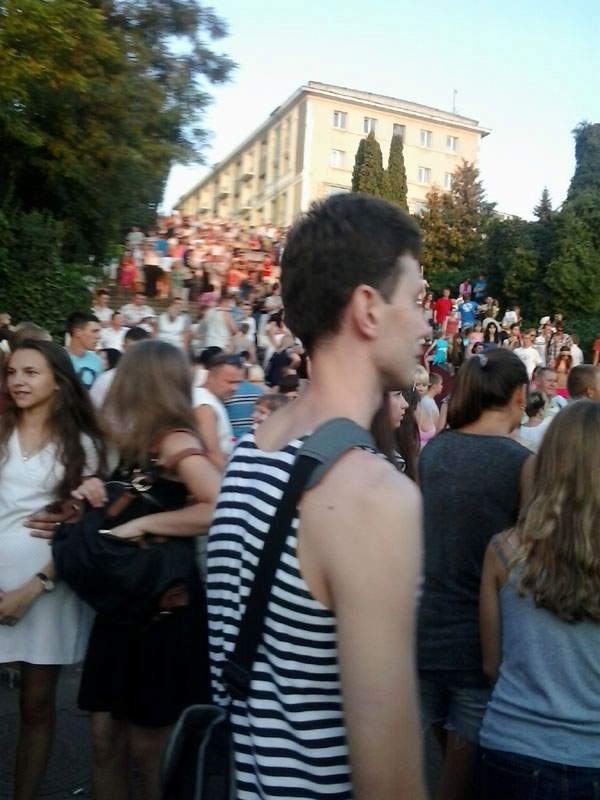


BBOY KNGURU – (ONEFLAVA) UKR/TERNOPIL 2012
From my weekly Google alert for Ternopil news:
[youtube]BzCx3UK3woY[/youtube]
Ronald Regan Square in Krakow

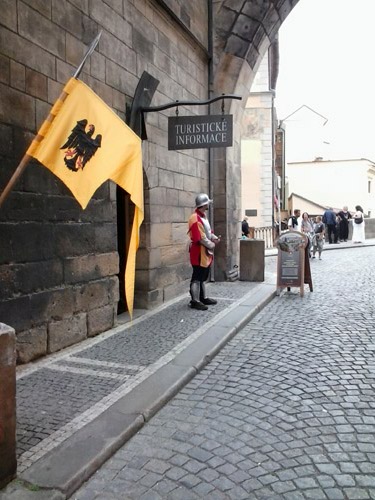
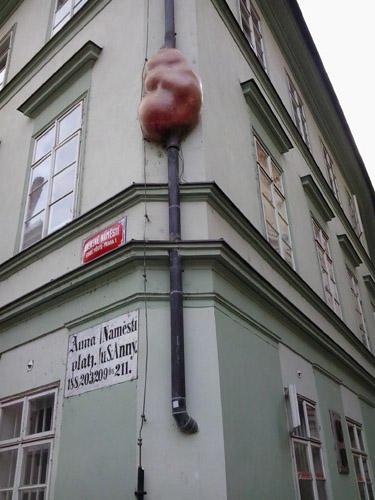
Prague is like a rennovated L’viv on steroids
I remain biased toward L’viv, but holy smokes! What a cool city.
Are those Kozaks as secondary figures in some of the sculptures on the Charles Bridge?