
Author Archives: RomanInUkraine
Merry Christmas, everyone!
I wish you all a Merry Christmas and a new year filled with inspiration:

Six impressions of America upon returning for the holiday
I’m back in NC for the holiday. I’m enjoying family, especially my niece who seems to think I’m a rock star, warm(er) weather, and American customer service — the best in the world!
My six impression upon returning for the holiday:
1) From the DC airport: Why are so many people wearing pajamas? By Ukrainian standards, this is criminally casual. Are whites America’s new minority?
2) You know that lonely feeling when you’re walking in the shoulder of a road? I wanted to get some fast food near my hotel. There were no sidewalks. Only the drive-thrus were open. The one at Taco Bell refused to serve me without a vehicle. So did the one at Wendy’s. The chill and smell of the air reminded me of nights at Fort Bragg. I’ll walk that memory lane when I visit Fayetteville next week. Welcome back to the USA.
3) Driving a car again. Love it. I can drive for hours and hours in any direction. My own car, after I jump started it, reminded me of the carefree days of Iowa City life. It was making noises first. Lots of them. But in the first few miles of driving they all disappeared, one by one.

4) The U.S. has the best customer service in the world. It is also immensely convenient — from the parking lots, to the cheap products available, to the price tags and come off easily without ripping. You no longer need a scouring pad to remove the glue. I bought a ladder and Lowes. The packaging just popped off. I didn’t even need scissors. I returned it to get another ladder, and the return process literally took about 30 seconds. It came with a smile too.


Meticulous thought has been devoted to anticipating and mitigating every difficult and inconvenience between my desires and their satisfaction. One example: since I used me credit card before at Walmart, I no longer have to sign the receipt. I’m not saying this is legal or a good idea, but it’s an example of how extraneous gesture is scrutinized with the aim of making life better. God bless Capitalism.
5) When I arrived at my sister’s my usually shy niece screamed my name and ran down the drive way to give me a hug. I think we all have a soft spot for such childish devotion and admiration.



6) My mom’s guest room is more Ukrainian than my L’viv apartment.

7) I love playing scrabble with mom. I had a banner game with three turns > 50 points, the highest being 65 points for “Nascent” which used all my letters.


ps – Lastly, here’s a picture of a Nativity model older than I am. The lamps were made by my grandfather and recently restored by my mother. The lamp-shades rotate when the lamp (with old fashioned Earth-hating incandescent bulbs) heats up, showing a procession of figures toward the manger

Photos from Ukraine 1947 by Robert Cappa
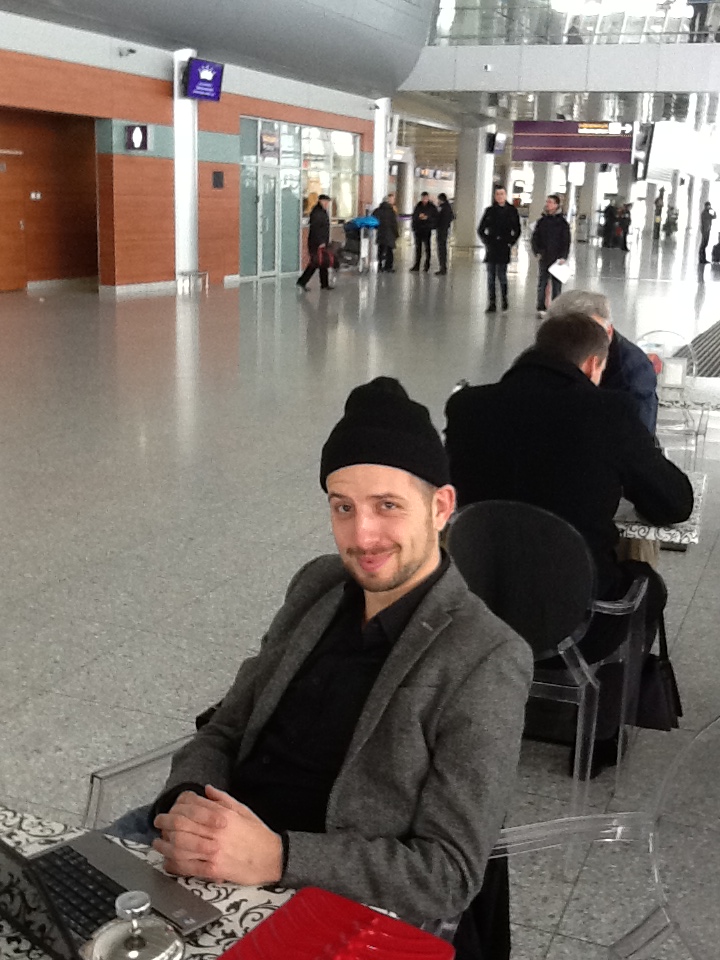
Just discovered that L’viv has a new airport

Armed Hutsulka
Isn’t she gorgeous?

Notes on Kolakowski’s “My Correct Views on Everything”
I love the intellectual life in L’viv.
I recently went to a coffee shop to hear L’viv author, historian, and university professor Iaroslav Hrytsak discuss a new collection of Kolakowski. I read a translation of one of Kolakowski’s essays which was discussed at the coffee shop. Here are some notes:
My Correct Views on Everything is a correspondence by Polish philosopher Leszek Kołakowski.
Wikipedia: “He came to believe that the totalitarian cruelty of Stalinism was not an aberration, but instead a logical end product of Marxism, whose genealogy he examined in his monumental Main Currents of Marxism, his major work published in 1976-1978.”
1) Kolakowski has a wonderful sense of humor, and offers a devastating demonstration of the hypocrisy and stupidity of Marxists using empirical evidence. I enjoyed reading it, though I feel like I missed a lot without first knowing Mr. Thomspon’s essays. This essay is 1/2 of a conversation.
2) If you want a deep philosophical analysis, start with the fact that Kolakowski is an empiricist. There is an ancient debate among philosophers over where knowledge comes from. Empiricism vs Rationalism. For the lay person, this is a boring debate, but it has huge implications, especially in the field of economics.
Some background on the debate:
http://www.dummies.com/how-to/content/philosophical-battles-empiricism-versus-rationalis.html
Hoppe spends the first 30-minutes of this lecture making the case for rationalism in economics and discussing the history of the debate. If you watch this video, know that “Positivists” are Empiricists. https://www.youtube.com/watch?v=hiXcO3pcR8I
Here’s an essay about Hoppe’s essay about Rationalism: http://www.stephankinsella.com/2011/06/hoppe-on-falsificationism-empiricism-and-apriorism-and-protophysics/
The first (and most difficult) part of Mises’ most famous book, Human Action, establishes the argument that economics is a rational science, not an empirical one. Here’s a free copy of the gigantic book: http://mises.org/document/3250
Here’s the simplest way to make the argument that I can think of: Humans learn. Therefore, every human event is unique and un-repeatable. Therefore, the study of human action is unsuitable for empiricism.
Okay, back to Kolakowski.
Most of his essay offers evidence of the brutality of socialism. “X happened, therefore socialism doesn’t work.” He always stops short of making absolute statements about the nature of human action. Empiricists fall into the trap that every situation is unique and requires experiment. If Utopian socialism doesn’t work, we can try Marxist-Leninist socialism. If that fails, we combine Rousseau and Marx and try to create an agrarian based communist society (as Cambodia attempted).
I think Kolakowski’s rejection of socialism is so strong and visceral, he would reject most forms of socialism, but his empiricism prevents him from making absolute statements.
You can do a search for “empiric” to see how often Kolakowski uses the term. Here are a few examples:
“These narrow empiricists and egoists [from Eastern Europe] extrapolate a poor few decades of their petty personal experience. . . .
and find in it pretexts to cast doubts on the radiant socialist future elaborated on the best Marxist-Leninist grounds by ideologists of the New Left for the Western countries.”
I think in this one he admits he is an empiricist:
“Only in such a loose sense that the same statement would be equally true when I substitute for “Marxist” or “Christian”, “sceptical”, “empiricist”. . . . I do not deny my debt to Marxism, to Christianity, to sceptical philosophy, to empiricist thought and to a
few other traditions ”
3) Kolakowski believes in the existence of a state (as 99.9% of people do). He criticizes a lack of a sort of “national liberty” just as much as he criticizes a lack of real liberty which is individual liberty.
“in that all key sectors of our life, including the army, foreign policy, foreign trade, important industries and ideology, are under tight control of a foreign empire which exerts its power with a considerable meticulousness (e.g. preventing specific books from being published or specific information from being divulged, not to speak of more serious matters). Still, we appreciate immensely our margins of freedom when we compare our position with that of entirely liberated countries like the Ukraine or Lithuania which, as far as their right to self-government is concerned, are in a much worse situation than the old colonies of the British empire were.”
He slips into Mr. Thompson’s paradign of socialist “systems” vs non-socialist “systems”. I would instead point out that these are not crimes of capitalism, but crimes of governments which have somewhat capitalistic economies:
“all negative facts to be found in the nonsocialist world-apartheid in South Africa, torture in Brazil, hunger in Nigeria or inadequate health service in Britain-are to be imputed to the “system”, while similar facts occurring within the socialist world have to be accounted for by the “system” as well, yet not socialist, but the same capitalist system (survival of old society; impact of encirclement etc.)”
4) He remains suspicious of capitalism:
[see above quote]
“consumer captialism has a logic of its own.”
“total freedom means anarchy and anarchy results in the domination of the physically strongest, i.e. total freedom turns into its opposite; efficiency as a supreme value calls again for despotism and despotism is economically inefficient above a certain level of technology.”
“I share without restrictions your (and Marx’s, and Shakespeare’s, and many others’) analysis to the effect that it is very deplorable that people’s minds are occupied with the endless pursuit of money, that needs have a magic power of infinite growth, and that the profit motive, instead of use-value, is ruling production. Your superiority consists in that you know exactly how to get rid of all this and I do not.”
5) The criticism which is most logical, and, in my opinion, best, is here:
“the “new alternative society” have shown very convincingly that the only universal medicine these people have for social evils-state ownership of the means of production-is not only perfectly compatible with all disasters of the capitalist world, with exploitation, imperialism, pollution, misery, economic waste, national hatred and national oppression, but that it adds to them a series of disasters of its own: inefficiency, lack of economic incentives and, above all, the unrestricted role of the omnipotent bureaucracy, a concentration of power never known before in human history. . . . We want a society with a large autonomy of small communities, do we not? And we want central planning in the economy. Let us try to think now how both work together. We want technical progress and we want perfect security for people; let us look closer how both could be combined.”
also here:
“And socialism is defined within this “system-thinking” as total or nearly total state ownership of the means of production; you obviously cannot define socialism in terms of the abolition of hired labour, since you know that if empirical socialism differs in this respect from capitalism, this is only in restoring direct slave labour for prisoners, half-slave labour for workers (abolition of the freedom to change one’s place of work) and the mediaeval glebae adrcriptio for peasants.”
He also approaches it here, though stops himself:
“Still, I think that many important tenets of Marx’s doctrine are either false or meaningless or else true only in a very restricted sense. I think that the labour theory of value is a normative device without any explanatory power whatsoever; that none of the well known general formulae of the historical materialism to be found in Marx’s writings is admissible and that this doctrine is valid only in a strongly qualified sense; that his theory of class consciousness is false and that most of his predictions proved to be erroneous (this is admittedly a general description of what I feel, I am not trying to justify here my conclusions).”
6) Side note: “Fascist” as slander.
On pages 10-11, he jokes about how the accusation of “fascism” was used as propaganda against anyone who opposed socialism. I think we Western Ukrainians can relate to that.
7) I’m really curious how Marx influenced Kolakowski, and which aspects of Marx Kolakowski accepts. He writes:
“If I admit nevertheless to keep thinking, in historical (yet not in philosophical) matters, in terms inherited in part from the Marxian legacy, do I accept an allegiance to the Marxist tradition? Only in such a loose sense that the same statement would be equally true when I substitute for “Marxist” or “Christian”, “sceptical”, “empiricist”. Without belonging to any political party or sect, to any Church, to any philosophical school, I do not deny my debt to Marxism, to Christianity, to sceptical philosophy, to empiricist thought and to a few other traditions ”
“I readily admit that without Marx our thinking about history would be different and in many respects worse than it is”
I hope he is speaking of Marx’s idea that history properly told is the history of class struggle. The first Hoppe essay I ever read was “Marxist and Austrian Class Analysis”. Hoppe details the surprising overlap between Marxism and the Austrian School. Basically, he arguing that Marxists interpret history correctly, but mis-identify the exploiters. The exploiters are not the businessmen, but those you use violence to seize wealth (criminals and politicians).
Audio: http://www.youtube.com/watch?v=1DIFVvrczXs
Text: http://mises.org/community/blogs/ayrnieu/archive/2008/07/17/marxist-and-austrian-class-analysis.aspx
PDF: http://mises.org/journals/jls/9_2/9_2_5.pdf
***
“Women Do Everything Here” : The Absence of Chivalry In The Byzantines
“So, just as the church had used its power of literacy and legitimacy to manage the Christian monarchs, they used the crusades and the myth of chivalry, to direct the energies of these professional warriors to productive ends.
This ethic of chivalry conveyed status upon those who served christendom. It codified service of others as masculine. It could be obtained through demonstrated action, and spiritual reflection, as well as daily posturing, rather than the more expensive requirement of land holding, and was therefore more widely available to retinues. It also provided a code of conduct that the aspring classes could imitate, making the ethics pervasive.
The need for commoners to rent land from land holders, participate as infantry, and to demonstrate their capacity for honorable hard work, before marriage and reproduction were possible, reinforced this set of chivalrous values – allowing laborers and craftsmen to also adopt the chivalrous ethic, and to demonstrate their status signals through conformity to it. THe corresponding delay of childbirth and consequential inclusion of women into the work force, as well as their possession of rudimentary property rights, worked along with suppression of the breeding of the lower classes to create the european universalist and commercial character.
This code of chivalric conduct does not exist here in the east among the men. Service is immasculine. It violates the primary principle of manliness which is independence from external direction. Whether that external direction come from service to an employer or service to the commons – society.
Manliness, and masculinity have not been hybridized. It is not even as mature here as it is among the peacock strutters of the mediterranean — even if it is less ignorant, brutal and barbaric than that of the Arabs, and less familial and hierarchical than that of the Asians. And while we will certainly argue that masculinity has been overly feminized in much of the west, so much so that lower class males are returning to their individualistic migratory roots, the ethic of masculinity through service remains — for now.”
This piercing observation comes from Kyiv. I think masculinity is more inclined to peace of productive cooperation in L’viv for several reasons:
1. People are much more religious.
2. More people travel to Western Europe and witness civilized cooperation.
2. People here fondly remember the Austro-Hungarian Empire and the notion of aristocracy.
3. The Soviet Union had 60, instead of 80 years to obliterate morality, identity outside state-identity, and pride outside pride in the state. Western Ukraine was spared the particularly murderous 1920s and 1930s. Additionally, the Soviet Union and it’s barbaric caricature of reality was views, from bloody inception to collapse, as something foreign.
Polish vs Ukrainian villages in Galicia
I enjoyed fascinating discussions yesterday in many regards. I enjoyed them in L’viv style too — sitting in a coffee shop, then in another, then in another.
Here’s one detail:
In Galicia, originally Ukrainian villages are visibly different from originally Polish ones. The Ukrainian ones arose earlier. Many were build during a time of Tartar and Turkish raiders. Consequently, they are often hidden in valleys and ravines. They are also rounder with many little streets — for security, community, or both. Polish villages mostly came into existence during the time of a strong Polish state. They were built along single roads or intersections in places with good land for farming.
For my An-Cap friends, these reflect eras of mobile bandits versus stationary ones (whose longer time preference causes them to be more slightly more humane).
November Headlines
Bloomberg: Richest Ukrainian makes $3 billion on state asset sales
“Rinat Akhmetov, Ukraine’s richest man, added $3 billion to his net worth in the past six months by buying state-owned energy assets sold by his hometown political ally, President Viktor Yanukovych.
As the sole bidder in two of five government auctions held since November, Akhmetov’s DTEK Holdings BV paid about $600 million to acquire state stakes in some of the country’s leading power generators and distributors that gave him control of about 70 percent of the country’s thermal power output.” (more)
***
“The following charts show that public support of the Party of Regions and voter turnouts are shooting through the roof at the special polling stations like hospitals and prisons.” (from Ukraine Watch)

***
Two Shocking Headlines
Entire Ukraine government resigns
This is nothing but an internal shuffling of personnel within the ruling party, perhaps timed to deflect blame for the story linked below.
***
Ukraine signs $1bn gas deal with mystery [con-artist] Spanish executive
The headline suggests stupidity, but I suspect evil. In other words, I suspect the Ukrainian politicians and bureaucrats who were supposedly conned were actually in on the fraud, personally benefiting from it.
Arguing with Soviet Patriots — USA vs USSR
I occasionally encounter a Soviet patriots who defends the USSR by comparing their crimes favorably to the United States, and grossly exaggerating Soviet military and economic power.
I am thrilled to have found this video which is so perfect a reply to their arguments that I feel relieved of the responsibility of making one myself.
[youtube]b3OZeiBdXx8[/youtube]
Note: I originally wrote Soviet “Nationalists” but I’m beginning to reserve that term to relate to ethnicity as opposed to political union.
Q: How many signatures does it take to receive a water delivery in Ukraine?
A: TEN! I couldn’t believe it. Exactly ten. I counted.
I had two jugs (approx. five-gallons each) delivered for my water cooler. This was the initial delivery. Subsequent deliveries will only require three signature.
Here’s a picture of the documents they left me:

On the other hand, Nova Poshta is emerging as a Ukrainian FedEx. They are professional, efficient and require only a single signature for deliveries.
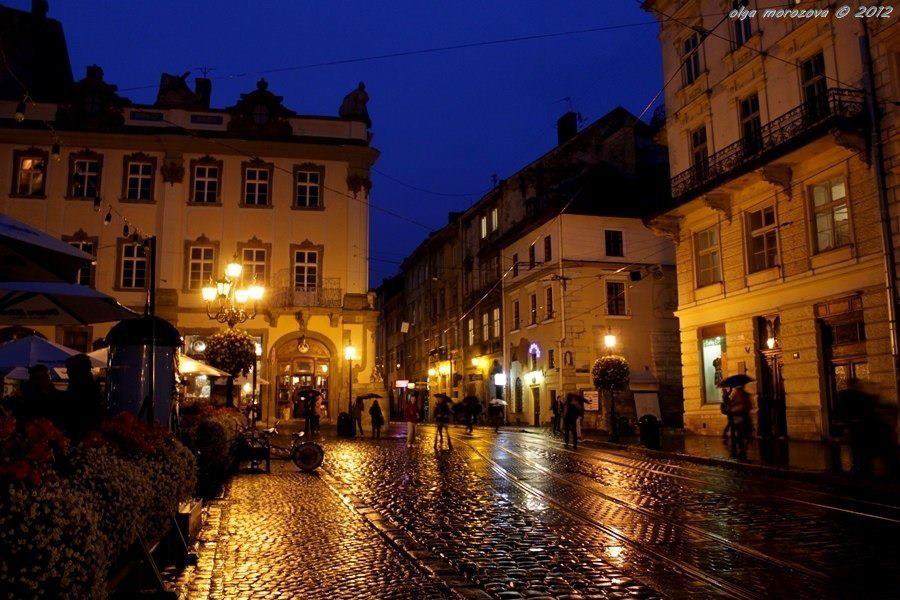
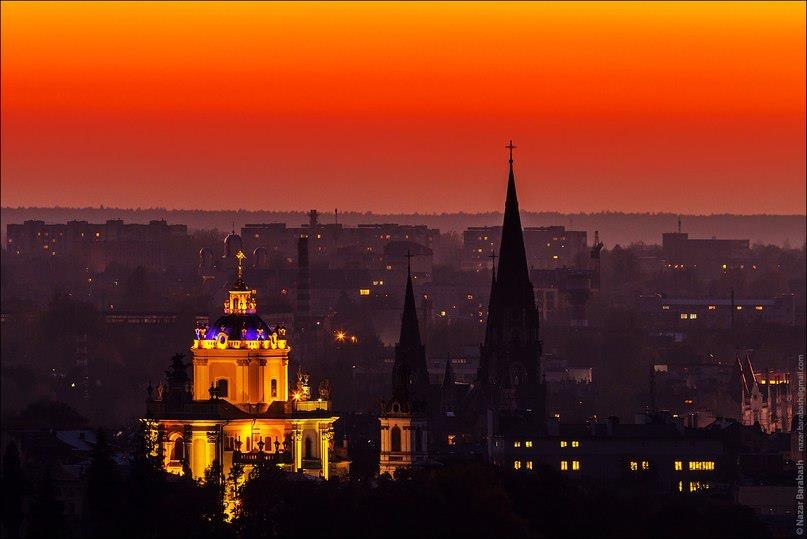
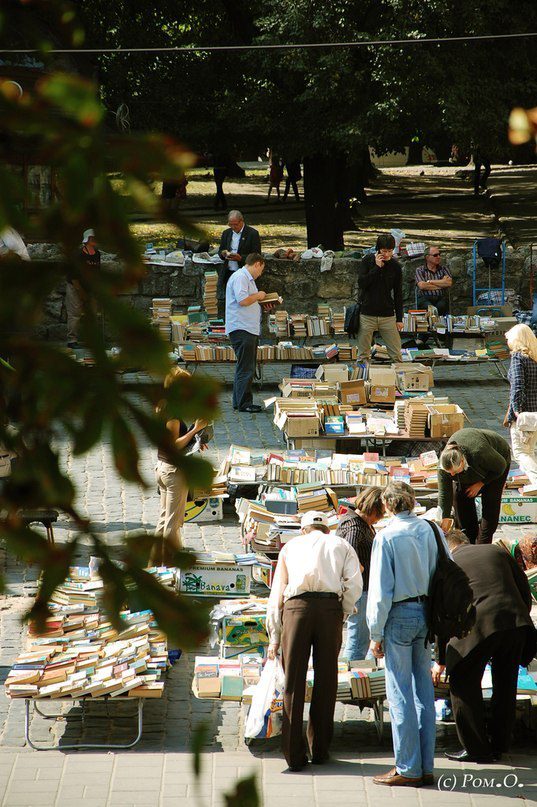
More photos from the Typical L’viv FB page
Please click on the photo for large version with attribution.

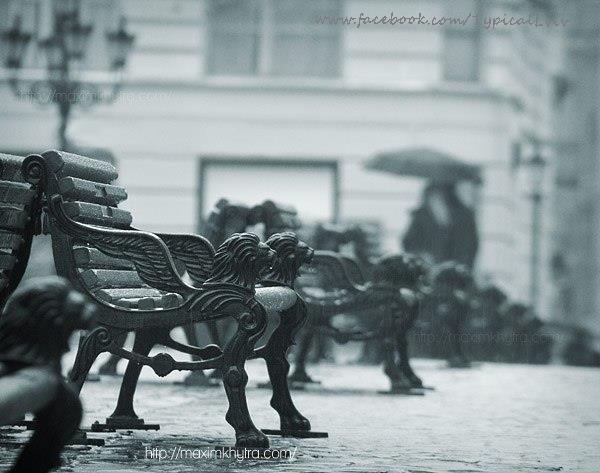
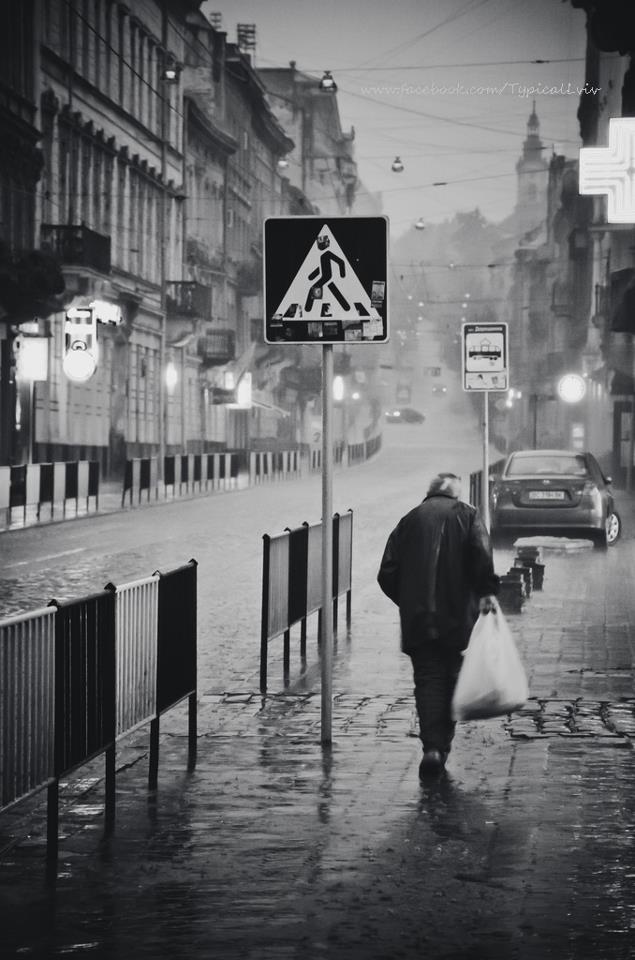
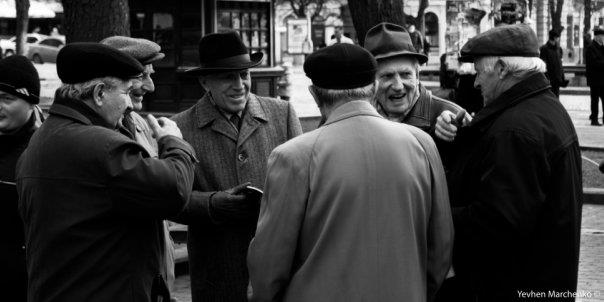






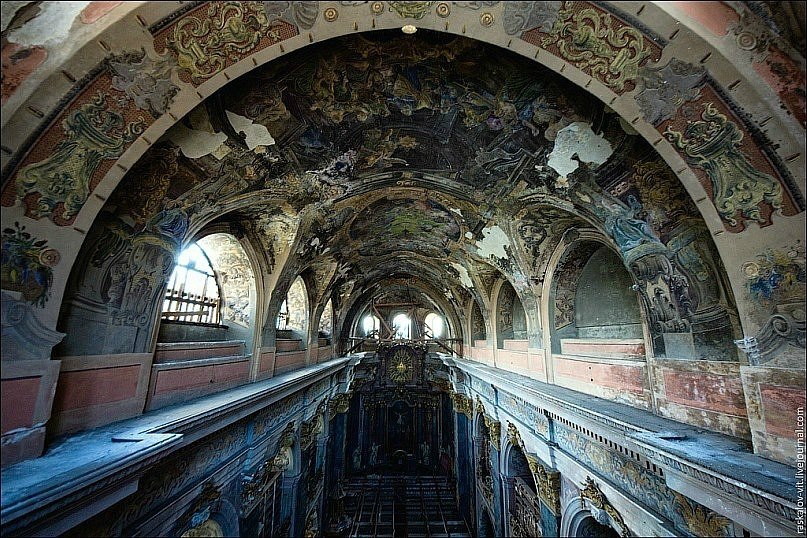



L’viv!
This city is so cool. It gives me chills.
Here are some photos posted in the FB group Типовий Львів (Typical L’viv). Each links to FB where you can see the photographers name.
***
***

***

***
***
***

Vanquished Aristocracy
Thanks to my great friend Curt Doolittle for helping me understand Ukraine a little better. I am delighted by his visit and hope he stays.
***
The story of Ukraine is the story of vanquished aristocracy, annihilated first by the Mongols and second by the Bolsheviks.
Much of what remains waits for their ancient kings to return. A cult awaiting leaders. Predictably, only false profits, lairs, manipulators and the most brutal thugs aspire to the helm. History will not be rewritten. The dead will not return.
Ukrainian aristocracy survives only in the blood of Ukrainians. The aristocratic class needs to be reconstituted. The best genes, those of the ancient kings, perhaps, can only rise amid liberty, in a system of voluntary exchange and property rights where the masses don’t assault the friuts of success with a million rusty knives, each entitled idiot tearing off a piece for himself. Furthermore, t can only arise amid institution like family and fatherhood. Voluntary segregation forces the irresponsible to face the consequences of their irresponsibility.
***
Curt:
A country where the men stand around, watch what’s going on, direct the women as if they are somehow adding value to the obvious, and the women humor the men, mollify them sufficiently as if they’re afraid of being beaten, and then do all the work as if the men weren’t there anyway.
. . . .
Men are what mothers breed, and make them. While they have innate tendencies that are very different from those of women, most of what we call civilization is creating rules and incentives that direct men’s energies to the pursuit of status and behavior that is beneficial for all.
So who is to blame for the behavior of men here?
They have not abandoned their wealth of violence. That’s obvious. Neither domestically, politically, economically or socially. And for that I admire them. HOwever, without chivalry, they have no means of directing their energies to service of others.
And without mothers who understand chivalry, they have no one to teach them.
***
The remembering of past glory seems to be the predominant theme in much Ukrainian poetry. See Shevchenko’s Розрита могила .
Also, in paintings of the iconic Kozak Mamay:
.jpg)
The Kozaks were many things, including the warrior culture of the steppe that proceeded the annihilation of Kyiv-Rus at the hands of the Mongols in the 13th century.
I imagine him singing about how there was once a great kingdom here. Tragically, much ancient Ukrainian literature, including unique original texts were destroyed by the Soviet Union.
The best local dive in Ukraine
 Holy Moley! This famous restaurant is found in Western Ukraine’s roadside village of Ozerna. Every trucker knows it. It’s buffet style and, as one would expect, contactly packed. It’s also some of the best food I’ve ever tasted. I’m told the restaurant is owned by a farmer. The food goes straight from field to your plate. Fantastic!
The portions are huge.
I had borshch and salo (pig fat). That’s right. Salo. For my American friends: imagine the white fat on the edge of your bacon. Now imagine it without the bacon. By itself. Cold. With piece of raw garlic beside it, and a sprinkle of paprika.
I’ve tried salo many times. Usually . . . meh. But on two occasions, including today’s . . . Wow. My paleo digestive system is still tingling, six hours later. I feel like a machine that’s finally been oiled. I can’t stop imagining the delicious taste, the texture. I’m going to dream about that salo.
I want to go back there to have it again, though I’ll also be tempted by the stakes and cutlets, fresh salads and plates overflowing with homemade pastries.
This is the type of food that makes you happy to be alive!
Oh, and I almost forgot to mention. The cost of my meal, plus that of my friend’s: about $3.50.
***
In celebration of salo:
[youtube]SHVDIP0xGxw[/youtube]
A problem of databases (not people!)
A situation as ironclad and immoveable as the mountains:
“Don’t you understand me? Your vehicle is in the new database. We can only generate the document you need from our old database!”
2012 Property and Freedom Society Conference Roundup
 So, I was going to write about the 2012 PFS Conference, but it’s already been done in funny, thoughtful and insightful ways.
I will only say that for me, personally, over the course of my three visits to the conference, it has gone from being the intellectual highlight of my year, to being, in addition to that, a gathering of some of my closet friends.
Here, I’ll simply organize much of what has already been written & recorded. I’ll also post my photos.
***
– Smiling in Bodrum by Michael McKay
– The Center of the Conspiracy by Jefferey Tucker
– Inside the Conspiracy by Andy Duncan who also wrote Outside the Asylum about the 2011 Conference
– The World’s Greatest Haircut by Doug French
– The Chief Event by Sean Ring
***
My good friend Joakim Fagerström of Sweden’s Mises Institute, a tireless, uncompromising promoter of liberty, took the following videos:
*
Two men who need no introduction, Jeffrey Tucker and Hans Hermann Hoppe:
*
“Mr Helio Beltrão is the President and one of the founders of Mises Brasil. I met Helio three years ago and he inspired us to start mises.se. Helio continues to be a very close friend and ally in the struggle for freedom. Mises Brasil and Mises Sweden has very close ties and I hope we will continue to have this for many years to come. In this interview Helio tell us about many good things that are happening with Mises Brasil, about PFS and his personal background in the financial industry.”
*
Vytautas is one of these young libertarians that give you real hope about the future. Vytautas is young smart, full of energy, well-educated and would make any socialist tremble with fear. He is a Senior Policy Analyst at the Lithuanian Free Market Institute and lives in Vilnius, Lithuania. Lithuanian Free Market Institute is a quite big and active Institute and employs 12 people. Remigijus Šimašius who is a frequent visitor at the PFS was the President of Lithuanian Free Market Institute from 2006-2008 but became the Minister of Justice 2008 in Lithuania.
*
“Benjamin Marks was one of the speakers this year. Benjamin is the editor of Economics.au.org and Capitalism.HK. Last year he hosted a Mises seminar in Australia with Professor Hoppe and this year he will host a seminar with Professor Block. In this interview we talk about what PFS is for Benjamin and what he has learned from it and about one of his intellectual favourites H.L. Mencken. He also tell us about the amazing Neville Kennard a vivid PFS supporter that passed away this year but Benjamin tell us about how he stayed an enemy to the state to the bitter end.”
*
“. . . the Inflation Blues performed by Professor Hunt Tooley and Joe Becker. A great song and fantastic performance in the honour of Ludwig von Mises 131st birthday!”
*
Last, but not least, me:
***
Most of these pictures were taken by me. The best ones were taken by Paul Vahur.


***
On the first evening, there was a tour of the Bodrum Castle which contains an “underwater museum” — a museum of recovered shipwrecks, including the Uluburun shipwreck shipwreck from the 14th century BC. The out was given by museum’s head archeologist. You could feel his enthusiasm.


***
Listed to my lecture at the 2011 PFS Conference, The Military Mentality,
and stay tuned to the Property and Freedom Society website for videos of this year’s lectures. If I were to make a single recommendation, it would be Anthony Daniels’s, The Ultimate “Freedom:” Choice without Consequences. His insights delivered with understated British humor always steal the show.
Ukrainian man on 50-hour drunkfest opens door on plane
The sad story of modern Ukraine can be summed up in this sentence from the article:
He had gone to Ukraine to build a house, but told the FBI that once he learned he could not start construction as hoped, he decided to start drinking.
***
“Hung over from a 50-day drunk, Anatoliy N. Baranovich thought Delta Flight 1215 was on fire when the aircraft landed at Salt Lake City Tuesday night, so the Ukrainian man frantically tried to open the rear door of the aircraft and furiously struggled with passengers trying to restrain him, authorities allege.” (Read More)

