Category Archives: History

Taras Shevchenko’s Testament (1859)

Great Ukrainian poet and artist and classical liberal Taras Shevchenko’s Testament (1859):

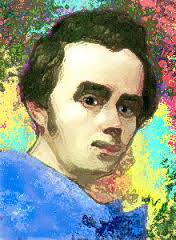
shevchenko

Dig my grave and raise my barrow
By the Dnieper riverside
In Ukraina, my own land,
A fair land and wide.
I will lie and watch the cornfields,
Listen through the years
To the magic river voices,
Whisper in my ears.

When I hear the call
Of the racing flood,
Loud with hated blood,
I will leave them all,
Fields and hills; and force my way
Right up to the Throne
Where God sits alone;
Clasp His feet and pray…
But till that day
What is God to me?

Bury me, be done with me,
Rise and break your chain,
Water your new liberty
With blood for rain.
Then, in the mighty family
Of all men that are free,
May be sometimes, very softly
You will speak of me?

— Taras Shevchenko

The Conflicting Nat’l Myths of Ukraine – Russia & the strange union w/ Putin – Europe’s Right

(previously unpublished essay)

The national myths of Ukraine and Russia are not just different, they are mutually exclusive, and while Ukraine’s can exist without Russia, the Russian idea plunges into an identity crisis without Ukraine.

Both claim the legacy of Kievan Rus, the mythologized and idealized kingdom is considered a well-spring of Slavic culture and Orthodox Christianity. It was obliterated by the Mongols in 1241. Here, the narratives diverge.

Russian ideologues consider themselves the great uniters and political champions of Slavic peoples. Kiev was the wellspring of their culture and religion, and Moscow has been and remains their natural political center ever since the principality of Muscovy “affirmed itself as a regional hegemon.” A unification, which, in the word of Putin adviser Alexander Dugin, occurred “not by the conquest, but by the genesis of Russian Statehood.” See Alexander Dugin’s “Open Letter to the American People.”

Ukrainian ideologues, whom Dugin refers to as “Western Russians,” consider themselves the unfortunate but otherwise noble descendants of Kyivan Rus whose greatest political expression for the previous several centuries were Kozak uprisings against slavery and feudal structures imposed by foreign monarchs, the Muscovites, an ethnically mixed Finno-Ugric people and latecomers to slavic culture, having been the most aggressive and successful of the oppressors.

The conflict is obvious, and the battle-space includes Wikipedia.

Ukrainian poetry often engages the idea of a hi-jacked identity: “What are these Muscovites searching for in our torn open graves? An ancient parent? Oh, if only they could find that, our children wouldn’t be crying.”

Dugin is correct when he claims “such a State [as Ukraine] . . . never existed in history.” I would describe Ukraine as a culture attempting to defend itself through statehood. It is a remarkably resilient culture having survived centuries of imposed feudalism, Russification, Polinization, merciless Soviet purges of writers, musicians, artists and other cultural figures, Holodomor, and many dozens of laws over the course 400 years forbidding or limiting the use of the Ukrainian language. Its attempts at statehood have been miserable failures, most recently combining all the bureaucratic excess of the over-protective West with the corruption and glacial work ethic of the post-Soviet East. The recent overthrow of the Yanukovych government was a huge accomplishment and had the potential to be Ukraine’s Magna Carta moment. It still might, though the Russian invasion throws everything into question.

Russia, by contrast, is a state looking for a culture. Ever since the Grand Duchy of Muscovy’s conquest (yes, conquest) of the Kingdom of Novgorod, the idea of a Greater Muscovy people, or later, a greater Russian people, has been inseparable from forced cultural assimilation, reaching its barbaric apogee in Soviet times. The joke was that if you beat a Polish man long enough, he becomes a Russian.

The expansionist idea is evident again in the symbol of Dugin’s “Russian Spring” — golden spear points radiating in all directions.

While Dugin invokes a Russian people to describe even 9th century Kievan-Rus, the idea of a Russian people is actually only slightly older than the idea of an American people.

It was in the 18th century that Czar Peter I, formerly of the Grand Duchy of Muscovy told his diplomats to start referring to the Grand Duchy and its conquests as “Russia” — a name taken from the contested legacy of Kievan-Rus.

Though many states can be described as military unifications of more tribal kingdoms, the Russian state was particularly audacious in expanding its myth to encompass Finno-Ugrics, Slavs, Caucasians, Asians, Tartars, and other Turkik peoples.

Once Russia extended its national myth beyond the boundaries of their core population, their problem has been the unification of disparate and unwilling cultures. So it remains.

Long before Peter Sutherland’s infamous statement about “undermin[ing] national homogeneity” through mass immigration, the cultures of the steppe were being undermined by population transfers, mass deportation, language restrictions, and purges of writers, artists, musicians and other cultural figures.

What the Europeanists and globalists only now pursue with a velvet glove (or at least a leather one) has long since been pursued with an iron fist in the steppe.

Thus it is a bit peculiar to witness the alliance between the Kremlin and much of Europe’s far right. As detailed by Anton Shekhovtsov:

International ‘observers’ at the illegal and illegitimate ‘referendum’ held in the Autonomous Republic of Crimea occupied by the Russian ‘little green men.’ The overwhelming majority of the ‘observers’ are representatives of a broad spectrum of European extreme-right parties and organisations: Austria’s Freiheitliche Partei (FPÖ) and Bündnis Zukunft, Belgian Vlaams Belang and Parti Communautaire National-Européen, Bulgarian Ataka, French Front National, Hungarian Jobbik, Italian Lega Nord and Fiamma Tricolore, Polish Samoobrona, Serbian ‘Dveri’ movement, Spanish Plataforma per Catalunya. They were invited to legitimise the ‘referendum’ by the Eurasian Observatory for Democracy & Elections (EODE) . . . Presented by Michel as ‘a non-aligned NGO’, the EODE does not conceal its anti-Westernism and loyalty to Putin, and is always there to put a stamp of ‘legitimacy’ on all illegitimate political developments, whether in Crimea, Transnistria, South Ossetia or Abkhazia. Moscow’s money talks. . . .

Front National’s Marine Le Pen now visits Moscow on a seemingly regular basis. . . .

Jobbik’s leader Gábor Vona gave a lecture at Moscow State University at the invitation of Russian right-wing extremist Aleksandr Dugin; according to Vona, it would be better for Hungary to leave the EU and join the Russia-dominated Eurasian Union. Dugin himself gave a talk in the United Kingdom at the invitation of the far-right Traditional Britain Group and wrote a letter of support to Nikolaos Michaloliakos, the now jailed leader of the Greek neo-Nazi Golden Dawn, whose political programme urges Greek society to turn away from ‘American Zionists’ and ‘Western usury’ towards Russia. . . .

Putin’s far-right government is eager to co-operate with any European ultranationalist party unless it is critical of Russia for historical or other reasons. . . .

On April 9th, Jobbik’s MP Tamás Gaudi Nagy made a 3-minute speech against European democracy wearing a T-shirt saying “Crimea legally belongs to Russia! Transcarpathia legally belongs to Hungary!”

Of course, politics have always made strange bedfellows.

By endearing themselves to the Kremlin, they get financial support. This matters. The risk is a compromised message, and the loss of nationalist movements in in Eastern Europe where the terrifying memory of Kremlin hegemony outweighs any fear of encroaching cultural Marxism.

As observed by Steve Sailor, Ukraine’s revolution had a very nationalist and conservative character, but now that it’s accomplishment is threatened by Moscow, Ukrainians are increasingly willing to embrace whatever it can get from the West in exchange for closer ties and protection, if only economic. Since the government was toppled in February, support for joining the EU has risen from 41 to 53%. (See page 38 of this report.)

With a weakened west and a collapsing empire overseas, Russia has tremendous potential to rise as the military and resource wing of European people. They would need to refocus on their core population and fight corruption whose size, scope and callousness is unique among Europeans.

Rather than seizing this potential, they’ve returned to their failed historic role of dragging surrounding nations and people into this morass of corruption and brutality. Instead of building a foundation for commerce and trade (including trade of military protection), they’ve decided to expand the rubric of a “greater Russian people” by several hundred kilometers.

They will continue to be the Europeans distinguished by their failure at modern civilization.

How Moscow Hijacked the History of Kyivan Rus

A lot of Ukrainian poetry deals with the idea of hijacked identity: “What are these Muscovites searching for in our torn open graves? An ancient parent? Oh, if only they could find that, our children wouldn’t be crying.”

***

Here are the facts:

At the time of the Kyivan Empire there was no mention of a Moscow nation. It is well known that Moscow was created in 1277 as a subservient vassal region or ‘ulus’ to the Golden Horde, established by the Khan Mengu-Timur. By that time, Kyivan Rus had existed for more than 300 years.
There are no indications of any connection of Kyivan Rus with the Finnish ethnic groups in the land of ‘Moksel’ or later of the Moscow principality with the Principality of Kyivan Rus up until the XVI century. At the time when Kyivan Rus had officially accepted Christianity, the Finn tribes in ‘Moksel’ lived in a semi-primitive state.

How can anyone speak of ‘an older brother’ when that ‘older brother’ did not first appear until centuries after Rus-Ukrainians? He has no moral right to call himself an ‘older brother’, nor to dictate how people are to live, nor to force his culture, language, and world views. It is clear that until the end of the XV century, there was no Russian nation, there was no older brother ‘Great Russian’, nor were there any Russian people. Instead, there was the land of Suzdal: the land of Moksel, later the Moscow princedom, which entered into the role of the Golden Horde, the nation of Genghis Khan. From the end of the XIII to the beginning of the XVIII century, the people in this land were called Moskovites. And Moscow historians are silent about this question of their national origins.

During the IX to the XII cent. the large area of Tula, Riazan, and today’s Moscow region, including the tribes of Mer, Ves, Moksha, Chud, Mari and others – all this was inhabited by the people called ‘Moksel’. These tribes eventually became the foundation of the nation who now call themselves ‘Great Russians’.
How Moscow hijacked the history of Kyivan Rus

Yuri Dolgoruky

In 1137, the younger son of the Kyivan prince Monomakh, Yuri Dolgoruky (who had been left without a princedom in the Kyivan empire) arrived in this land.

Yuri Dolgoruky began the rule of the ‘Riurykovyches’ in ‘Moksel’, becoming prince of Suzdal. To him and a local Finnish woman was born a son Andrey, called ‘Bogoliubsky’. Born and raised in the forest wilderness among the half savage Finnish tribes, prince Andrey cut all ties with his father’s entourage and with their old Kyivan customs.

In 1169 Andrey Bogoliubsky sacked and destroyed Kyiv. He destroyed all the churches and religious artifacts, something unheard of in those times.

Andrey was a barbarian who did not feel any familial ties with Kyiv, the holy city of Slavs. . . .

Under the influence of Christianity, the land of ‘Moksel’ started to form their language, which in time became Russian. Up until the XII century, only Finn tribes lived in the land of ‘Moksel’. The archaeological findings of O.S. Uvarova (Meria and their everyday life from kurhan excavations, 1872 – p. 215) support this. Out of 7729 excavated kurhans, not a single Slavic burial was discovered.

And the anthropological investigations of human skulls by A. P. Bohdanov and F. K. Vovk support the differentiated characteristics of the Finnish and Slavic ethnoses. . . .

n 1237 the Tatar-Mongols entered the lands of Suzdal. All who bowed, kissed the boots of the Khan and accepted subservience remained alive and unharmed, all others who did not submit were destroyed.

The princes of Vladimir, Yury and Yaroslav Vsevolodovich accepted subservience to Khan Batey. In this manner, the land of ‘Moksel’ entered the ranks of the Golden Horde Empire of Genghis Khan, and its fighting forces were combined with the army of the Empire. The commander of the Moksel division within Batey’s army was Yury Vsevolodovich, the prince of the city of Vladimir. In 1238, Finnish tribe divisions were formed and marched together under Batey in his invasions of Europe in 1240-1242. This is direct evidence of the establishment of the rule of the Khan in the lands of Rostov-Suzdal.

While Yuri Vsevolodovich was away taking part in Batey’s European invasion, his younger brother Yaroslav Vsevolodovich was placed at the head of the Vladimir princedom. Yaroslav left his eight year old son Alexander Yaroslavich as hostage with the Khan. . . .

The big lie was introduced: that Moscow was founded in 1147 by Yuri Dolgoruky. This is a myth with no supportive evidence. Moscow was established as a settlement in 1272. That same year the Golden Horde conducted their third census of the populations in their domain. Both in the first census (1237-1238) and in the second census (1254-1259) there is no mention of any Moscow at all.

Moscow appeared as a princedom in 1277 at the decree of the Tatar-Mongol Khan Mengu-Timur and it was an ordinary ‘ulus’ (subdivision) of the Golden Horde. The first Moscow prince was Daniel (1277-1303), younger son of Alexander, so-called ‘Nevsky’. The Riurykovich dynasty of Moscow princes starts from him. In 1319 Khan Uzbek (as stated in the afore-mentioned work by Bilinsky) named his brother Kulkhan the virtual Prince of Moscow, and in 1328 the Great Prince of Moscow. Khan Uzbek (named in Russian history as Kalita), after he converted to Islam, destroyed almost all the Riurykovich princes. In 1319-1328 the Riurykovich dynasty was replaced by the Genghis dynasty in the Moscow ‘ulus’ of the Golden Horde. In 1598 this Genghis dynasty in Moscow which began with Prince Ivan Kalita (Kulkhan) was finally broken. Thus for over 270 years, Moscow was ruled solely by the Khans of Genghis.

Still, the new dynasty of the Romanovs (Kobyla) promised to follow former traditions and solemnly swore allegiance to the age-old dynasty of Genghis.

In 1613 the Moscow Orthodox Church became the stabilizing force to safeguard the sustainment of Tatar-Mongol government in Moscow, offering Masses for the Khan, and issuing anathemas on anyone who opposed this servitude.

Based on these facts, it becomes clear that Moscow is the direct inheritor of the Golden Horde Empire of Genghis and that actually the Tatar-Mongols were the ‘godfathers’ of Moscow statehood. The Moscow princedom (and tsardom from 1547) up until the XVI century had no ties or relationships with the princedoms of the lands of Kyivan Rus. . . .

The tribe of Great Russians, or the Russian people as known today, appeared around the XV to XVII centuries from among the Finn tribes: Muroma, Mer, Ves and others. This was when their history started. There is no history of Great Russians on Kyivan lands! The history of Great Russians starts with the ‘Beyond the Forests Land’ in Moscow, which was never Kyivan Rus. The Tatar-Mongols who entered these lands were a big element in the formulation of ‘Great Russians’. The Great Russsian psychology absorbed many characteristics – the Tatar-Mongol instincts of a conqueror and despot, with the ultimate aim: world domination. Thus by the XVI cent. was established the type of a conqueror who was horrible in his lack of education, rage and cruelty. These people had no use for European culture and literacy. All such things like morality, honesty, shame, justice, human dignity and historical awareness were absolutely foreign to them. A significant amount of Tatar-Mongols entered the makeup of Great Russians from the XIII to XVI centuries and they accounted for the genealogy of over 25% of Russian nobility. Here are some Tatar names that brought fame to the Russian Empire: Arakcheev, Bunin, Derzhavin, Dostoyevsky, Kuprin, Plekhanov, Saltykov-Shchedrin, Turgenev, Sheremetiev, Chadaev and many others. . . .

During the reign of Ivan IV (the Terrible) they grasped not only after the inheritance of Kyivan Rus, but now also the Byzantine Empire. Thus, according to accounts, the cap of Monomakh was believed to have been given the Kyivan prince Volodymyr Monomakh by his granddad, the basileus Constantine IX.

[See “Cap of Volodymyr Monomakh”]

This was considered the symbol of the transfer of power from Byzantium to Kyivan Rus. In addition, Yuri Dolgoruky, the sixth son of Volodymyr Monomakh, was the first prince of Suzdal, so the appearance of this cap in Moscow was a ‘proof’ of the legacy legitimacy of the Moscow rulers not only to the Kyiv Great Throne, but now also to the inheritance of the former Byzantine Empire. Furthermore, Moscow fabricated a deceptive last will of Volodymyr Monomakh about handing over ‘legacy rights’ to his son Yuri Dolgoruky, the conqueror of the so-called ‘Beyond the Forests Land’. This was all fiction. In reality, the cap of Monomakh was a gold ‘bukhar tubeteyka’, which Khan Uzbek presented to Ivan Kalyta (1319-1340) who maintained this cap in order to further his fame.

Ivan IV (the Terrible) in 1547 was anointed in the cathedral with the title of ‘Moscow Tsar’ as the ‘inheritor’ of the Greek and Roman emperors. Of the 39 signatures who affirmed this document sent from Constantinople, 35 were forgeries. Thus, Ivan the Terrible became the ‘inheritor of the Byzantine emperors’. Thus, the lie was made official.
How Moscow hijacked the history of Kyivan Rus

Ivan IV, the Terrible

Peter I began the massive falsification of his people’s history. In 1701 he issued a decree to eliminate from all subjugated peoples all their recorded national historical artifacts: ancient chronicles, chronographs, old archives, church documents etc. This was especially directed at Ukraine-Rus.

In 1716, Peter I ‘changed the copy’ of the so-called Königsberg Chronicles to now show the ‘joining’ of the old chronicles of the Kyivan with the Moscow princedoms. The aim was to lay a foundation for the unity of Slavic and Finnish lands. However, both the false ‘copy’ as well as to the original were sealed.

Peter’s falsification became the basis for further falsifications – the composition of the so-called ‘General Rus Chronicles Collections’ which purported to establish Moscow’s rights to the legacy of Kyivan Rus. On the basis of these falsifications, on October 22, 1721, Moscow proclaimed itself the Russian Empire, and all Moskovites were now to be – Russians. In this manner, they stole from the legitimate inheritors of Kyivan Rus the Ukrainians’ historical name of Rus.

Peter imported from Europe a large number of specialists, including professional historians, who were assigned the rewriting and falsification of the history of the Russian state.

In addition, every foreigner who entered government work, swore an oath not to reveal state secrets and to never betray the Moscow state. The question remains, what government secrets regarding the ‘formation of Russian history’ of ancient times could there be? In any civilized European country, after 30-50 years all archives are opened. The Russian Empire is very afraid about the truth in its past. Deathly afraid!

Following Peter I, who transformed Moscow into the Russian state, the Moscow elite began to consider the necessity of creating a comprehensive history of their own country. Empress Catherine II (1762-1796) intensively took on this task.

http://euromaidanpr.com/2014/05/14/how-moscow-hijacked-the-history-of-kyivan-rus/

***

See also:

Muskovy Lies About History and the Invented Russian People

General Patton: Without taking Moscow, “we have failed in the liberation of Europe”

WE CHOSE NOT TO TAKE MOSCOW. BIG MISTAKE?

“I understand the situation. Their (the Soviet) supply system is inadequate to maintain them in a serious action such as I could put to them. They have chickens in the coop and cattle on the hoof — that’s their supply system. They could probably maintain themselves in the type of fighting I could give them for five days. After that it would make no difference how many million men they have, and if you wanted Moscow I could give it to you. They lived on the land coming down. There is insufficient left for them to maintain themselves going back. Let’s not give them time to build up their supplies. If we do, then . . . we have had a victory over the Germans and disarmed them, but we have failed in the liberation of Europe; we have lost the war!” — Patton. Prior to his assassination by the Soviets.

***

Also:

“The difficulty in understanding the Russian is that we do not take cognizance of the fact that he is not a European, but an Asiatic, and therefore thinks deviously. We can no more understand a Russian than a Chinaman or a Japanese, and from what I have seen of them, I have no particular desire to understand them, except to ascertain how much lead or iron it takes to kill them. In addition to his other Asiatic characteristics, the Russian has no regard for human life and is an all out son of bitch, barbarian, and chronic drunk.”

Statement by Patton on 8 August 1945, as quoted in “General Patton : A Soldier’s Life” (2002) by Stanley P. Hirshson, p. 650

***

Regarding Patton’s murder (yes, murder):

But after a decade-long investigation, military historian Robert Wilcox claims that OSS head General “Wild Bill” Donovan ordered a highly decorated marksman called Douglas Bazata to silence Patton, who gloried in the nickname “Old Blood and Guts”.

His book, “Target Patton”, contains interviews with Mr Bazata, who died in 1999, and extracts from his diaries, detailing how he staged the car crash by getting a troop truck to plough into Patton’s Cadillac and then shot the general with a low-velocity projectile, which broke his neck while his fellow passengers escaped without a scratch.

Mr Bazata also suggested that when Patton began to recover from his injuries, US officials turned a blind eye as agents of the NKVD, the forerunner of the KGB, poisoned the general.

Mr Wilcox told The Sunday Telegraph that when he spoke to Mr Bazata: “He was struggling with himself, all these killings he had done. He confessed to me that he had caused the accident, that he was ordered to do so by Wild Bill Donovan.

http://www.telegraph.co.uk/news/worldnews/northamerica/usa/3869117/General-George-S.-Patton-was-assassinated-to-silence-his-criticism-of-allied-war-leaders-claims-new-book.html

(Just to be clear, I condemn Patton’s racism against Asians. Those were different times. His general impression is relevant.)

In 1992, 62% of Tartarstan supported referendum for independence

On August 30, 1990, Tatarstan announced its sovereignty with the Declaration on the State Sovereignty of the Tatar Soviet Socialist Republic and in 1992 Tatarstan held a referendum on the new constitution, and 62 percent of those who took part voted in favor of the constitution. In the 1992 Tatarstan Constitution, Tatarstan is defined as a Sovereign State. However the referendum and constitution were declared unconstitutional by the Russian Constitutional Court.

http://en.wikipedia.org/wiki/Tatarstan

The statement of a British sailor about Kozaks being “repatriated” by the UK and US forces during Operation Keelhaul

The statement of a British sailor about Kozaks being “repatriated” by the UK and US forces during Operation Keelhaul:

“I took part in the evacuation of Dunkirk. Our soldiers felt very badly. I helped to fish out Germans from the sunken Bismarck, which received the greatest number of torpedoes in history. I saw the population of Malta sitting in the cellars for many weeks. I saw Malta being bombed incessantly and deafened by explosions of bombs and shells. They were exhausted from constant explosions and alarms. I lived through the sinking of my own ship. I know about jumping into the water at night, dark and without bottom, and the terrifying shouts for help of the drowning, and then the boat, and looking for the rescue ship. It was a nightmare. I drove German prisoners captured during the invasion of Normandy. They were almost dying from fear. But all that is nothing. The real, terrible, unspeakable fear I saw during the convoying and repatriation of people to Soviet Russia. They were becoming white, green and grey with the fear that took hold of them. When we arrived at the port and were handing them over to the Russians, the repatriates were fainting and losing their senses. And only now I know what a man’s fear is who lived through hell, and that it is nothing compared to the fear of a man who is returning to the Soviet hell. ”

FB Conversation about EU, Russia & cultural destruction

Michal
Oh yeah the EU is so wonderful. You can do what ever you want as long as Brussels approves. Free travel to destroy the cultural identity of the entire continent. All these new EU members really want is some security and economic prosperity, but it comes at a price. See the trends of increasing public and private debt and decreasing religiousness as the east is “westernised”. This is not happening by chance.

Paul Michal, in Soviet Union there was also free travel that destroyed cultural identity (or at least tried) – free travel to Siberia (my father got the ticket) or to steppes (for Crimean Tatars).

We, people of the borderlands, need to make practical choices. And even if we loose our national identity it is way better to loose it in EU than in (Soviet) Russia…

Roman I would say that burning Ukrainian language books and stabbing to death pro-Ukrainian protesters is a little more serious destruction of cultural identity. Both things happened last week in Ukraine. There has been no analogous violence toward Russians.

75 Years Ago Yesterday, Carpathian Ukraine Declared Independence

[youtube]eKMxT8Jw9uA[/youtube]

Carpatho-Ukraine (Ukrainian: Карпатська Україна, Karpats’ka Ukrayina) was an autonomous region within Czechoslovakia from late 1938 to March 15, 1939. It declared itself an independent republic on March 15, 1939, but was returned to Hungary between March 15 and March 16, 1939, remaining under Hungarian control until the Nazi occupation of Hungary in 1944.

Two Old Maps of Europe

From 1689:

1686-map-of-Europe

1689 Cossaks state after Bohdan Khmelnystky’s death is conquered by Moskovia and Ukraine is divided between Poland and Moskovia. Look on Crimean Khanate

Lithuania includes such Western Ukrainian lands as Volinia, Podolia (now – Khmelnytsky and Vinnytsya regions) and Russia (!!!) = Halicia. Halychyna in XV-XVIII was marked on many maps as Russia or Red Russia (Червона Русь) and people of this lands called themselves as русини rusyny

Scotland and Ireland are still independent.

Transylvania is independent state Moldova, Romania, Walachia, Bulgaria and Serbia are united in one state or union.

1918-Ethnographic-Map

This is an ethnographic map of Europe from 1918 (printed in France).

You can see Ukrainians far on East and North-East – now Russian regions of Kursk and Voronezh, and Kuban and Don regions on South-East near Caucasus.

You might have heard that Kubal and Don were settled by kossaks after Sich was destroyed in 1775. Kyrylo-Mefoddivske bratstvo (brotherhood) of which Taras Shevchenko was a member believed that in future Don and Kuban will be Ukrainian states or autonomous regions of Ukraine.

Various ethnic groups and nations on Russian territory are marked and map is incorrect about Western Ukrainians on Polish and Slovakian territory (Lemky is the most significant group).

Basques and Catalans are there on the map.

The Galician SS Division

From an email to a friend:

If you want to get into some very delicate history, we can talk about Nazi symbols which make a rare (thankfully) appearance among Ukrainian nationalists. Timothy Snyder’s book Bloodlands does the best job of illustrating the plight of people trapped between Hitler and Stalin.

Much to the Kremlin’s delight, you occasionally see SS symbols among the protesters. Swastikas, never (as far as I know), only SS symbols. Why?

There was a “Galician” SS Division formed of western Ukrainians that gets a sympathetic narrative. I’m not saying the following is the complete story, but the narrative goes like this:

The division formed in 1943 when it was absolutely clear the Nazis were going to lose the war.

It formed with two stipulations: 1. they only be used to fight the advancing Red Army and 2. they be the only SS Division allowed to have priests. Point #2 is significant because when the Soviets first took over Western Ukraine (then-Poland) in 1939, they immediately slaughtered all the priests and, after some hesitation, deported all the seminary students. Stalin himself had been a seminary student, so, according to an old man I know who was a seminary student at the time and survived the Gulag, their captors weren’t sure whether they’d in trouble for executing the students.

The Division was supposed to form the core of an eventual Ukrainian Army. This followed the model of the “Sich Riflemen” of the Austro-Hungarian Army who went on to fight first the Polish Army, then the Bolsheviks for the creation of a Ukrainian state, losing eventually on both fronts, but allowing for the declaration of an albeit short lived Ukrainian state in 1918.

The Galician SS Division, about 13,000 men, took something like 70-80% killed in action in the Battle of Brody which was goes down in history as a mere speed bump along the Red Army’s advance to Berlin.

Again, I’m not saying this is the complete story, but you can understand why they get a sympathetic narrative — their story is viewed as a heroic but futile last stand against the Soviets.

You can also probably imagine why this received with such hostility. Both Soviet patriotism and the flavor of Russian nationalism invoked by Putin derives much of its legitimacy from victory over the Nazis.

Two interesting details:

– At Brody, the Galician SS faced the Red Army’s First Ukrainian Front. It was brother against brother. Both World Wars had the catastrophic nature of civil war on the territory of Ukraine.

– One survivor of the Galician SS Division, Hryhoriy Hevryk, joined the Red Army and was killed in action in Poland, becoming an official Hero of the Soviet Union.

There is no serious neo-nazi or fascist movement in Ukraine, but a very small number of idiots sometimes use SS symbols to represent resistance to the Soviets and, by inference, to Russia.